A designer was chosen in January, and conceptual rendering were released in July. Project boosters are also pushing an ambitious timeline that would start construction in late 2020.


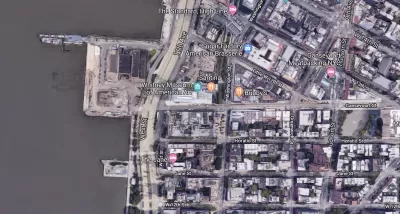
"After decades of planning, a 5.65-acre park with a beach is coming to Hudson River Park’s Gansevoort Peninsula—a site that until recently was a Department of Sanitation facility," reports Valerie Ricciulli.
A preliminary concept was released last week, with designs by James Corner Field Operations—the landscape architecture firm behind the High Line, located nearby.
"The park, located from Gansevoort Street to Little West 12th Street—along what used to be 13th Avenue—will have a sandy beach area with kayak access and a seating area; a salt marsh, habitat enhancements; a large sports field; and on its western side, picnic tables and lounge chairs," according to Ricciulli.
The article debuts the first renderings of the park. Another article by Lizeth Beltran also covers the announcement and provides additional historical perspective on the 20-year germination period for the idea.
The presentation [pdf] delivered to the public on July 24 is currently available on the Hudson River Park Trust's website.
FULL STORY: First look at Gansevoort Peninsula Park along the Hudson River

Meet Some of New York City's Newest Parks
In a city where density is everything, these park projects make creative use of existing public spaces—and, in some cases, create their own.
Ten Years of the High Line—Time to Reflect
As the High Line turns ten, a debate about the costs and benefits of urban revitalization continues.
Never Built New York: The Pier 55 Park Project for the Hudson River
The Pier 55 proposal made a big splash in New York when it was proposed in 2014, but now it appears headed for the trash bin of history.

The state-sanctioned urbicide of Austin
People don’t kill cities. Freeways do.

US to reduce Colorado River water deliveries to Mexico
A new Colorado Treaty amendment reduces Mexico’s Colorado River water allocation by 250,000 acre feet.

New Jersey’s second-largest city bans standalone data centers
Jersey City will continue to allow co-location facilities, such as those meant for research institutions that store their own data.

Amtrak not solely to blame for New Jersey commuter rail's unreliability, report finds
A new study from the Garden State Initiative found that NJ Transit’s budget grew 20% across a 4 year period, but reliability declined significantly over the same period.

EPA erases limits on planet-warming pollution from power plants
Under Monday’s plan, power plants would still have some limits on how much mercury, arsenic and other contaminants they can emit.

Phoenix announces new on-demand transit service, more frequent RAPID buses
Both new services will launch in October, and are part of Phoenix's Project Effective Access Solutions for Easing Congestion.

FREE Course: Walkable City 1: Why Walkability?
After describing his path towards focusing on walkability as the essence of good planning, Jeff Speck marches through his five principal reasons for making more walkable places.
Reinventing Malls: Planning Alchemy—Turning Gray Fields Into Gold
The course focuses on the opportunities and imperatives that shape reinvention of mall sites.

Eagle County Government
Harvard University Graduate School of Design
Nashville Planning Department
The Architects Foundation
University of Cincinnati Online
The Pocatello Development Authority
The Urban Renewal Agency of the City of Pocatello
Journal of the American Planning Association