Even after experiencing devastating wildfires, residents are often willing to take the risk to return and start over.


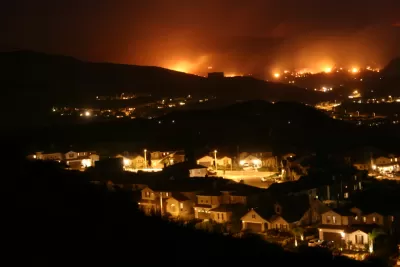
The threat of climate change means communities are facing hard questions about their futures, writes James Temple. "When should communities stay or go? Who gets to decide? And how do you ask—or force—an entire community to pick up and leave?"
Temple takes a closer look at developments in Paradise, California, which was devastated last year by the massive Camp Fire. While some residents have relocated, others want to rebuild, and they are opposing proposals for stricter safety standards and building regulations.
Paradise residents say changing the laws will add costs to rebuilding and cutting down trees will change the character of the town. "People will fight against higher seawalls that lower their property values or block their views. But they’ll also resist abandoning their homes," says Temple.
FULL STORY: Paradise, California and the impossible choice between climate fight and flight

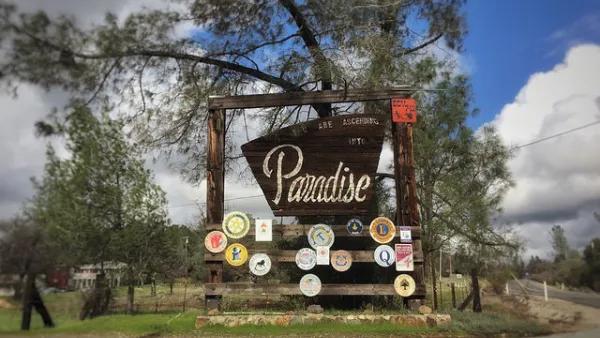
California Town Looks to Rebuild After Wildfire, but No Clear Path Forward
Paradise, California, burned to the ground last year, and the town’s recovery has begun. But questions remain about the measures that should be put into place to prevent another disaster.
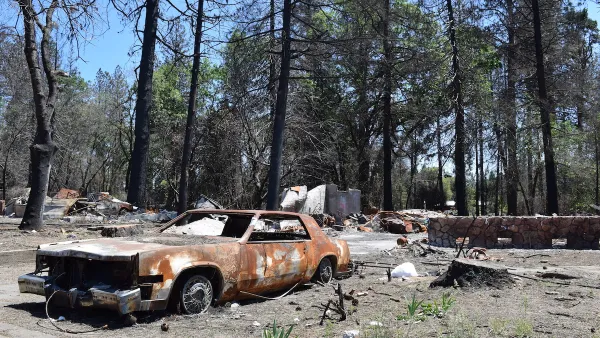
Paradise Lost: Long-Time Residents Priced out of Fire-Devastated Town
The California community lost 85 lives and tens of thousands of homes. Now, high housing and rebuilding costs are forcing many former residents out.
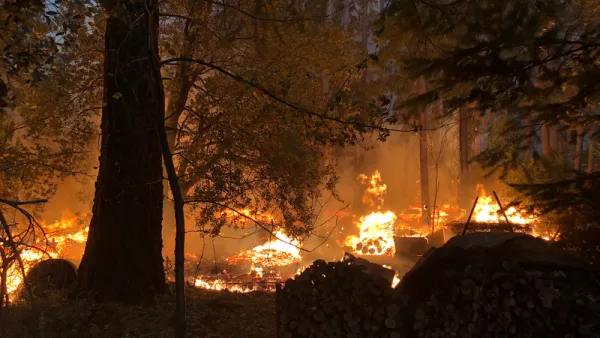
How To Protect an Entire Town From Wildfire
In the wake of the destructive Camp Fire, a proposal to encircle the town of Paradise with a green belt could help keep future fires at bay and better protect vulnerable residents.

The state-sanctioned urbicide of Austin
People don’t kill cities. Freeways do.

US to reduce Colorado River water deliveries to Mexico
A new Colorado Treaty amendment reduces Mexico’s Colorado River water allocation by 250,000 acre feet.

New Jersey’s second-largest city bans standalone data centers
Jersey City will continue to allow co-location facilities, such as those meant for research institutions that store their own data.

Amtrak not solely to blame for New Jersey commuter rail's unreliability, report finds
A new study from the Garden State Initiative found that NJ Transit’s budget grew 20% across a 4 year period, but reliability declined significantly over the same period.

EPA erases limits on planet-warming pollution from power plants
Under Monday’s plan, power plants would still have some limits on how much mercury, arsenic and other contaminants they can emit.

Phoenix announces new on-demand transit service, more frequent RAPID buses
Both new services will launch in October, and are part of Phoenix's Project Effective Access Solutions for Easing Congestion.

FREE Course: Walkable City 1: Why Walkability?
After describing his path towards focusing on walkability as the essence of good planning, Jeff Speck marches through his five principal reasons for making more walkable places.
Reinventing Malls: Planning Alchemy—Turning Gray Fields Into Gold
The course focuses on the opportunities and imperatives that shape reinvention of mall sites.


Eagle County Government
Harvard University Graduate School of Design
Nashville Planning Department
The Architects Foundation
University of Cincinnati Online
The Pocatello Development Authority
The Urban Renewal Agency of the City of Pocatello
Journal of the American Planning Association