With more cars on roads and planes in the sky than ever before, finding truly noise-free places with pure natural sounds has become ever more challenging.


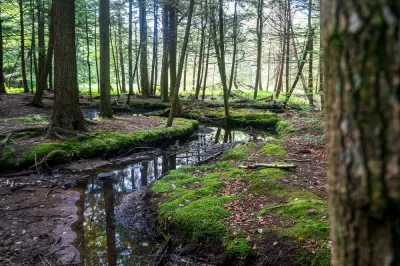
Chris Morgan, host of the radio show The Wild, explores natural silence and the places where human-made noise is not present. He talked with Gordon Hempton, a self-described "sound tracker," and travels with Matt Mikkelson into the Hoh Rainforest in Olympic National Park in Washington to find a place untouched by noise.
"Hempton and Mikkelson have rules for what qualifies a quiet place: free of noise pollution for 15 minutes in the time period between an hour before sunrise and two hours after sunset. Hempton said only about a dozen places in the lower 48 meet that standard," says Morgan.
On the way to one of these spots, in the Hoh Rainforest, Mikkelson discusses the impact that noise has on wildlife, and Morgan notes that the hum from the park’s visitor center is still audible from half a mile away. Because the forest’s birds communicate on a variety of frequencies, such noise can interfere with an integral part of nature.
"As humans, we don’t really realize how sensitive animals are to noise pollution. And so we see that noise pollution impacts animals in some tangible and really scary ways ... We need to start realizing how noisy of a world we’ve created and really take steps to mitigate that and come to terms with that," says Mikkelson.
After they spend time at the site of a "square inch of silence" deep in the forest, Mikkelson notes that quiet and natural silence are important for humans, providing a sense of comfort and a space for reflection. “Like all of us, the silence of the wild is something perhaps we all need once in a while,” adds Morgan.
Read the full story: The hunt to find just one square inch of silence
When Noise Is a Matter of Life and Death
The world is noisier than ever, and the long-term effects of exposure are serious. Still, noise pollution isn’t considered a legitimate environmental hazard.
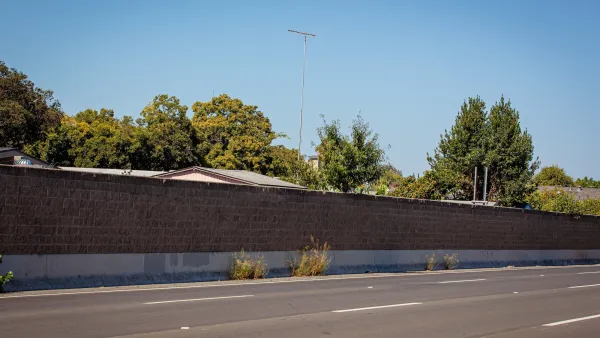
Study: Silence Raises Property Values
A Florida study found homes near recently built sound walls saw a rise in value.
‘Quiet Parks’ Highlight Importance of Silence for Public Health
The initiative recognizes parks and other areas that preserve natural quiet in a world full of noise pollution.

Planetizen Federal Action Tracker
A weekly monitor of how Trump’s orders and actions are impacting planners and planning in America.

California plans to bury El Niño’s downpour
If the state plays its cards right, it may be able to store a billion acre-feet of El Niño’s water in aquifers.

Desperate measures: Advocates weigh draining Lake Powell to fill Colorado River
Draining the reservoir could reduce evaporation losses by a couple hundred thousand acre-feet.

Chicago voters approve permanent festival grounds, penalty for vacant property owners
Currently, major summer and fall festivals take over public parks for weeks at a time, drawing criticism from nearby residents

NYC votes to cut outdoor dining red tape, speed up permitting
New York City also voted to allow the Department of Transportation to begin work on urgent projects before notifying elected officials.

California appears to reject Prop. 45
The proposition would have expanded the projects that qualify for a streamlined environmental review, effectively paring down the California Environmental Quality Act.

FREE Course: Walkable City 1: Why Walkability?
After describing his path towards focusing on walkability as the essence of good planning, Jeff Speck marches through his five principal reasons for making more walkable places.
Reinventing Malls: Planning Alchemy—Turning Gray Fields Into Gold
The course focuses on the opportunities and imperatives that shape reinvention of mall sites.

City of Rosemead
Rutgers University, Edward J. Bloustein School of Planning and Public Policy
One Hundred Miles
Hunter College, City University of New York (CUNY)
The Architects Foundation
University of Cincinnati Online
City of Cambridge
Montrose County
The Pocatello Development Authority