A Florida study found homes near recently built sound walls saw a rise in value.


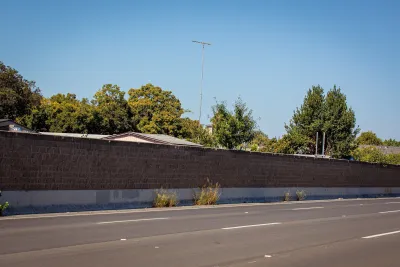
A study out of Florida reveals that homes near new sound barriers that block out freeway noise saw a 6.8 percent price increase after the walls were built, reports Lisa Ward in the Wall Street Journal.
Researchers found that “The barrier’s effect on property values declined with distance, the researchers found. They observed price increases of about 3.9% for homes located 100 to 200 meters from a newly constructed sound barrier, 3.1% for homes located 200 to 300 meters from a barrier and 2.8% for homes 300 to 400 meters from a barrier.”
The study shows that buyers are willing to pay more for homes in quieter areas, adding to a growing body of research on the measurable health and economic impacts of urban noise.
The authors of the study estimate that traffic noise reduces property values by about $110 billion nationally. “Lower-income homeowners often bear the brunt of this, the researchers say, because their neighborhoods tend to be most affected by things like pollution, crime and traffic noise.”
Read the full story: Quieter Streets Linked to Increase in Home Prices

Noise as a Public Health Hazard
New ways of measuring the effects of sound on human health are helping communities fight back against noise pollution.
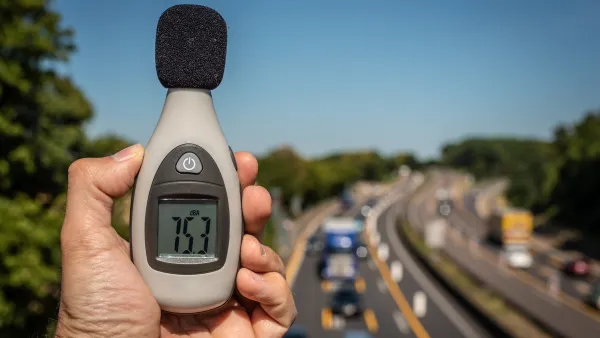
The Case Against Noise Pollution
A detailed description of how noise impacts health and wellbeing.
Using Tech to Control Noise Pollution
Several cities are piloting programs that use machine learning to identify and understand urban noise patterns and enforce noise ordinances.

Planetizen Federal Action Tracker
A weekly monitor of how Trump’s orders and actions are impacting planners and planning in America.

Amtrak, CN end decades-long dispute with eight-year agreement
The new operating agreement establishes an updated framework for the companies to work together, including processes to resolve disputes.

Judges permit Denver to divert 77,000 acre feet from the Colorado River for reservoir expansion
Overuse and climate change have caused the Colorado River’s water levels to plummet.

NYC DOT wants faster, more permanent street upgrades
The city is examining ways to build more concrete infrastructure without getting entangled in 'decades-long' projects.

'Something we’ve never seen before:' rising utility rates could strain city finances nationwide
Data centers, climate change and other factors have caused utility rates in the United States to increase by 38% since 2020.

Trump to overrule local leaders, lease millions of acres of America’s Pacific Island territories’ seafloors to mining companies
International law says that the Indigenous people of America’s territories have a right to prior and informed consent regarding projects that impact their countries.

FREE Course: Walkable City 1: Why Walkability?
After describing his path towards focusing on walkability as the essence of good planning, Jeff Speck marches through his five principal reasons for making more walkable places.
Reinventing Malls: Planning Alchemy—Turning Gray Fields Into Gold
The course focuses on the opportunities and imperatives that shape reinvention of mall sites.

Harvard University Graduate School of Design
KFH Group Inc.
Greater Baltimore Committee
The Architects Foundation
University of Cincinnati Online
The Pocatello Development Authority
The Urban Renewal Agency of the City of Pocatello