Applied to roads, the theory of induced demand says new construction only brings out more users. But can something similar be said of housing? According to this research, the likely answer is no.


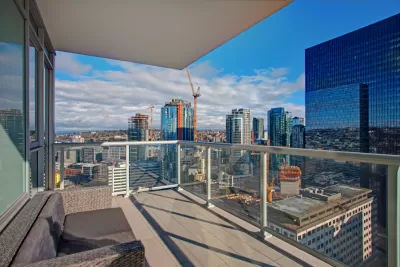
Pointing to an upcoming paper studying whether new luxury housing raises rents, Joe Cortright makes a case that induced demand theories for housing may be off-base. "The induced demand theory applied to housing," he writes, "is that building new housing somehow signals a big change in the neighborhood's amenities and livability and the new supply of housing triggers an even bigger increase in demand."
But while induced demand has been shown to apply to highway construction, a key difference between roads and housing is that road users pay a "zero price" to use the amenity. "Thus capacity (and willingness to tolerate delay) are the only things regulating demand, and when capacity is expanded, demand responds quickly," Cortright writes. The case is different for housing, which users pay a premium for. "When you actually price new capacity at even a fraction of its cost, demand evaporates."
Cortright discusses the paper's findings, which show depressed rents in buildings immediately surrounding new construction, drawing on data from 100 apartment buildings in 11 cities. The results appear to support the supply side theory and cast doubt on induced demand.
FULL STORY: Another housing myth debunked: Neighborhood price effects of new apartments

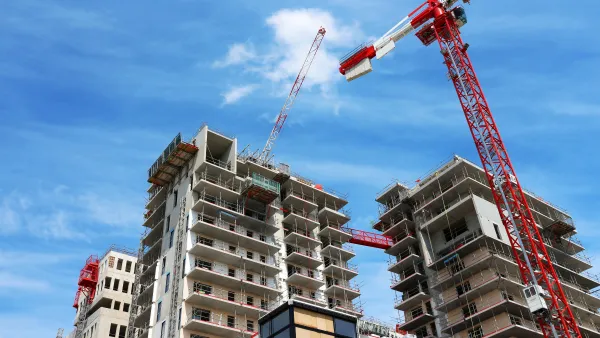
The Relationship Between Rents and Housing Supply
Despite a strong belief in market forces in many other aspects of the economy, many Americans don’t see a correlation between housing supply and housing costs.

A Playbook for Supply-Side Housing Affordability Solutions
The word YIMBY isn't used in the McKinsey Global Institute's new supply-side toolkit for housing affordability, but YIMBYs will like this it anyway.
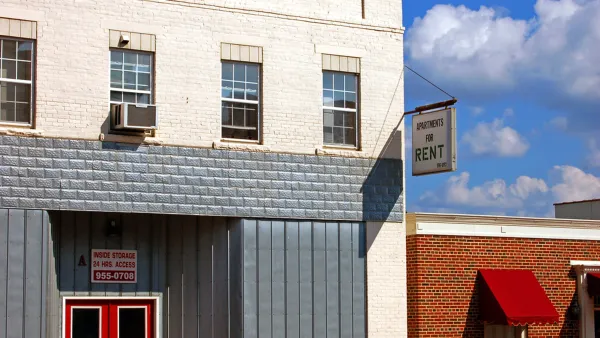
Some Big Cities See Shrinking Rents
Even as rents continue to rise nationally, some of the most expensive cities like San Jose, San Francisco, and New York have seen rents fall this year.

Planetizen Federal Action Tracker
A weekly monitor of how Trump’s orders and actions are impacting planners and planning in America.

The state-sanctioned urbicide of Austin
People don’t kill cities. Freeways do.

US to reduce Colorado River water deliveries to Mexico
A new Colorado Treaty amendment reduces Mexico’s Colorado River water allocation by 250,000 acre feet.

Mamdani overhauls NYC's Vision Zero plan with 100 new policy goals
The overhaul aims to reduce traffic deaths and make streets safer for pedestrians, cyclists and drivers through lower speed limits, new safety infrastructure and more.

Amtrak not solely to blame for New Jersey commuter rail's unreliability, report finds
A new study from the Garden State Initiative found that NJ Transit’s budget grew 20% across a 4 year period, but reliability declined significantly over the same period.

EPA erases limits on planet-warming pollution from power plants
Under Monday’s plan, power plants would still have some limits on how much mercury, arsenic and other contaminants they can emit.

FREE Course: Walkable City 1: Why Walkability?
After describing his path towards focusing on walkability as the essence of good planning, Jeff Speck marches through his five principal reasons for making more walkable places.
Reinventing Malls: Planning Alchemy—Turning Gray Fields Into Gold
The course focuses on the opportunities and imperatives that shape reinvention of mall sites.

Eagle County Government
Harvard University Graduate School of Design
Nashville Planning Department
The Architects Foundation
University of Cincinnati Online
The Pocatello Development Authority
The Urban Renewal Agency of the City of Pocatello
Journal of the American Planning Association