The word YIMBY isn't used in the McKinsey Global Institute's new supply-side toolkit for housing affordability, but YIMBYs will like this it anyway.



Jonathan Woetzel, Sangeeth Ram, Shannon Peloquin, and Jan Mischke have created a supply-side toolkit for cities looking to combat skyrocketing housing prices. The work accepts the argument that at the heart of the current housing crisis is an "extreme imbalance in supply and demand." In effect, "[p]opulation growth, the continuing trend toward urbanization, and rising global incomes are all fueling steady demand increases," according to the article that announces the new toolkit.
The supply-side toolkit that follows addresses "three challenges that all cities have in common: making land available, removing barriers, and making the construction sector more productive." a list of specific recommendations follows each of those three focus areas. The full report, "Housing Affordability: A Supply-Side Toolkit for Cities" [pdf], is available online.
FULL STORY: Housing affordability: A supply-side tool kit for cities

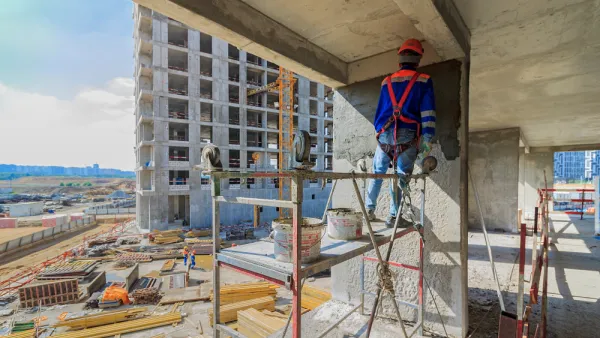
New Market-Rate Housing Lowers Rents for Everyone, According to New Research
A study published by a German researcher adds ammunition to the cause of improving housing affordability by legalizing and building new supply.

Lack of Multi-Family Zones Contributes to Nashville’s High Housing Costs, Study Says
Nashville and surrounding communities allow for a relatively small amount of multi-family housing, according to a new zoning atlas of Middle Tennessee. A regionally focused nonprofit is using the atlas to push for zoning reforms.
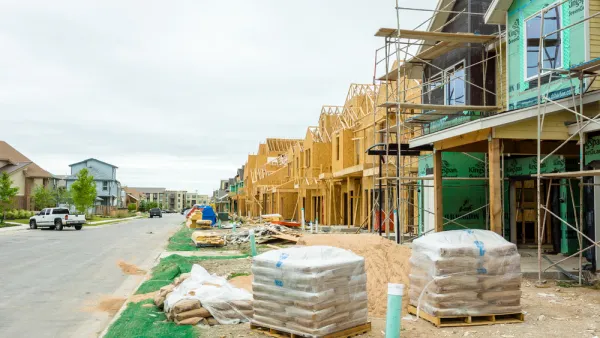
The Housing Affordability Recipe
Smart policies can ensure that low- and moderate-income households can find suitable housing in good neighborhoods where transportation costs are low. The research is clear: upzoning works.

Planetizen Federal Action Tracker
A weekly monitor of how Trump’s orders and actions are impacting planners and planning in America.

The state-sanctioned urbicide of Austin
People don’t kill cities. Freeways do.

US to reduce Colorado River water deliveries to Mexico
A new Colorado Treaty amendment reduces Mexico’s Colorado River water allocation by 250,000 acre feet.

Baltimore to break ground on $50 million Transit Priority Project
The project will bring faster bus trips, safer streets and better bike connections to Baltimore.

Airbnb launches $250 million 'last-dollar financing' housing accelerator, makes first investment in Austin
The company will put $6.4 million towards affordable housing development in Texas’ capital.

Guerilla urbanists are building DIY bus stop benches in Chicago
A before-and-after of one of the bus stops with a new bench. The new benches are not officially sanctioned or permitted, but the residents who placed them hope they will be the start of a network of DIY benches across the city.

FREE Course: Walkable City 1: Why Walkability?
After describing his path towards focusing on walkability as the essence of good planning, Jeff Speck marches through his five principal reasons for making more walkable places.
Reinventing Malls: Planning Alchemy—Turning Gray Fields Into Gold
The course focuses on the opportunities and imperatives that shape reinvention of mall sites.

Eagle County Government
Harvard University Graduate School of Design
Nashville Planning Department
The Architects Foundation
University of Cincinnati Online
The Pocatello Development Authority
The Urban Renewal Agency of the City of Pocatello
Journal of the American Planning Association