Not long ago, schools were built as the cornerstone of communities. Today, many new schools are built on the periphery, far from the neighborhoods they serve.


"The modernization of schools has come at a price -- the loss of walkable, neighborhood-scale schools in favor of larger, more remote campuses accessible primarily by school bus or chauffeuring parents. Forty years ago, half of all students walked to school. Today,only about one out of every 10 trips to school is made by walking and bicycling... This report outlines trends in school construction in North Carolina, identifies key factors affecting the location and design of schools, and suggests solutions for overcoming obstacles to building and maintaining walkable, neighborhood-scale schools"
Thanks to Congress for the New Urbanism Listserv
Read the full story: Good Schools Good Neighborhoods - The Impacts of State and Local School Board Policies on the Design and Location of Schools in North Carolina


Planetizen Federal Action Tracker
A weekly monitor of how Trump’s orders and actions are impacting planners and planning in America.

Northwest rail fans eager for Sept. 30 debut of Amtrak’s Airo fleet
Get ready for that new train smell and more seats. But they won’t go faster or run more frequently on the Cascades route in Washington and Oregon.
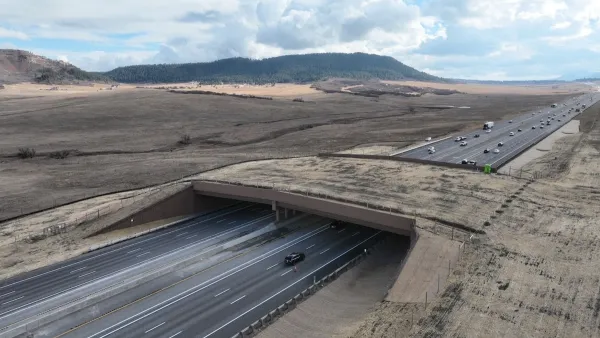
Record-breaking wildlife overpass in Colorado brings 91% reduction in animal collisions
Prior to the overpass, vehicles were hitting one deer per day on Colorado’s Interstate 25.

Detroit to transform waterfront with $2.2 billion investment
Developers will convert about 18 acres of unused parking lot space into civic spaces.

‘Going backwards:’ Baltimore mayor, students rally against state's transit funding plan
Maryland's proposed six-year plan provides no funding for Baltimore’s BMORE bus program and reduces its road maintenance funding.

Trump wants to cancel nearly 98% of funding for HUD housing support program
Multiple housing groups are suing the administration in an effort to preserve the funding.

FREE Course: Walkable City 1: Why Walkability?
After describing his path towards focusing on walkability as the essence of good planning, Jeff Speck marches through his five principal reasons for making more walkable places.
Reinventing Malls: Planning Alchemy—Turning Gray Fields Into Gold
The course focuses on the opportunities and imperatives that shape reinvention of mall sites.

City of Thousand Oaks
City of Wisconsin Rapids
Harvard University Graduate School of Design
The Architects Foundation
University of Cincinnati Online
Northern Illinois Transit Authority (NITA)
The Pocatello Development Authority
The Urban Renewal Agency of the City of Pocatello