Labor costs vary greatly throughout the country, but wages are rising in the construction industry, especially in cities like San Francisco, New York, and Los Angeles.


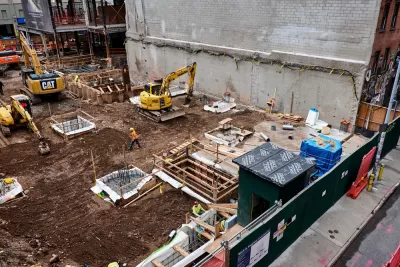
Construction costs are up in the United States, and labor is a big part of the reason why. "Construction costs have jumped 23.6 percent since 2004, according to 'What’s Up With Construction Costs?' a new report by BuildZoom economist Issi Romem," Patrick Sisson reports for Curbed. Why are labor costs up? In the cities with the biggest wage gains, unions are a factor. Also, the type of construction done impacts the overall cost of labor. Markets with the highest labor costs, like San Francisco, demand a lot of renovation, which can be more time-consuming then new construction.
Market forces may reverse the trend of rising labor costs. "Training more workers to meet the labor shortage in the building trades is a useful, but long-term, solution. Others see technology as a potential savior; numerous startups and new prefab companies have raised money to develop more efficient construction methods," Sisson reports. Still, many of the forces pushing up labor costs are unlikely to disappear anytime soon.
FULL STORY: Rising labor costs send the price of house construction skyward

Opinion: New Construction Is Safer, Better for the Environment
The emotional attachment to old homes can obscure the benefits of new buildings, which consume less energy and provide more amenities for residents.
To upzone or not to upzone? Two views on the housing crisis
Allowing more density can increase the housing supply, but does the attendant rise in land prices cancel out the benefits?
Alexandria eviction diversion program will let tenants pay back rent in installments
Eligible tenants will be allowed to make a 10% down payment on the back rent they owe and pay off the rest in installments while remaining in their home.

The state-sanctioned urbicide of Austin
People don’t kill cities. Freeways do.

US to reduce Colorado River water deliveries to Mexico
A new Colorado Treaty amendment reduces Mexico’s Colorado River water allocation by 250,000 acre feet.

New Jersey’s second-largest city bans standalone data centers
Jersey City will continue to allow co-location facilities, such as those meant for research institutions that store their own data.

Amtrak not solely to blame for New Jersey commuter rail's unreliability, report finds
A new study from the Garden State Initiative found that NJ Transit’s budget grew 20% across a 4 year period, but reliability declined significantly over the same period.

EPA erases limits on planet-warming pollution from power plants
Under Monday’s plan, power plants would still have some limits on how much mercury, arsenic and other contaminants they can emit.

Phoenix announces new on-demand transit service, more frequent RAPID buses
Both new services will launch in October, and are part of Phoenix's Project Effective Access Solutions for Easing Congestion.

FREE Course: Walkable City 1: Why Walkability?
After describing his path towards focusing on walkability as the essence of good planning, Jeff Speck marches through his five principal reasons for making more walkable places.
Reinventing Malls: Planning Alchemy—Turning Gray Fields Into Gold
The course focuses on the opportunities and imperatives that shape reinvention of mall sites.

Eagle County Government
Harvard University Graduate School of Design
Nashville Planning Department
The Architects Foundation
University of Cincinnati Online
The Pocatello Development Authority
The Urban Renewal Agency of the City of Pocatello
Journal of the American Planning Association