To provide affordable housing to meet the demand, DCHA has worked to make the housing voucher process easier for landlords.



Adrianne Todman claims her agency has had success by working closely with landlords. "Todman, who served as executive director of the D.C. Housing Authority from 2009 to 2017, knew that getting more landlords onboard to accept voucher tenants in their units would benefit both the tenants and the housing authority; the DCHA wanted to work with all landlords, those who managed many multi-story buildings and those who owned only a handful of units," Rebecca Gale writes for Pacific Standard. She found that landlords wanted responsiveness from DCHA. "The DCHA found the three things most important to landlords were creating a smooth process to deem families eligible, having inspections done quickly, and being able to do re-certifications without delay," Gale writes.
The agency seems to have been successful, compared to other similar cities. Voucher recipients in D.C. had better success finding units to choose from. "Martha Galvez, a senior research associate at the Urban Institute and author of the recent report on voucher denial rates, says that D.C. is notable because it has a neighborhood-based rent system, also called Small Area Fair Market Rents, which designates rent reimbursements by zip code, rather than by metropolitan area," Gale writes
FULL STORY: WHY D.C.'S HOUSING VOUCHERS ARE WORKING BETTER THAN THOSE IN OTHER CITIES

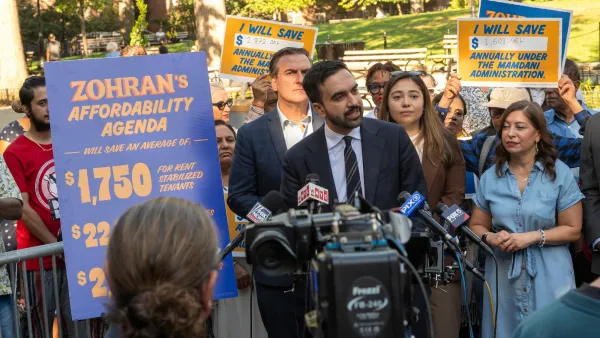
NYC expands housing vouchers by $175M in new budget
Mayor Mamdani agreed to drop an Adams-era lawsuit that attempted to block the expansion of the voucher program.

Hartford launches program that uses housing vouchers to facilitate homeownership
The Connecticut capital will allow voucher recipients to use their vouchers toward home payments as a way to build long-term wealth.
Federal cuts to voucher program put 9,000 New Yorkers at risk of homelessness
The Emergency Housing Voucher program is ending years ahead of schedule, forcing housing agencies to find new ways to support roughly 70,000 households nationwide.

Planetizen Federal Action Tracker
A weekly monitor of how Trump’s orders and actions are impacting planners and planning in America.

The state-sanctioned urbicide of Austin
People don’t kill cities. Freeways do.

US to reduce Colorado River water deliveries to Mexico
A new Colorado Treaty amendment reduces Mexico’s Colorado River water allocation by 250,000 acre feet.

Mamdani overhauls NYC's Vision Zero plan with 100 new policy goals
The overhaul aims to reduce traffic deaths and make streets safer for pedestrians, cyclists and drivers through lower speed limits, new safety infrastructure and more.

Amtrak not solely to blame for New Jersey commuter rail's unreliability, report finds
A new study from the Garden State Initiative found that NJ Transit’s budget grew 20% across a 4 year period, but reliability declined significantly over the same period.

EPA erases limits on planet-warming pollution from power plants
Under Monday’s plan, power plants would still have some limits on how much mercury, arsenic and other contaminants they can emit.

FREE Course: Walkable City 1: Why Walkability?
After describing his path towards focusing on walkability as the essence of good planning, Jeff Speck marches through his five principal reasons for making more walkable places.
Reinventing Malls: Planning Alchemy—Turning Gray Fields Into Gold
The course focuses on the opportunities and imperatives that shape reinvention of mall sites.

Eagle County Government
Harvard University Graduate School of Design
Nashville Planning Department
The Architects Foundation
University of Cincinnati Online
The Pocatello Development Authority
The Urban Renewal Agency of the City of Pocatello
Journal of the American Planning Association