A new study looks at homeownership among native-born and foreign-born residents in U.S. cities.


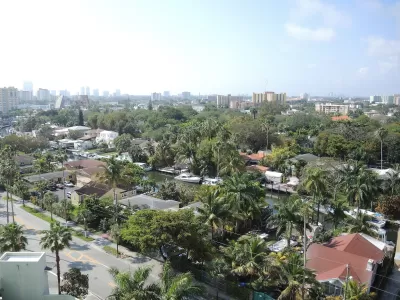
The company LendingTree recently examined census data to better understand homeownership among immigrants in the 50 largest cities in the United States. In a ranking of the cities, Miami was at the top of the list, where 26 percent of homeowners are immigrants and 34 percent are native-born residents. At the other end of the list was Pittsburgh, where immigrants make up only 2 percent of homeowners, compared to 68 percent native-born homeowners.
“For the most part, the highest immigrant homeownership rates were in some of the most expensive markets — which is not surprising, since those areas also tend to have vibrant economies and job opportunities that attract immigrants,” reports Michael Kolomatsky.
Still, Miami stands out from other top-ranking cities because its median home price of $278,700 is significantly lower than the high-cost cities right behind it — San Jose, California; Los Angeles; and San Francisco. Of all the cities included in the study, it is also the one with the highest percentage of immigrants, 41 percent.
FULL STORY: Immigrants and Homeownership


Is the Pandemic Improving Affordable Housing Asset Management?
Resident services has long been the first to be cut in hard times—but for some housing providers that may be changing.

For 2020 Census, Cities Face Hurdles Finding People to Count
In many cities, people are living in places that are hard to locate. But accurate census counts are crucial to ensuring cities get their fair share of political power and funding.
Builders Look to Growing Home Rental Market
Subdivisions in states across the country are catering to people who want the benefits of living in homes without the burdens of home ownership.

Planetizen Federal Action Tracker
A weekly monitor of how Trump’s orders and actions are impacting planners and planning in America.

The state-sanctioned urbicide of Austin
People don’t kill cities. Freeways do.

US to reduce Colorado River water deliveries to Mexico
A new Colorado Treaty amendment reduces Mexico’s Colorado River water allocation by 250,000 acre feet.

5 New England states march closer to 800 megawatt wind energy project
Securing federal approval for the project may be complicated under the Trump administration, which has historically been hostile towards domestic wind power.

Baltimore to break ground on $50 million Transit Priority Project
The project will bring faster bus trips, safer streets and better bike connections to Baltimore.

Airbnb launches $250 million 'last-dollar financing' housing accelerator, makes first investment in Austin
The company will put $6.4 million towards affordable housing development in Texas’ capital.

FREE Course: Walkable City 1: Why Walkability?
After describing his path towards focusing on walkability as the essence of good planning, Jeff Speck marches through his five principal reasons for making more walkable places.
Reinventing Malls: Planning Alchemy—Turning Gray Fields Into Gold
The course focuses on the opportunities and imperatives that shape reinvention of mall sites.

.JPG)
Eagle County Government
Harvard University Graduate School of Design
Nashville Planning Department
The Architects Foundation
University of Cincinnati Online
The Pocatello Development Authority
The Urban Renewal Agency of the City of Pocatello
Journal of the American Planning Association