The Tribune found 53 local tax agreements across 34 data centers guaranteed a total of 465 jobs. Roughly half of the agreements had no job stipulations.



This story was originally published in the Texas Tribune.
This story was supported by the Pulitzer Center.
Four years ago, representatives from a data center operating under the name Wurldwide, LLC came to El Paso with what they pitched as a transformative economic opportunity.
Lawyers with the company told local officials they could boost the city’s stagnant economy through jobs, tax revenue and billions of dollars in investment. But county and city officials would need to sign an agreement promising them a hefty tax break to prevent the data center from taking its business elsewhere, the lawyers said, according to El Paso County Judge Ricardo Samaniego.
Soon, it was revealed that the company they were dealing with was Meta — the tech behemoth behind Facebook, Instagram and WhatsApp. Local officials were desperate to land the deal.
So they signed a contract washing away 80% of the future facility’s property tax burden over the next 35 years, an amount projected at the time to be worth $550 million. The value of the tax break is expected to dramatically grow as the project’s scope has expanded from a $1.5 billion investment to one that will exceed $10 billion. In exchange, Meta needs to create and maintain only 50 jobs.
A first-of-its-kind Texas Tribune analysis found Texas cities and counties are giving away at least $1 billion in local property tax rebates to data centers — of which El Paso’s deal accounts for more than half. In total, the Tribune identified 53 local tax agreements that critics say are negotiated outside of the public eye and offer little in return in terms of jobs.
The Tribune scoured every local tax contract compiled by the Texas comptroller, however, the office does not track data centers. Our analysis is likely an undercount because data centers often use shell companies to shield their identity in state and local documents, as was the case for Meta — which went by Wurldwide in El Paso and Winner, LLC in a separate deal in Fort Worth.
Many local governments engaging in deals with data centers did not report financial details in their agreements that are required by the state, including the monetary value of the deals and information about the companies.
The Tribune found that those 53 tax agreements across 34 data centers guaranteed 465 jobs in total — and roughly half of the agreements had no job stipulations. But the tech companies have said they expect to create many hundreds more full-time jobs and employ thousands in indirect construction and utility work. And despite the tax breaks, some government officials said data centers are still among their top taxpayers, yielding financial benefits for the cities and counties that they expect to sustain over the next several decades.
El Paso city officials say they will still net an estimated $16.7 million in property taxes annually from Meta. Meanwhile, the city is projecting a budget deficit of $33 million in 2028. In Fort Worth, where Meta has had a data center operating since 2017, the city is expected to rebate at least $271 million back to the company over 20 years, even as the city in September approved property tax rate hikes to close a projected $94 million budget shortfall in 2027. (Fort Worth officials declined requests for comment.)
The agreements have come under fire this past year as Texas has emerged as the top destination in the U.S. for new development of massive AI hyperscalers that span hundreds of acres in size, and utilize exorbitant amounts of electricity and water. The Tribune earlier this year identified nearly 600 operating and planned data centers.
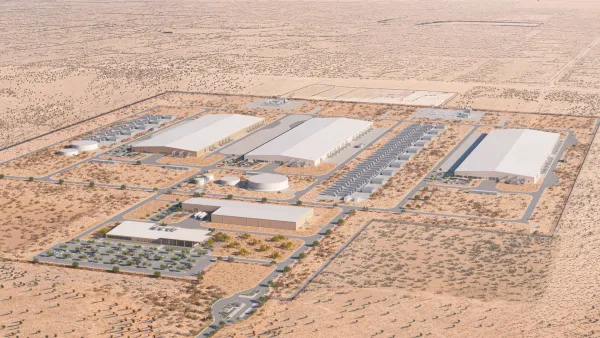
Earlier this summer, years after El Paso inked its deal with Meta, locals were so angry over the planned data center that the city council held a meeting to consider backing out of the agreement. Hundreds of residents packed a city council meeting in June, where they bristled at how their local leaders signed nondisclosure agreements with Meta to keep negotiations off of public meeting agendas. They denounced the 3.1-million-square-foot facility, anchored in northeast El Paso, which will require 1 gigawatt of electricity — enough to power 750,000 homes, which is three times the size of El Paso. They worried it risks the city’s water supply in a region struggling with drought. And they were in disbelief that officials from their own community had lured the gigantic, noisy eyesore to come into their home by offering it a tax discount.
The city council ultimately voted to preserve the agreement, citing the threat of lawsuits by the trillion-dollar company.
“To be there for almost nine hours and to see so many people who took a day off from their work to be there and not have that be something that moves more of the representatives in our favor I think also was enraging for a lot of people,” said Ana Fuentes, executive director of Amanecer People’s Project, an anti-data center group in El Paso. She said the community is deeply concerned about the long-term impact on El Paso’s resources, and a local tax incentive “adds insult to injury.”
Samaniego says he has some regrets — and with hindsight, he would have negotiated the deal differently. But he still thinks it will pay off in the long run.
“When people criticize the decisions that we were making, they were in a vacuum,” Samaniego said. “We had population challenges and weren’t growing the way we were wanting. We had kids leaving El Paso more than usual, and when you look at all that, it seemed like Meta wasn’t the silver bullet or anything like that, but it was the beginning of something that could really make our economy boost.”


Other local officials said that the tax agreements are their only negotiating tool to leverage concessions from data centers that they have little power to stop.
The local tax breaks data centers enjoy are in addition to the state’s already generous sales tax rebate program. Texas is expected to forego at least $3.2 billion in sales taxes from data centers over the next two years, Tribune reported in April.
Meta’s data centers in El Paso and Fort Worth will receive both the state sales tax exemption and local tax breaks. There are at least 25 data centers in Texas that receive both the state’s tax exemption and at least one local property tax agreement.
A spokesperson for Meta said the company has contributed to Texas’ economy for more than a decade.
“We’ve invested over $20 billion in the state across Fort Worth, Temple and El Paso. Those sites support roughly 2,500 full-time jobs and more than 6,400 skilled trade jobs at peak construction, and we’ve put over $7.7 million into local schools and nonprofits since 2018. At every site we pay the full cost of the energy, water and grid infrastructure our data centers require, so those costs aren’t passed on to the community,” spokesperson Francis Brennan said.
Few jobs promised
While Meta is only on the hook to create 50 jobs in El Paso, company officials insist they expect 300 full-time employees to work at the data center once it is operational.
Critics argued the low number of guaranteed jobs in many of the agreements mean companies have no obligation to exceed those benchmarks and could scale back in the future.
“Do data centers generate investment and jobs? Yes, but do they generate them to the level that the industry suggests? Absolutely not, and it’s also a heavily subsidized industry,” said Anthony Elmo, an analyst with economic development think tank Good Jobs First. “So we’re out there paying for these jobs and this investment with our tax dollars, and I think people need to do a better job of understanding if that’s useful and needed.”
The local agreements typically require that the jobs are high-paying, above the municipality’s median pay. The annual median wage in El Paso in May 2025 was $24.94 per hour, according to the Bureau of Labor Statistics.
In Fort Worth, Meta is only required to create and maintain 40 full-time jobs, but the company said the facility is currently “supporting over 200 operational positions.”
Microsoft signed an agreement in 2013 that requires 20 full-time employees be employed at its data center in San Antonio, and has so far seen the company receive $5.4 million in rebates, according to the city. Equinix signed an agreement with Dallas County in 2021 that requires 25 full-time jobs in exchange for about $910,000 in abated taxes over 10 years.
There’s already evidence that suggests some existing data centers are struggling to create jobs.
In July, Texas Comptroller officials testified in a legislative committee that only 20 data centers had been audited so far to determine compliance with the state’s sales tax exemption program. One in five of those data centers had fallen short of the eligibility requirement to create between 20 and 40 jobs. The Comptroller’s office would not identify which companies were in violation.
Read the full story: Texas cities and counties forgo $1 billion in taxes to data centers in exchange for few job guarantees
New Mexico spent millions drafting climate goals. Data centers are unraveling them
Three data centers in New Mexico and El Paso will release more emissions yearly than 2 million cars in the same timeframe.

Data Centers Gaining Ground in Central Ohio
Massive data centers are gobbling up energy resources and tax breaks while creating few jobs in the region.

Illinois considers spending $1 billion in taxpayer money on data center
A quantum computing campus and data center are currently under construction in Chicago.

Planetizen Federal Action Tracker
A weekly monitor of how Trump’s orders and actions are impacting planners and planning in America.

Washington state to charge fee to drivers with fuel-efficient cars
Revenue from the fee will go towards supporting the state’s highways.
Illinois considers spending $1 billion in taxpayer money on data center
A quantum computing campus and data center are currently under construction in Chicago.

‘Demolition of our heritage:’ Some US tribes speak out against BAAJA
A coalition of indigenous groups in the United States are concerned about provisions in the bill that may weaken their ability to halt large energy projects.

How LA’s new mayor plans to tackle affordable housing crisis
Mayor-elect Nithya Raman has proposed overhauling the city’s permitting process.

Interactive map reveals Pennsylvania's abandoned oil, gas wells — many on residential property
It is difficult for residents to know if a well is near their home, or if it poses a threat to them.

FREE Course: Walkable City 1: Why Walkability?
After describing his path towards focusing on walkability as the essence of good planning, Jeff Speck marches through his five principal reasons for making more walkable places.
Reinventing Malls: Planning Alchemy—Turning Gray Fields Into Gold
The course focuses on the opportunities and imperatives that shape reinvention of mall sites.

City of Charlotte
City of Rosemead
Rutgers University, Edward J. Bloustein School of Planning and Public Policy
University of Michigan School for Environment and Sustainability (SEAS)
Hunter College, City University of New York (CUNY)
The Architects Foundation
University District Partnership