Small cities hold 39% of America’s population, but receive only 10% of U.S. venture capital investment.


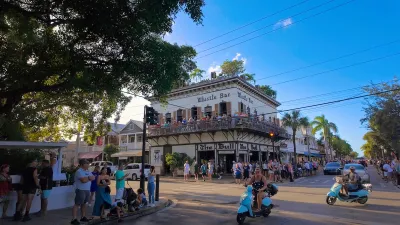
Investing in “micropolitan communities” could generate $2 trillion in economic output for the United States, according to a Heartland Forward and McKinsey Institute for Economic Mobility report. The report defines micropolitans as cities with a population between 10,000 and 49,999 people. While these small cities are currently under-invested in, the report finds that funding them could lead to an incredible economic boost.
“The 20 states in the middle of the country have 62% of the 538 micropolitans in the United States, according to the report. It’s also home to 39% of the country’s population and generates about 35% of GDP — making it the world’s third largest economy — but cities there get only 10% of the total U.S. venture capital investment and 29% of fixed capital lending, the report states,” Stephanie Kanowitz writes for Smart Cities Dive. "Shrinking the investment gap so the region’s share of the GDP matches its share of the population could lead to that $2 trillion bump, the report states."
Not all micropolitans are on equal footing: the report finds that they differ widely in terms of economic foundation and ability to coordinate economic development actions from states, community organizations and local governments. The micropolitans that are successful at managing economic development are best suited for additional investment, the report states.
Read the full story: The $2 trillion growth opportunity hiding in small cities

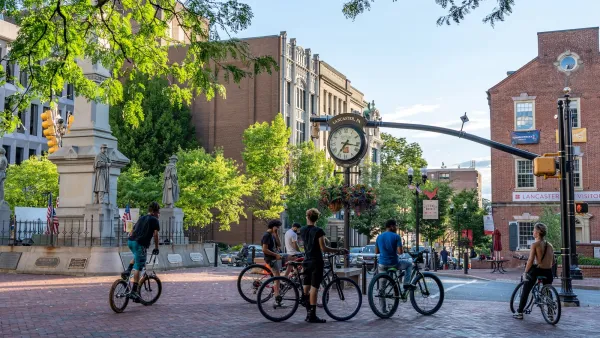
The Nation’s Best Small Cities Ranked by Livability, Affordability
A new list looks at a range of factors from housing costs to entertainment to commute times to rank the most attractive small cities in the U.S.
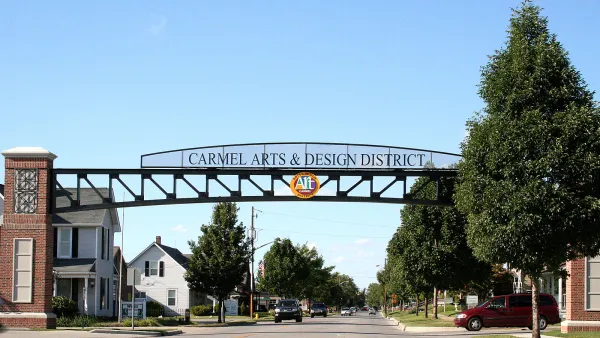
Americans Continue to Move to Smaller Cities
Cities with populations between 25,000 and 100,000 continue to see an influx of migrants lured by lower costs of living and high quality-of-life metrics.
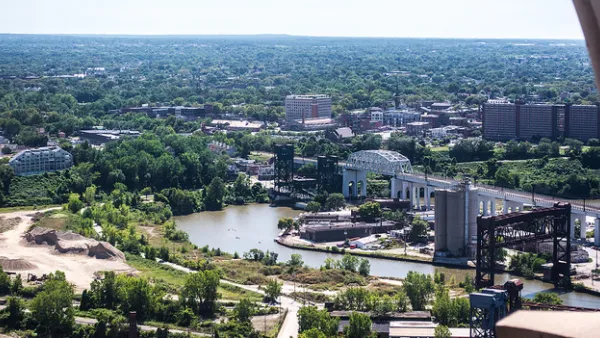
Legacy Cities, Post-Pandemic
The question of how the pandemic and all of its corresponding crises will alter the future of cities and planning has persisted since March. This article rightfully focuses those large, challenging questions of the Legacy Cities of the United States.

Planetizen Federal Action Tracker
A weekly monitor of how Trump’s orders and actions are impacting planners and planning in America.

‘Going backwards:’ Baltimore mayor, students rally against state's transit funding plan
Maryland's proposed six-year plan provides no funding for Baltimore’s BMORE bus program and reduces its road maintenance funding.

Detroit to transform waterfront with $2.2 billion investment
Developers will convert about 18 acres of unused parking lot space into civic spaces.

'I can't live in this:' Mississippi town besieged by power plant noise
A plant powering Elon Musk’s xAI data centers is subjecting Southaven, Mississippi residents to ceaseless noise.

Battered from federal attacks, Louisiana's offshore wind industry refuses to give up
State Representative Joe Orgeron expressed hope that the state could revitalize its wind industry once President Trump leaves office.

Data center developers are using lawsuits, cash offers to ‘overwhelm’ rural America
Newsrooms in five states worked together to uncover the tactics big tech developers use to buy land from reluctant communities.

FREE Course: Walkable City 1: Why Walkability?
After describing his path towards focusing on walkability as the essence of good planning, Jeff Speck marches through his five principal reasons for making more walkable places.
Reinventing Malls: Planning Alchemy—Turning Gray Fields Into Gold
The course focuses on the opportunities and imperatives that shape reinvention of mall sites.

One Hundred Miles
County of Mendocino
planning NEXT
The Architects Foundation
University of Cincinnati Online
Montrose County
Northern Illinois Transit Authority (NITA)
The Pocatello Development Authority