Climate change has caused sea level rise, flooding and erosion along the coast of Maine, leading to a trend of coastal residents erecting or repairing stone walls.


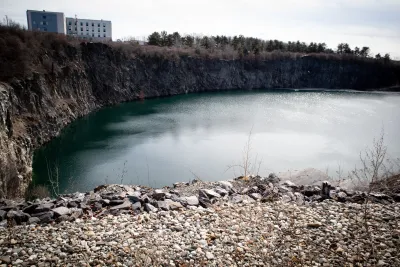
Blasts from quarries in Maine subject their neighbors to supersonic shockwaves over a dozen times a year, which create plumes of dust and can potentially damage homes. Hundreds more homes may soon be in range of the shockwaves: the number of permits to develop new quarries have more than tripled over the past five years compared to the prior decade, according to the Maine Department of Environmental Protection, and some quarry owners are looking to expand ones already built.
Climate change is at least partially to blame for Maine’s booming quarry industry. More and more coastal property owners are erecting stone walls, or repairing pre-existing ones, to protect against sea level rise, flooding and erosion, Emmett Gartner writes for Inside Climate News.
“There are few state regulations on quarries in Maine, critics say, and following the recent surge, more and more towns are considering local moratoriums on new quarries, strengthened ordinances that greatly restrict the activity of existing ones, and even local restrictions on new rock sea walls,” Inside Climate News reports.
Read the full story: The Winners and Losers of Maine’s Race to Armor Its Shoreline Against Climate Change


Who pays when a remote Alaska village can no longer stay?
A year after ex-Typhoon Halong, the struggle for two communities to find safer ground has become part of a national debate over who should bear the costs of the climate crisis.

'Something we’ve never seen before:' rising utility rates could strain city finances nationwide
Data centers, climate change and other factors have caused utility rates in the United States to increase by 38% since 2020.
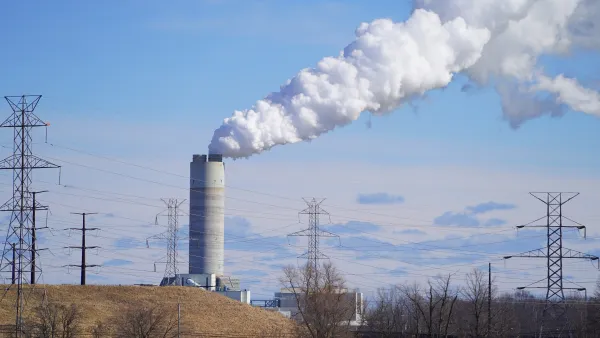
EPA erases limits on planet-warming pollution from power plants
Under Monday’s plan, power plants would still have some limits on how much mercury, arsenic and other contaminants they can emit.

Planetizen Federal Action Tracker
A weekly monitor of how Trump’s orders and actions are impacting planners and planning in America.

Chicago breaks ground on $3 billion megadevelopment
The new neighborhood, titled Foundry Park, will one day host 3,700 residences.

This MA town is drowning in its own sewage — and residents like it that way
Susan Murcott, a waste water expert, said if Carlisle didn't address their leaking sewage, the problem could turn “deadly.”

Dallas suburbs are turning their downtowns into small towns
Four Texas towns are embracing walkability and density in their downtowns.

Home batteries are ushering in an energy revolution
Batteries capable of storing solar energy can stabilize the grid during peaks and keep homes running on cloudy days.

A sneak peek at NYC’s Midtown Bus Terminal rebuild
The city will turn a deck used for storage during the construction process into a park once construction is complete.

FREE Course: Walkable City 1: Why Walkability?
After describing his path towards focusing on walkability as the essence of good planning, Jeff Speck marches through his five principal reasons for making more walkable places.
Reinventing Malls: Planning Alchemy—Turning Gray Fields Into Gold
The course focuses on the opportunities and imperatives that shape reinvention of mall sites.

City of Rosemead
Rutgers University, Edward J. Bloustein School of Planning and Public Policy
One Hundred Miles
The Architects Foundation
University of Cincinnati Online
Montrose County
The Pocatello Development Authority
The Urban Renewal Agency of the City of Pocatello