The new rules ban plants within one foot of homes and do not allow landowners to attach wooden fences to their homes.


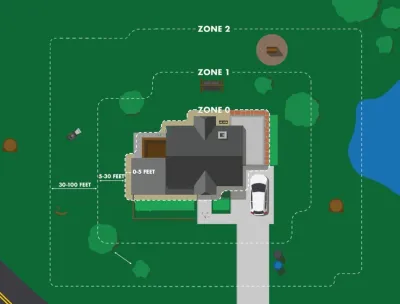
California’s Board of Forestry and Fire Protection approved new landscaping rules for landowners in “high-hazard” fire zones on Aug. 19. The new “Zone Zero” rules ban plants within one foot of homes and wooden sheds and combustible materials within five feet, the zone where experts say homes are most vulnerable to ignition from embers.
The new rules do not require residents to remove trees, but do ask landowners to trim tree branches back at least 10 feet from chimneys and 5 feet above roofs. The rules also forbid wooden fences attached to houses, Jocelyn Fiset reports for KTLA 5.
Residents will have five years to comply with the new policy. New construction must abide by the rules immediately.
Some landowners are concerned about the cost of tearing down their wooden fences, but others are optimistic that the new rules will help prevent fires, reports KTLA 5.
Read the full story: Strict new landscaping rules will impact millions of Californians in fire-prone areas

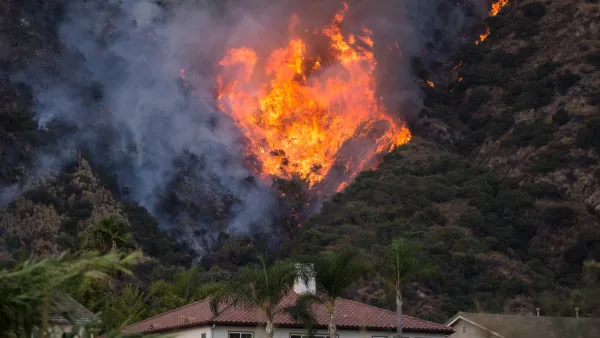
80% of California homes built between 2020-2022 are in high fire risk areas
In 2020, California wildfires destroyed nearly a fifth of homes they came in contact with.

Rethinking Wildfire Defense: How a Landscape Approach Can Protect Neighborhoods
Post-fire analysis of the Eaton Fire reveals that a landscape approach — including fire-resistant vegetation, home hardening, and strategic planning — can help reduce wildfire risk, challenging assumptions that trees and plants are primary fire hazards.

Denver Plans to Update Landscaping Regulations
The city will change its landscaping rules to prohibit “non-functional turf” and encourage native and climate-resilient vegetation.

Planetizen Federal Action Tracker
A weekly monitor of how Trump’s orders and actions are impacting planners and planning in America.

Data reveals that NYC’s bet on congestion pricing has paid off
After almost two years of the program, reports show positive impacts on traffic and air quality and no disruptions to parking.
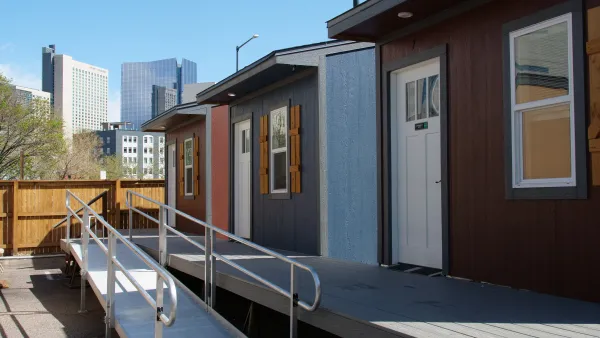
Denver is solving homelessness. Why aren't the rest of us?
Since 2023, Denver's street homeless population has decreased by 64%, proving that effective tools exist to support those in need of housing.

Michigan needs billions to save its water infrastructure. The state won't fund it
Michigan needs to invest $2.8 billion per year over the next 20 years to fix its water infrastructure. The FY 2027 budget allocates only $27.9 million.

Trump asks Supreme Court to allow border wall through Texas national park
Judge Kathleen Cardone previously blocked the Big Bend border wall project, and Texas’ Land Commissioner has spoken out against it as well.

This MA town is drowning in its own sewage — and residents like it that way
Susan Murcott, a waste water expert, said if Carlisle didn't address their leaking sewage, the problem could turn “deadly.”

FREE Course: Walkable City 1: Why Walkability?
After describing his path towards focusing on walkability as the essence of good planning, Jeff Speck marches through his five principal reasons for making more walkable places.
Reinventing Malls: Planning Alchemy—Turning Gray Fields Into Gold
The course focuses on the opportunities and imperatives that shape reinvention of mall sites.

City of Rosemead
Rutgers University, Edward J. Bloustein School of Planning and Public Policy
One Hundred Miles
The Architects Foundation
University of Cincinnati Online
Montrose County
Northern Illinois Transit Authority (NITA)
The Pocatello Development Authority