A city appeal has stayed a court order to halt the tax until it moves through a higher court.


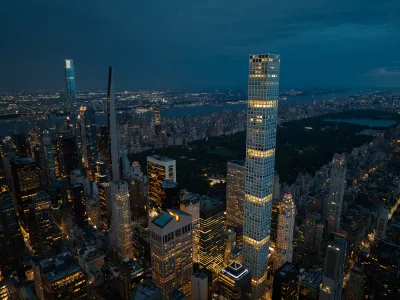
New York City's luxury second home tax is moving forward for now amid a heated court case granted temporary pause by an appeal.
Last Monday, a Staten Island judge temporarily blocked the rollout of the new tax, which is set to apply to secondary homes valued at $1 million or more (or one-, two- and three-family homes valued at more than $5 million). But the city moved to appeal the ruling, which automatically stayed the ruling until it can move through a higher court. As a result, the city's deadline to apply for an exemption by September 18 — extended from the original deadline of August 21 — remains in place.
Spectrum News NY1 reports that "Staten Island Judge Wayne Ozzi’s ruling came in response to a lawsuit filed by a group of city homeowners who maintain the Mamdani administration 'arbitrarily and capriciously foisted onto New York City residents the burden of proving they are not subject to the surcharge.'" President Trump also called the tax a "dangerous political 'experiment,'" claiming that he is looking to options for federal government intervention.
Read the full story, below.
Read the full story: Luxury second-home tax survives temporary court block, for now
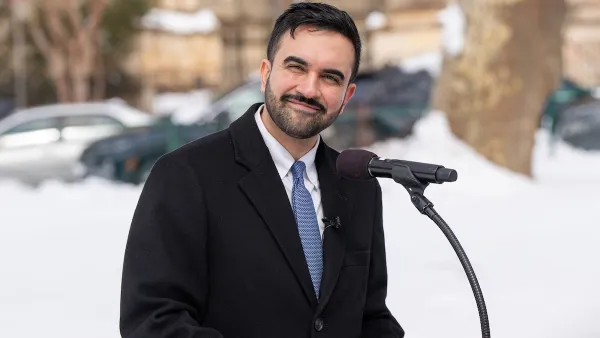
Mamdani’s pied-à-terre tax survives legal challenge
A panel of judges found that the plaintiffs failed to demonstrate injury as a result of New York City's implementation of the tax.

Exemption applications for NYC’s pied-à-terre tax see 55% success rate
The city sent nearly 40% of its initial pied-à-terre tax warnings erroneously.
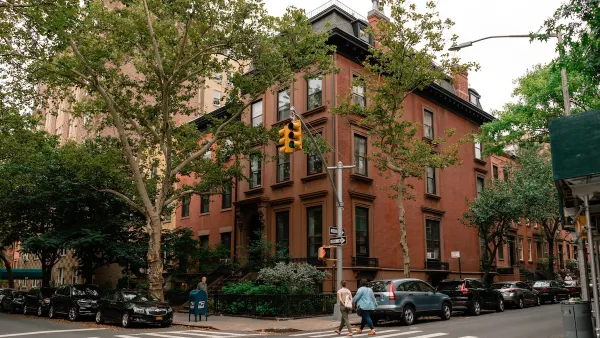
Mamdani sent nearly 6,000 pied-à-terre tax warnings to homes that didn’t qualify
A judge has ordered the administration to cancel thousands of pied-à-terre tax notices after it sent 35% of them erroneously.

Planetizen Federal Action Tracker
A weekly monitor of how Trump’s orders and actions are impacting planners and planning in America.

Eastern Nebraska is running out of electricity
Data centers and electrification are straining eastern Nebraska’s grid, throttling economic development.

Washington state to charge fee to drivers with fuel-efficient cars
Revenue from the fee will go towards supporting the state’s highways.

Instead of building new housing, LA developers are turning mansions into mega-mansions
In the richest areas, the number of houses valued at $30 million with demolition permits has skyrocketed since 2018.

Illinois considers spending $1 billion in taxpayer money on data center
A quantum computing campus and data center are currently under construction in Chicago.

As development costs rise, Boston moves to lessen affordable housing requirements
The Boston Zoning Commission and the City Council still need to approve Boston Mayor Michelle Wu’s proposed changes

FREE Course: Walkable City 1: Why Walkability?
After describing his path towards focusing on walkability as the essence of good planning, Jeff Speck marches through his five principal reasons for making more walkable places.
Reinventing Malls: Planning Alchemy—Turning Gray Fields Into Gold
The course focuses on the opportunities and imperatives that shape reinvention of mall sites.

City of Charlotte
City of Rosemead
Rutgers University, Edward J. Bloustein School of Planning and Public Policy
University of Michigan School for Environment and Sustainability (SEAS)
Hunter College, City University of New York (CUNY)
The Architects Foundation
City of Cambridge
The Pocatello Development Authority
The Urban Renewal Agency of the City of Pocatello