Residents of the Marina District are up in arms over a proposed housing development above a Safeway store.


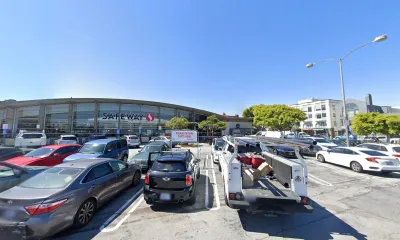
Opposition to a proposed 800-unit residential tower in San Francisco's Marina District highlights a generational divide over new housing between older, established homeowners and younger residents, reports Owen Tucker-Smith in the Wall Street Journal.
According to Tucker-Smith, "The tower that Align Real Estate wants to construct above the Safeway on Marina Boulevard is among San Francisco’s most recognizable buildings these days, and it hasn’t even been built yet." The building would tower above its neighbors in a neighborhood where the number of housing has actually dropped since 2010. The developer of the building is using a state law that mandates expedited approvals for mixed-income projects along commercial corridors.
While some residents say it will bring much-needed housing to the area, others say it is out of scale for the neighborhood. The Marina Community Association, which opposes the project, says that "the development is on the site of hazardous waste and that its approval cannot be streamlined according to the state law," and that the new units would overwhelm the sewage system.
"It does feel like a fight between people whose housing is settled for decades, versus people who are worried that they may never be able to own a home," said resident Konrad Posch.
Read the full story: A San Francisco Apartment Tower Ignites a Generational Fight Over Housing

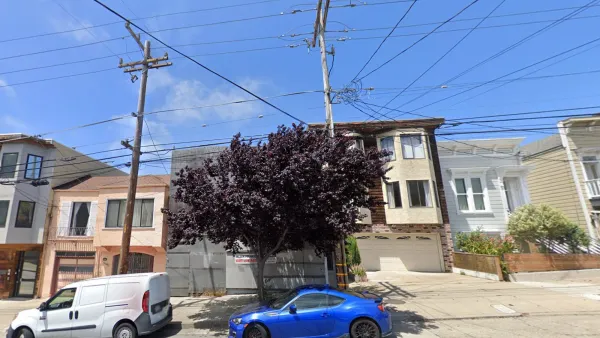
8-story tower is San Francisco's first project approved under new upzoning rules
Some neighbors call the project out of scale for the area, which has not grown beyond two- and three-story buildings in decades.
California Gives 15 Cities ‘Final Warning’ to Submit Mandatory Housing Plans
Communities are required to produce housing elements that accommodate sufficient housing for all income levels.
LA Delays State TOD Law to 2030 With its Own, Lower-density Plan
SB 79 allows cities to delay its implementation if they come up with alternate plans to boost density while retaining local control near transit.

Planetizen Federal Action Tracker
A weekly monitor of how Trump’s orders and actions are impacting planners and planning in America.

The state-sanctioned urbicide of Austin
People don’t kill cities. Freeways do.

US to reduce Colorado River water deliveries to Mexico
A new Colorado Treaty amendment reduces Mexico’s Colorado River water allocation by 250,000 acre feet.

Nation's most wind-powered state turns to coal as data centers increase energy demand
For the first time in decades, Iowa has increased its generation of coal power.

NYC cools commuters with city's first rain garden above a bus stop
New York City officials say the plants in the rain garden can absorb 16 gallons of rainwater during heavy storms.

Brightline West’s future may rely on $6 billion federal loan
The company has until Nov. 2 to make a $400 million equity investment into its proposed high-speed rail line.

FREE Course: Walkable City 1: Why Walkability?
After describing his path towards focusing on walkability as the essence of good planning, Jeff Speck marches through his five principal reasons for making more walkable places.
Reinventing Malls: Planning Alchemy—Turning Gray Fields Into Gold
The course focuses on the opportunities and imperatives that shape reinvention of mall sites.

Greater Baltimore Committee
Eagle County Government
Harvard University Graduate School of Design
The Architects Foundation
University of Cincinnati Online
The Pocatello Development Authority
The Urban Renewal Agency of the City of Pocatello
Journal of the American Planning Association