Increased awareness of infrastructure issues combined with aging equipment and more extreme weather are leading more public works officials to feel their local systems are 'unsatisfactory.'


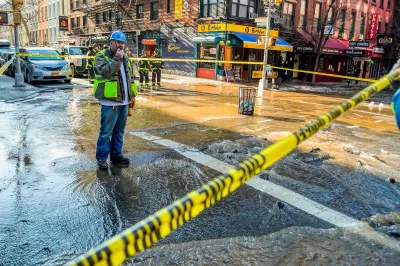
According to a survey in the National League of Cities’ 2026 Municipal Infrastructure Conditions Report, the confidence of public works and city officials in their water systems has dropped significantly, with just 39% of officials surveyed saying their own water and sewer infrastructure is 'satisfactory,' down from 82% in 2022.
As Robyn Griggs Lawrence explains in Smart Cities Dive, no officials called their water systems 'unsatisfactory' in 2022; in 2026, that number jumped to 39%.
The report notes that one factor in lower ratings may be increased funding for studies and improvements provided by the 2021 Infrastructure Investment and Jobs Act. "Engineering studies and asset inventories, required to apply for the funding, heightened many cities’ awareness of water infrastructure issues that were not fully documented before, according to the report." Cities are also being held to stricter standards when it comes to lead pipe replacement and PFAS contamination.
Aging infrastructure and more extreme weather are also straining local water systems and putting pressure on increasingly inadequate networks. "Cities are leveraging federal programs, such as a Bureau of Reclamation funding pool supporting surface or groundwater storage projects, to address water and sewer infrastructure quality, according to the report."
FULL STORY: Cities sound alarm on crumbling water infrastructure

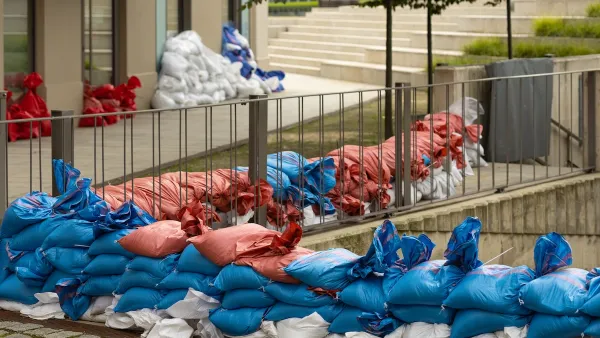
How US Communities Are Building Resilience Against Flooding
Flooding causes over $400 billion in damage in the United States every year.
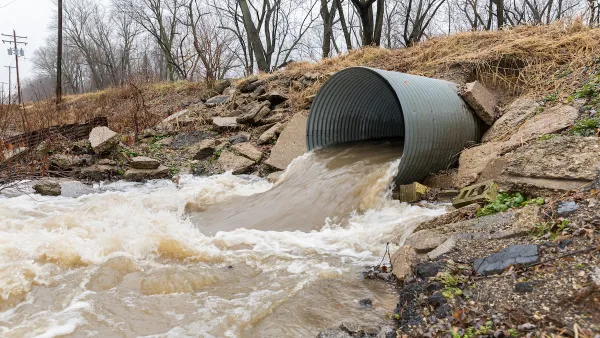
Southern Water Infrastructure at Risk From Climate Impacts
A water main breaks somewhere in the United States every two minutes, according to an estimate from the American Society of Civil Engineers.
LA’s ‘Spongy’ Infrastructure Captured Almost 9 Billion Gallons of Water
The city is turning away from stormwater management practices that shuttle water to the ocean, building infrastructure that collects and directs it underground instead.

Planetizen Federal Action Tracker
A weekly monitor of how Trump’s orders and actions are impacting planners and planning in America.

The state-sanctioned urbicide of Austin
People don’t kill cities. Freeways do.

US to reduce Colorado River water deliveries to Mexico
A new Colorado Treaty amendment reduces Mexico’s Colorado River water allocation by 250,000 acre feet.

5 New England states march closer to 800 megawatt wind energy project
Securing federal approval for the project may be complicated under the Trump administration, which has historically been hostile towards domestic wind power.

Baltimore to break ground on $50 million Transit Priority Project
The project will bring faster bus trips, safer streets and better bike connections to Baltimore.

Airbnb launches $250 million 'last-dollar financing' housing accelerator, makes first investment in Austin
The company will put $6.4 million towards affordable housing development in Texas’ capital.

FREE Course: Walkable City 1: Why Walkability?
After describing his path towards focusing on walkability as the essence of good planning, Jeff Speck marches through his five principal reasons for making more walkable places.
Reinventing Malls: Planning Alchemy—Turning Gray Fields Into Gold
The course focuses on the opportunities and imperatives that shape reinvention of mall sites.

Eagle County Government
Harvard University Graduate School of Design
Nashville Planning Department
The Architects Foundation
University of Cincinnati Online
The Pocatello Development Authority
The Urban Renewal Agency of the City of Pocatello
Journal of the American Planning Association