Today, the 'futuristic' ride still spews out gas fumes. Disney says it is testing new electric prototypes.


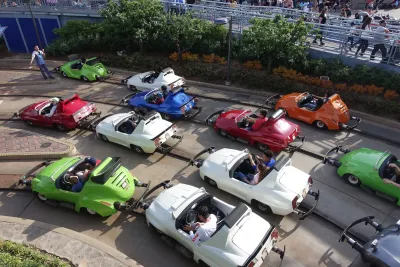
Disneyland will soon begin testing electric prototypes on its Autopia ride, an attraction in Tomorrowland that lets riders "drive" tiny cars around a track. For Matt Novak of Gizmodo, this begs the question: what took so long?
Autopia was born in 1955, when Tomorrowland purported to portray the future of 1986. "But the Autopia ride has largely remained the same since it was first introduced, with a few incremental improvements here and there. In 1977, for example, a Disney engineer replaced the bearings of the cars’ axles with a more durable bearing material, according to an annual report from NASA highlighting how space tech has improved private industry."
But aside from adding guardrails to prevent the ride from being a free-for-all, little else has changed. The cars have remained gas-powered, even though other parks switched: Hong Kong Disneyland's Autopia ride was fully electric before it closed in 2016. In 2024, Disneyland said the ride would go fully electric by 2026, but no progress was made on that plan. Even if the ride switches to hybrid vehicles, is it truly a vision of the "future"?
FULL STORY: Why the Hell Has It Taken So Long for Disneyland’s Autopia to Go Electric?

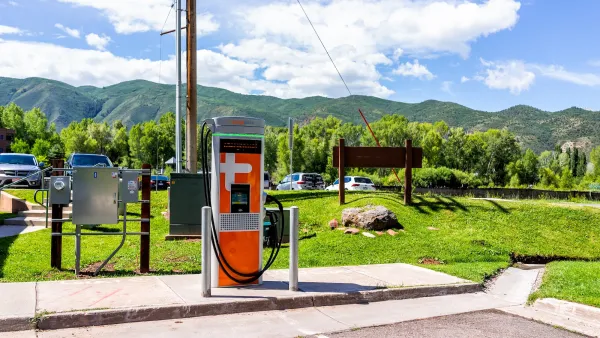
USDOT Cancels Over $100 Million in Sustainable Transportation Funds for Colorado
The administration is pulling funding for what it calls “woke” and “redundant” clean energy projects including EV charging infrastructure.
How New Federal Rule Could Impact EV Adoption
An adjustment to federal pollution limits will require a greater share of low-carbon vehicles, but the rule also gives automakers some flexibility in deploying electric and hybrid cars.
Hybrids Regain in Popularity Amid EV Cost and and Charging Concerns
After their sales dropped thanks to the introduction of all-electric vehicles, hybrid gas-electric cars are seeing a renaissance among consumers.

Planetizen Federal Action Tracker
A weekly monitor of how Trump’s orders and actions are impacting planners and planning in America.

The state-sanctioned urbicide of Austin
People don’t kill cities. Freeways do.

US to reduce Colorado River water deliveries to Mexico
A new Colorado Treaty amendment reduces Mexico’s Colorado River water allocation by 250,000 acre feet.

Guerilla urbanists are building DIY bus stop benches in Chicago
A before-and-after of one of the bus stops with a new bench. The new benches are not officially sanctioned or permitted, but the residents who placed them hope they will be the start of a network of DIY benches across the city.

Mamdani overhauls NYC's Vision Zero plan with 100 new policy goals
The overhaul aims to reduce traffic deaths and make streets safer for pedestrians, cyclists and drivers through lower speed limits, new safety infrastructure and more.

Amtrak not solely to blame for New Jersey commuter rail's unreliability, report finds
A new study from the Garden State Initiative found that NJ Transit’s budget grew 20% across a 4 year period, but reliability declined significantly over the same period.

FREE Course: Walkable City 1: Why Walkability?
After describing his path towards focusing on walkability as the essence of good planning, Jeff Speck marches through his five principal reasons for making more walkable places.
Reinventing Malls: Planning Alchemy—Turning Gray Fields Into Gold
The course focuses on the opportunities and imperatives that shape reinvention of mall sites.


Eagle County Government
Harvard University Graduate School of Design
Nashville Planning Department
The Architects Foundation
University of Cincinnati Online
The Pocatello Development Authority
The Urban Renewal Agency of the City of Pocatello
Journal of the American Planning Association