A neighborhood 25 years in the making blends Flemish vernacular architecture with walkability and affordability.


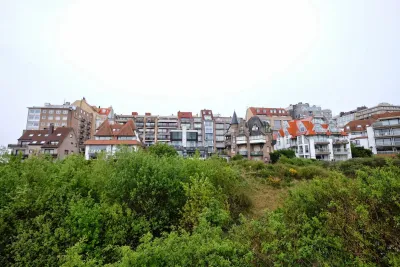
An 'urban village' in a Belgian city is proving that social housing can be beautiful, writes Robert Steuteville in CNU's Public Square. According to Steuteville, "The Village of Heulebrug is a 66-acre urban village, an extension of the City of Knokke-Heist, Belgium, that delivers social and affordable housing along with exceptionally competent vernacular architecture."
The village is built around a central tower, with narrow streets emanating out in a modified grid. "Northern and western edges of Heulebrug seamlessly connect to the existing urban fabric, while the southern and eastern edges face the City’s greenbelt. A trail and right-of-way preserve views of the open space, which the planners describe as a 'second coastline.'"
Heulebrug offers both market-rate and affordable housing, including publicly owned social housing. The first phase of the project began in 2002 with 185 building plots, 26 social housing units, and 124 private apartments, some of which are income-restricted. Plots in the second phase, begun in 2017, were allocated to young resident families and include conditions such as a 20-year ban on resale to discourage speculation. At present, "The village is about 80 percent built out with 851 living spaces, civic uses, and a small amount of commercial space."
While Modernist design is now more popular, former mayor Leopold Lippens supported the idea of using vernacular Flemish architecture for Heulebrug. The design team developed a "simple yet precise one-page code of urban and architectural standards" that govern aspects like roofs, windows, doors, exterior walls and other elements. For Steuteville, "This village demonstrates that a municipally-sponsored development designed to address the housing needs of lower-income residents can transcend the conventional perception of a 'housing project.'"
The success of the village has also prompted a more ambitious affordable housing policy for the whole city, said engineer-architect Mathias Delrue.
FULL STORY: Neighborhood combines affordable housing with design excellence


Seattle social housing agency can now issue bonds
The new Seattle Social Housing Developer funds affordable housing through a tax on the city's highest-paying companies.
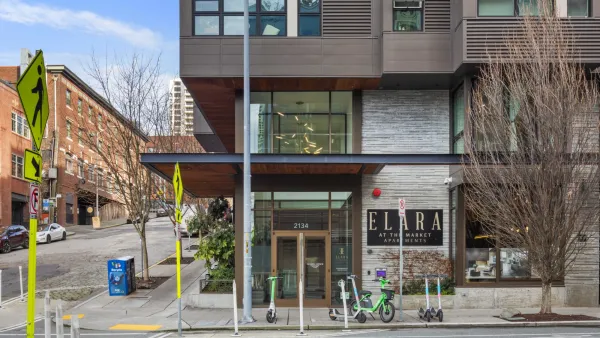
Seattle's first social housing building gets 10,000 resident applications
The Elara at the Market development includes 150 affordable housing units.
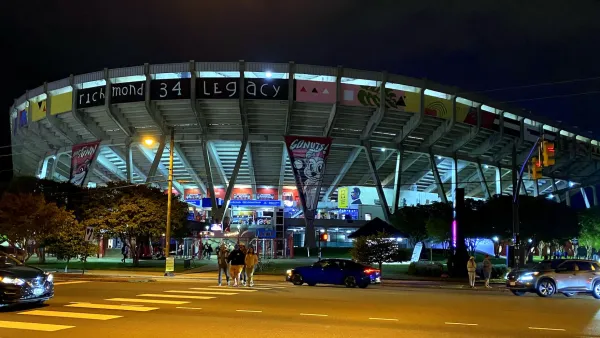
Richmond's new 'stadium district' will include hundreds of homes, offices, jobs
The city is planning for a neighborhood revival in the area around a new baseball stadium.

Planetizen Federal Action Tracker
A weekly monitor of how Trump’s orders and actions are impacting planners and planning in America.

The state-sanctioned urbicide of Austin
People don’t kill cities. Freeways do.

US to reduce Colorado River water deliveries to Mexico
A new Colorado Treaty amendment reduces Mexico’s Colorado River water allocation by 250,000 acre feet.

5 New England states march closer to 800 megawatt wind energy project
Securing federal approval for the project may be complicated under the Trump administration, which has historically been hostile towards domestic wind power.

Baltimore to break ground on $50 million Transit Priority Project
The project will bring faster bus trips, safer streets and better bike connections to Baltimore.

Airbnb launches $250 million 'last-dollar financing' housing accelerator, makes first investment in Austin
The company will put $6.4 million towards affordable housing development in Texas’ capital.

FREE Course: Walkable City 1: Why Walkability?
After describing his path towards focusing on walkability as the essence of good planning, Jeff Speck marches through his five principal reasons for making more walkable places.
Reinventing Malls: Planning Alchemy—Turning Gray Fields Into Gold
The course focuses on the opportunities and imperatives that shape reinvention of mall sites.


Eagle County Government
Harvard University Graduate School of Design
Nashville Planning Department
The Architects Foundation
University of Cincinnati Online
The Pocatello Development Authority
The Urban Renewal Agency of the City of Pocatello
Journal of the American Planning Association