The Modal Parity in Permitting Act aims to reduce a “structural disadvantage in the permitting process” and level the playing field between transit, rail and highway projects.


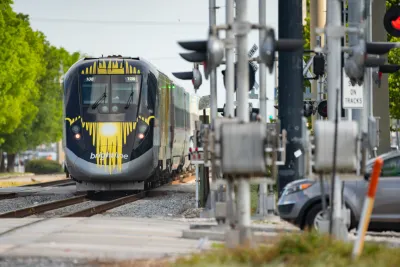
Last week, Rep. Dina Titus, D-Nev, introduced a new bipartisan bill in the U.S. House of Representatives aimed at aligning the permitting process for transit and passenger rail projects more closely with procedures already in place for highway construction. As reported by Constructionowners.com, the Modal Parity in Permitting Act “would allow transit and rail projects to acquire property before completing the National Environmental Policy Act review process — a step currently permitted for highway projects but not for transit initiatives.”
“The bill… is expected to be considered as part of the next surface transportation legislation package, which will outline federal funding and policy priorities for highways and mass transit systems,” Constructionowners.com reports. It aims to reduce the relative disadvantage current rules place transit and rail projects at in comparison to highway projects. The bill was co-sponsored by Rep. Robert Bresnahan Jr., R-Pa., and Rep. Laura Friedman, D-Calif, and has garnered backing by advocacy organizations including the American Public Transportation Association, The Bus Coalition and others.
“For too long, public transit and passenger rail projects have faced a structural disadvantage in the permitting process — highway projects can acquire land before NEPA is complete, while [Federal Transit Administration] and [Federal Railroad Administration] projects cannot,” said APTA president and CEO Paul Skoutelas.
Read the full story below.
Read the full story: House Bill Seeks to Streamline Transit and Rail Permitting Process

Planetizen Federal Action Tracker
A weekly monitor of how Trump’s orders and actions are impacting planners and planning in America.

Eastern Nebraska is running out of electricity
Data centers and electrification are straining eastern Nebraska’s grid, throttling economic development.

Study reveals best places in the U.S. for cycling, walking
New research from Streetlight Data examines bicycle and pedestrian miles per capita in the 100 largest U.S. cities by population.

Next-generation nuclear reactors are coming to Texas
The reactors will not require towering containment structures thanks to new safety features.

California distributes $1.3 billion to prevent transit service cuts, bolster projects
Twenty-eight projects across California received a portion of the funding.

Pennsylvania Democrats have 15 affordability, clean energy bills for flipped state Senate
Bills in consideration include a bill supporting geothermal energy and a bill supporting solar on warehouses.

FREE Course: Walkable City 1: Why Walkability?
After describing his path towards focusing on walkability as the essence of good planning, Jeff Speck marches through his five principal reasons for making more walkable places.
Reinventing Malls: Planning Alchemy—Turning Gray Fields Into Gold
The course focuses on the opportunities and imperatives that shape reinvention of mall sites.

City of Charlotte
City of Rosemead
Rutgers University, Edward J. Bloustein School of Planning and Public Policy
University of Michigan School for Environment and Sustainability (SEAS)
Hunter College, City University of New York (CUNY)
The Architects Foundation
City of Cambridge
The Pocatello Development Authority
The Urban Renewal Agency of the City of Pocatello