Grazing as a wildfire prevention tool is one of the most eco-friendly ways to clear dry brush and remove invasive plants.


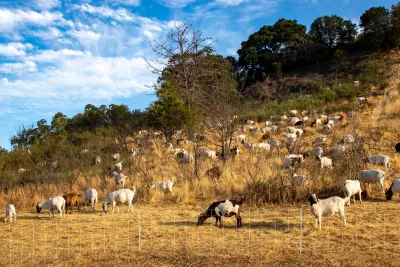
The city of Los Angeles is deploying a herd of 500 goats to clear overgrown vegetation in the Sepulveda Basin Wildlife Reserve, an area that will also be used as training facilities for the 2028 Olympics and Paralympics.
According to a Smart CIties Dive article by Robyn Griggs Lawrence, the goat grazing pilot program is meant to stop invasive plants without pesticides and reduce wildfire risk from dry brush.
According to Lawrence, “Los Angeles joins a host of other California cities, including San Diego, Oakland and West Sacramento, that have brought in goats to chew through weeds that pose fire risk.”
A 2014 review of goat grazing as a wildfire prevention tool called it “probably the most ecologically sound technique for creating discontinuities in fuels, mainly at the shrubby layer, and disrupting fuel ladders.”
Read the full story: Before the world arrives for the LA28 Olympics, the goats are going to work

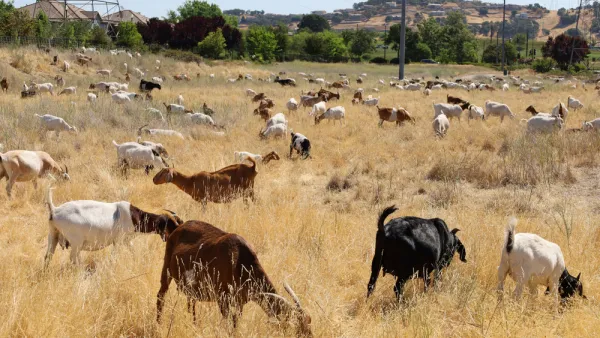
How Goats Aid in Wildfire Prevention
Grazing goats can quickly and effectively clear steep or hard-to-reach hillsides of invasive, fire-fueling vegetation.
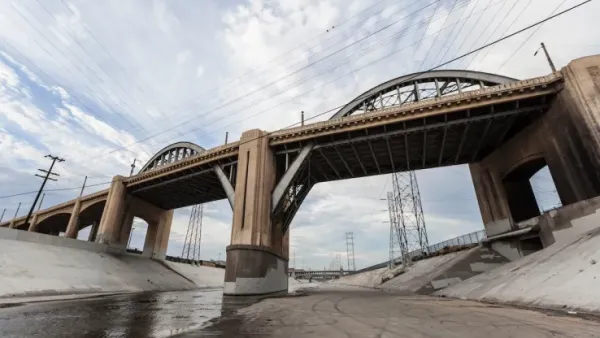
Don't Cement Our Future: Rethinking LA’s Landscape After Fire (and Floods)
A call for regenerative approaches to rebuilding that work with nature rather than against it.
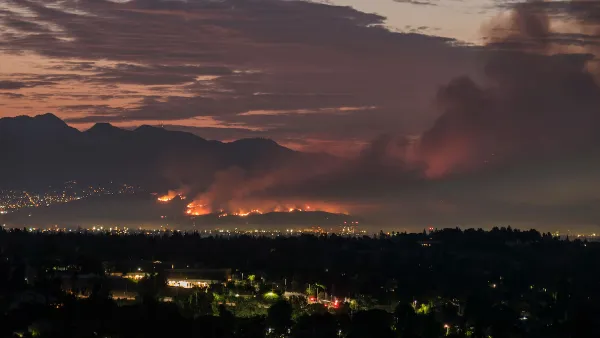
'Place Shock' and the Ecology of Fear
How to conceive of rebuilding places amid sudden change in a region known for its “ecology of fear?” As the city embarks on the arduous task of rebuilding, the question arises: how do we reconcile the imperatives of safety and sustainability with the deeply ingrained human desire for continuity, for a sense of rootedness in the familiar?

Planetizen Federal Action Tracker
A weekly monitor of how Trump’s orders and actions are impacting planners and planning in America.

California plans to bury El Niño’s downpour
If the state plays its cards right, it may be able to store a billion acre-feet of El Niño’s water in aquifers.

Desperate measures: Advocates weigh draining Lake Powell to fill Colorado River
Draining the reservoir could reduce evaporation losses by a couple hundred thousand acre-feet.

California’s ‘unrecognizable’ water plan may go down the drain
After four years of regulatory processes, water agencies say the plan to overhaul how cities and farms take water from the Sacramento-San Joaquin Delta has changed dramatically.

Chicago Avenue bridge construction delays enrages city leaders
The bridge has been closed since 2025. The city originally aimed to re-open it in December, and now expects to finish construction in 2027.

NYC bus network redesign speeds up Queens buses
Rush routes have seen a 4.6% speed increase after the redesign.

FREE Course: Walkable City 1: Why Walkability?
After describing his path towards focusing on walkability as the essence of good planning, Jeff Speck marches through his five principal reasons for making more walkable places.
Reinventing Malls: Planning Alchemy—Turning Gray Fields Into Gold
The course focuses on the opportunities and imperatives that shape reinvention of mall sites.

City of Rosemead
Rutgers University, Edward J. Bloustein School of Planning and Public Policy
One Hundred Miles
Hunter College, City University of New York (CUNY)
The Architects Foundation
University of Cincinnati Online
City of Cambridge
Montrose County
The Pocatello Development Authority