A coalition of state and local officials is calling on Congress to change how federal transportation funds are allocated to give local governments more control.


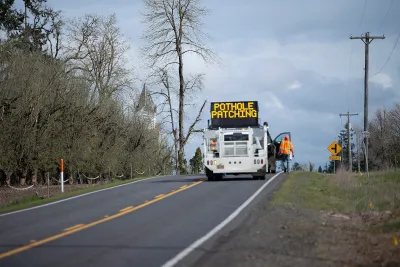
State and local leaders are calling for more federal transportation funding to their agencies, which control and maintain 43 percent of the Federal-Aid Highway System, yet receive only 16 percent of federal transportation funding.
Now, a bill introduced by U.S. Reps. Kristen McDonald Rivet, D-Mich., and Rob Bresnahan, R-Pa. would “streamline access to funds for regional priority projects, improve accountability and focus on road safety,” writes Dan Zukowski in Smart Cities Dive.
In a letter, a coalition of officials from around the country called on Congress to “deliver federal formula funding fairly based on the ownership and the national goals of the system including condition, performance and safety.” The coalition is particularly focused on the Surface Transportation Block Grant program, whose funding “may be used for any federal-aid highway, bridge or tunnel project, including pedestrian and bicycle infrastructure, transit capital projects and intercity bus terminals.”
FULL STORY: Local leaders want more say in federal transportation funding

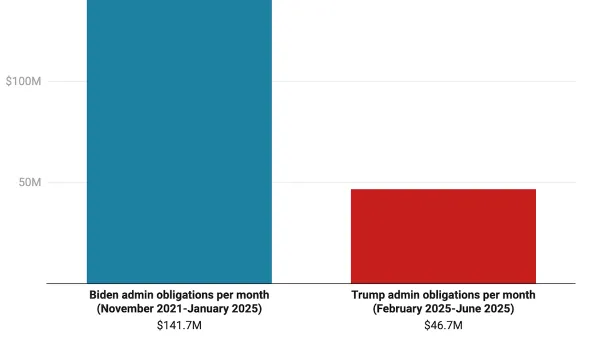
Trump Distributing DOT Safety Funds at 1/10 Rate of Biden
Funds for Safe Streets and other transportation safety and equity programs are being held up by administrative reviews and conflicts with the Trump administration’s priorities.
Analysis: What does America want from surface transportation reauthorization?
Over 13,000 comments were submitted in the federal Request for Information on surface transportation reauthorization. We analyzed all of them.
Follow Planetizen’s analysis of surface transportation reauthorization
Follow along as we explore the upcoming surface transportation reauthorization bill and its potential impacts on US transportation infrastructure in the coming years.

Planetizen Federal Action Tracker
A weekly monitor of how Trump’s orders and actions are impacting planners and planning in America.

The state-sanctioned urbicide of Austin
People don’t kill cities. Freeways do.

US to reduce Colorado River water deliveries to Mexico
A new Colorado Treaty amendment reduces Mexico’s Colorado River water allocation by 250,000 acre feet.

5 New England states march closer to 800 megawatt wind energy project
Securing federal approval for the project may be complicated under the Trump administration, which has historically been hostile towards domestic wind power.

Baltimore to break ground on $50 million Transit Priority Project
The project will bring faster bus trips, safer streets and better bike connections to Baltimore.

Airbnb launches $250 million 'last-dollar financing' housing accelerator, makes first investment in Austin
The company will put $6.4 million towards affordable housing development in Texas’ capital.

FREE Course: Walkable City 1: Why Walkability?
After describing his path towards focusing on walkability as the essence of good planning, Jeff Speck marches through his five principal reasons for making more walkable places.
Reinventing Malls: Planning Alchemy—Turning Gray Fields Into Gold
The course focuses on the opportunities and imperatives that shape reinvention of mall sites.

Eagle County Government
Harvard University Graduate School of Design
Nashville Planning Department
The Architects Foundation
University of Cincinnati Online
The Pocatello Development Authority
The Urban Renewal Agency of the City of Pocatello
Journal of the American Planning Association