A 2020 law allows cities to permit residential developments on formerly industrial land.


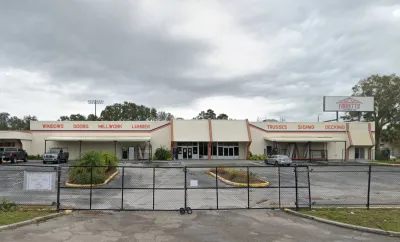
The first project approved under a 2020 Florida law that lets cities convert formerly industrial land to housing broke ground in St. Petersburg, reports Jesse Mendoza in Florida Politics.
The project is the largest affordable housing development approved in St. Petersburg to date and could offer a useful model for other cities. The 6.9-acre site will include 264 housing units for multiple income levels.
“Total development costs are estimated at $94.2 million and will be financed through a combination of public and private sources, including $9.7 million from the South St. Pete Community Redevelopment Area fund, funding from Pinellas County, a HUD construction loan and developer equity.” When complete, it will be owned and managed by the Pinellas County Housing Authority.
Read the full story: St. Petersburg breaks ground on first Florida housing project approved under industrial-land law


San Francisco Mayor’s ‘Family Zoning’ Plan Faces Pushback, Displacement Concerns
Newly proposed legislation aims to protect long-term tenants from displacement caused by Mayor Lurie’s proposed zoning reform plan, which would allow for more housing construction in parts of the city.

San Diego wants to limit upzoning law to just 16% of transit-adjacent parcels
The city's planning director says some areas are unfit for immediate upzoning due to a lack of resources or hazards such as wildfire risk.
Five simple zoning changes that any city can make to increase housing affordability
Zoning for more affordable housing is not rocket science, says Donald Elliot, author of "An Even Better Way to Zone." Here’s his five-step guide to getting started.

Planetizen Federal Action Tracker
A weekly monitor of how Trump’s orders and actions are impacting planners and planning in America.

The state-sanctioned urbicide of Austin
People don’t kill cities. Freeways do.

Colorado’s Largest Data Center Could Rise Next to Homes — Without a Public Hearing
The proposed campus would consume 11 times the power of Denver International Airport; as it has across the country, opposition mounts.

Judges permit Denver to divert 77,000 acre feet from the Colorado River for reservoir expansion
Overuse and climate change have caused the Colorado River’s water levels to plummet.

Amtrak, CN end decades-long dispute with eight-year agreement
The new operating agreement establishes an updated framework for the companies to work together, including processes to resolve disputes.

Raised interest rates may kill financially vulnerable construction projects
The chief economist at ConstructConnect warns that if construction project owners are negatively impacted by the raised rates, it could result in delayed payments to contractors.

FREE Course: Walkable City 1: Why Walkability?
After describing his path towards focusing on walkability as the essence of good planning, Jeff Speck marches through his five principal reasons for making more walkable places.
Reinventing Malls: Planning Alchemy—Turning Gray Fields Into Gold
The course focuses on the opportunities and imperatives that shape reinvention of mall sites.

KFH Group Inc.
Greater Baltimore Committee
Eagle County Government
The Architects Foundation
University of Cincinnati Online
The Pocatello Development Authority
The Urban Renewal Agency of the City of Pocatello