While difficult to estimate for individual homes, experts argue that home buyers should have access to data about flood and wildfire risk, extreme heat, and other climate hazards in the area.



In November, real estate website Zillow removed the ‘climate risk data’ on its listings amid questions about the accuracy of flood risk data. The removed data included far more than flood risk. It also showed wildfire risk, sea level rise, air quality, and extreme heat exposure.
“Now, a climate policy expert in California is working to put data back in buyers’ hands,” writes Claire Barber in Inside Climate News.
Neil Matouka is developing a proof of concept plugin that provides climate data to replace what Zillow removed. “Matouka’s plugin includes publicly available data from the state of California and federal agencies, whose extensive methods are readily available online. Overall, experts tend to agree on the utility of both private and public data sources for climate risk data, even with needed improvements.”
Experts say home-by-home risk predictions are “notoriously difficult,” but the data can still provide information about “standing potential risks in the area,” says Matouka.
FULL STORY: A California Climate Expert Is Working to Restore Climate Risk Scores Deleted by Zillow

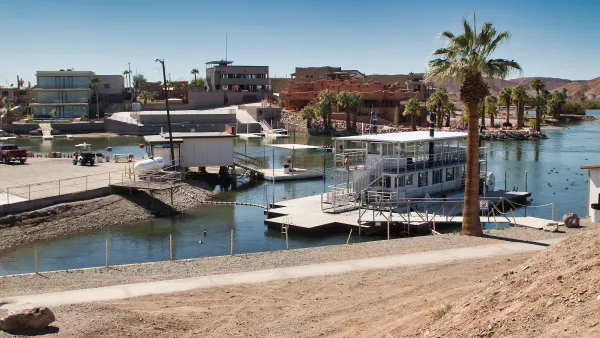
Arizona had its hottest spring in 131 years
Average March temperatures across the state were 12.5 degrees above normal.

Study: Pavement covers 40% of Phoenix
A new study reveals how ultrafine particles emitted by pavement worsen air quality.
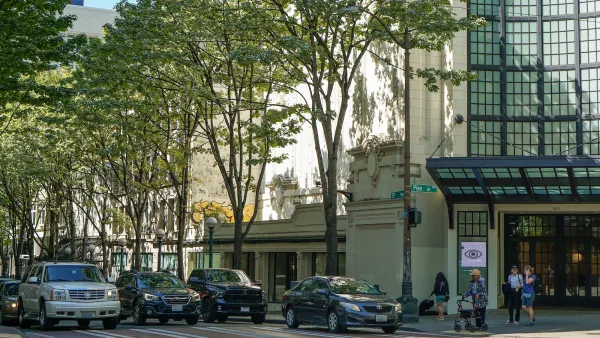
Washington Urban Forestry Program Faces 'Existential' Budget Cut
A proposed budget eliminates funding for a key urban forestry program that funds greening efforts across the state.

The state-sanctioned urbicide of Austin
People don’t kill cities. Freeways do.

US to reduce Colorado River water deliveries to Mexico
A new Colorado Treaty amendment reduces Mexico’s Colorado River water allocation by 250,000 acre feet.

New Jersey’s second-largest city bans standalone data centers
Jersey City will continue to allow co-location facilities, such as those meant for research institutions that store their own data.

Amtrak not solely to blame for New Jersey commuter rail's unreliability, report finds
A new study from the Garden State Initiative found that NJ Transit’s budget grew 20% across a 4 year period, but reliability declined significantly over the same period.

EPA erases limits on planet-warming pollution from power plants
Under Monday’s plan, power plants would still have some limits on how much mercury, arsenic and other contaminants they can emit.

Phoenix announces new on-demand transit service, more frequent RAPID buses
Both new services will launch in October, and are part of Phoenix's Project Effective Access Solutions for Easing Congestion.

FREE Course: Walkable City 1: Why Walkability?
After describing his path towards focusing on walkability as the essence of good planning, Jeff Speck marches through his five principal reasons for making more walkable places.
Reinventing Malls: Planning Alchemy—Turning Gray Fields Into Gold
The course focuses on the opportunities and imperatives that shape reinvention of mall sites.

Eagle County Government
Harvard University Graduate School of Design
Nashville Planning Department
The Architects Foundation
University of Cincinnati Online
The Pocatello Development Authority
The Urban Renewal Agency of the City of Pocatello
Journal of the American Planning Association