While officials tout the return of coal power as the answer to the affordability crisis, critics point to America’s aging coal infrastructure as a pain point in its return.


The Trump administration has vowed to keep coal plants open in an effort to meet surging electricity and consumer costs, MSN reports. “The goal is 100% open,” Jennifer A. Dlouhy and Will Wade reported Interior Secretary Doug Burgum stating.
US coal consumption has experienced significant decline due to the shift toward cheaper alternatives, like natural gas, wind and solar. Coal once accounted for more than half of American electricity generation. In 2025 it accounted for 17 percent.
Andy Blumenfeld, director of data analytics at McCloskey by Opis weighed in, noting that continuing coal power generation is only a short term strategy due to the significant maintenance required to maintain the nation’s stable of aging plants, which the Department of Energy has already set aside $525 million to begin addressing. “We need the power, and the coal units are there now. But in the long term, they’re up against an aging coal fleet,” said Blumenfeld.
Read the full story below.
Read the full story: Trump Officials Vow to Keep All US Coal Plants Running

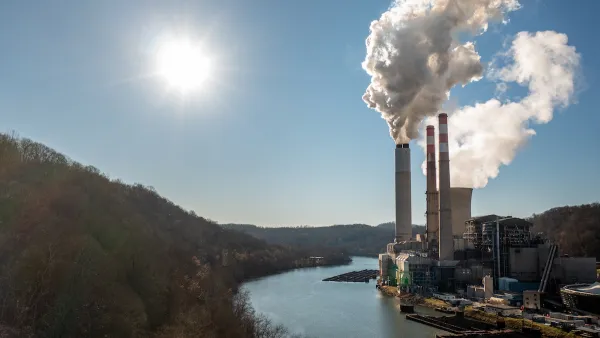
Red States Challenge Biden Rules That Threaten Coal Power Plants
The publication in the Federal Register on May 9 of the Environmental Protection Agency's New Source Performance Standards for Greenhouse Gas Emissions from new power plants triggered the filing of 25 lawsuits from Republican-led states.
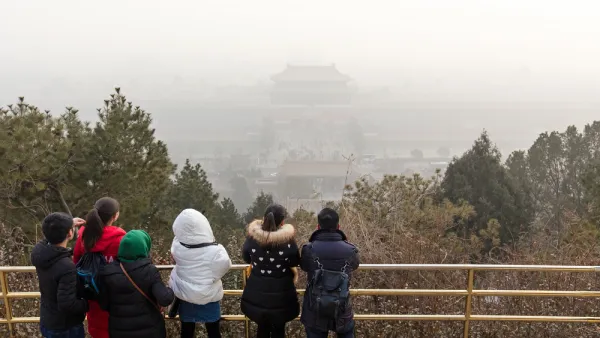
Spare the Air: Beijing to Drastically Reduce Coal Use
Beijing promises "extraordinary" measures to reduce pollution in the infamously smoggy city.
Coal Industry: Down but Not Out
It's easy to focus on the shrinking market share and layoffs in the coal industry and see the demise of the industry, but construction of new coal burning power plants is still booming in countries like China and India.

Planetizen Federal Action Tracker
A weekly monitor of how Trump’s orders and actions are impacting planners and planning in America.

California plans to bury El Niño’s downpour
If the state plays its cards right, it may be able to store a billion acre-feet of El Niño’s water in aquifers.

Chicago breaks ground on $3 billion megadevelopment
The new neighborhood, titled Foundry Park, will one day host 3,700 residences.

Satanic place names
From streams and lakes to valleys and canyons, I mapped more than 1,000 places named after the Devil.

California High-Speed Rail Authority CEO resigns after $600,000 scandal
Under Ian Choudri, the authority used taxpayer dollars to fund first class flights and trips to nightclubs.

Want to study the Missouri River? Soon, you may need unanimous approval from 10 states
Legislation would require 10 governors’ permission to study or build projects moving water outside the basin.

FREE Course: Walkable City 1: Why Walkability?
After describing his path towards focusing on walkability as the essence of good planning, Jeff Speck marches through his five principal reasons for making more walkable places.
Reinventing Malls: Planning Alchemy—Turning Gray Fields Into Gold
The course focuses on the opportunities and imperatives that shape reinvention of mall sites.


City of Rosemead
Rutgers University, Edward J. Bloustein School of Planning and Public Policy
One Hundred Miles
Hunter College, City University of New York (CUNY)
The Architects Foundation
University of Cincinnati Online
City of Cambridge
Montrose County
The Pocatello Development Authority