A state law seeks to protect workers who provide services to unhoused residents, regardless of where they live.


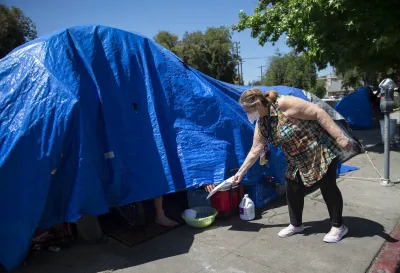
A California law that takes effect on January 1 prohibits cities from taking legal action against outreach workers who provide services to unhoused people, whether or not the people they serve live in an illegal encampment or location.
As Marisa Kendall explains in CALmatters, “the law says cities cannot bar people or organizations from providing homeless residents with legal services, medical care or things needed for survival, such as food, water, blankets, pillows and materials to protect themselves from the elements.”
The law seeks to protect service workers who are sometimes caught in the crosshairs of hostile policies, with the city of Fremont briefly attempting to make it illegal to help people in illegal encampments. “ts city council later walked back that language — after CalMatters first reported it — but it made a lasting impression on state legislators.”
FULL STORY: Cities can’t punish outreach workers for helping homeless Californians under new law

Judge halts 'hasty' HUD changes to homelessness grants
Service providers said the sudden changes would have imperiled thousands of Americans and forced more people into homelessness.
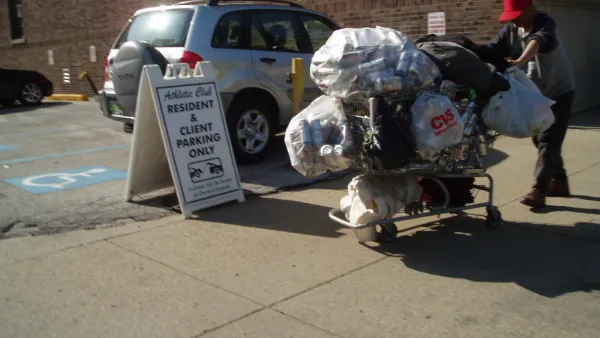
Indiana bans public homelessness
A new law prohibits sleeping or camping on public property.
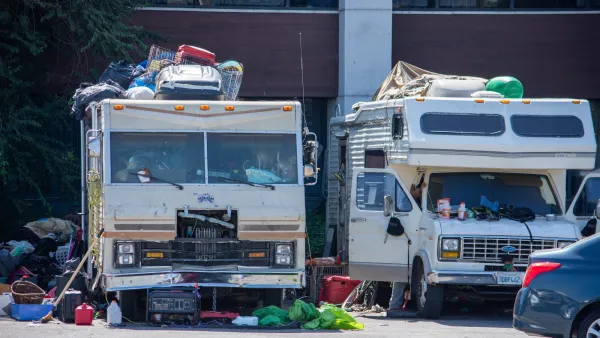
Salt Lake City weighs ban on sleeping in cars
A proposed city ordinance would restrict people from sleeping in vehicles on public property.

The state-sanctioned urbicide of Austin
People don’t kill cities. Freeways do.

US to reduce Colorado River water deliveries to Mexico
A new Colorado Treaty amendment reduces Mexico’s Colorado River water allocation by 250,000 acre feet.

New Jersey’s second-largest city bans standalone data centers
Jersey City will continue to allow co-location facilities, such as those meant for research institutions that store their own data.

Amtrak not solely to blame for New Jersey commuter rail's unreliability, report finds
A new study from the Garden State Initiative found that NJ Transit’s budget grew 20% across a 4 year period, but reliability declined significantly over the same period.

EPA erases limits on planet-warming pollution from power plants
Under Monday’s plan, power plants would still have some limits on how much mercury, arsenic and other contaminants they can emit.

Phoenix announces new on-demand transit service, more frequent RAPID buses
Both new services will launch in October, and are part of Phoenix's Project Effective Access Solutions for Easing Congestion.

FREE Course: Walkable City 1: Why Walkability?
After describing his path towards focusing on walkability as the essence of good planning, Jeff Speck marches through his five principal reasons for making more walkable places.
Reinventing Malls: Planning Alchemy—Turning Gray Fields Into Gold
The course focuses on the opportunities and imperatives that shape reinvention of mall sites.

Eagle County Government
Harvard University Graduate School of Design
Nashville Planning Department
The Architects Foundation
University of Cincinnati Online
The Pocatello Development Authority
The Urban Renewal Agency of the City of Pocatello
Journal of the American Planning Association