Recet disruptions to air travel highlight the importance of a multimodal intercity transportation system.


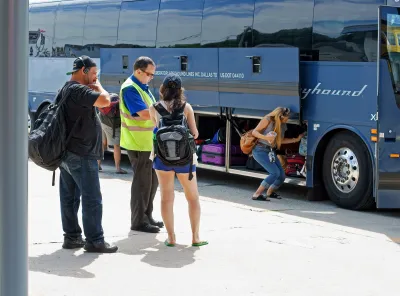
In a piece for Streetsblog USA, Kai Boysan makes a case for intercity bus travel as a more convenient alternative to holiday air travel.
The beleaguered long-distance bus industry has largely been at worst stigmatized and at best ignored in the American imagination, “viewed by the public and government stakeholders as a last resort rather than a core component of national mobility.”
That perception is not only inaccurate; it actively weakens the resilience of our transportation system. It is time to change that.
Outlining the benefits of bus travel, Boysan notes that intercity buses are mostly privately funded and receive very little in the way of public subsidies, unlike airlines or passenger rail that rely on public subsidies and facilities.
In some cases, governments actively make it difficult for long-distance buses to operate, pushing them to inconvenient or inaccessible locations in the outskirts of cities. “This weakens access to jobs, education, healthcare, and essential services for the communities that rely on buses most. They disconnect intercity travel from local transit networks that taxpayers have already funded.”
For Boysan, “The benefits of intercity buses are clear. They connect people to opportunity, support local economies, reduce emissions, and add redundancy to a fragile transportation network” — and the stigma against them is undeserved.
FULL STORY: This Holiday Travel Season, It’s Time to End the Stigma Around Intercity Buses

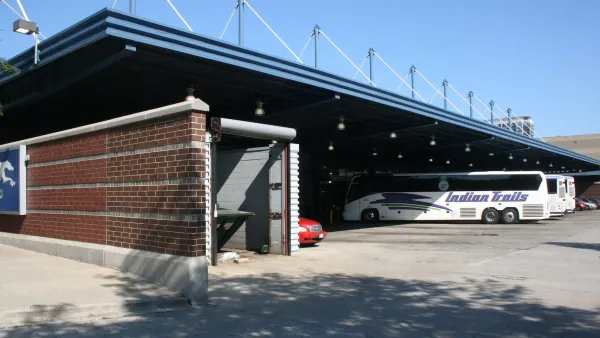
Chicago approves city buyout of downtown Greyhound station
The city is also budgeting $30 million for repairs to the city's only intercity bus station.
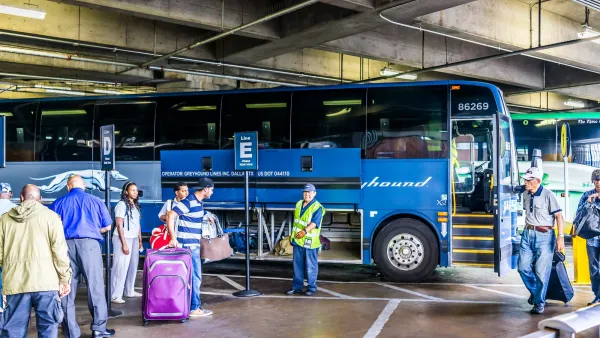
Greyhound Says the ‘Great American Road Trip’ is Best Done by Bus
Hitting back on Sec. Duffy’s call for Americans to “get in the car,” Greyhound launched a guide to using buses to access America 250 celebrations.
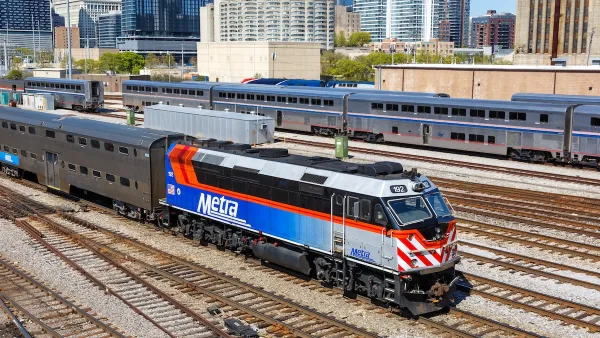
Opinion: Illinois Transit Bill Could Revolutionize Intercity Travel
A bill passed by the state’s General Assembly would create a permanent source of dedicated funding for intercity rail.

Planetizen Federal Action Tracker
A weekly monitor of how Trump’s orders and actions are impacting planners and planning in America.

The state-sanctioned urbicide of Austin
People don’t kill cities. Freeways do.

US to reduce Colorado River water deliveries to Mexico
A new Colorado Treaty amendment reduces Mexico’s Colorado River water allocation by 250,000 acre feet.

Baltimore to break ground on $50 million Transit Priority Project
The project will bring faster bus trips, safer streets and better bike connections to Baltimore.

Airbnb launches $250 million 'last-dollar financing' housing accelerator, makes first investment in Austin
The company will put $6.4 million towards affordable housing development in Texas’ capital.

Guerilla urbanists are building DIY bus stop benches in Chicago
A before-and-after of one of the bus stops with a new bench. The new benches are not officially sanctioned or permitted, but the residents who placed them hope they will be the start of a network of DIY benches across the city.

FREE Course: Walkable City 1: Why Walkability?
After describing his path towards focusing on walkability as the essence of good planning, Jeff Speck marches through his five principal reasons for making more walkable places.
Reinventing Malls: Planning Alchemy—Turning Gray Fields Into Gold
The course focuses on the opportunities and imperatives that shape reinvention of mall sites.

Eagle County Government
Harvard University Graduate School of Design
Nashville Planning Department
The Architects Foundation
University of Cincinnati Online
The Pocatello Development Authority
The Urban Renewal Agency of the City of Pocatello
Journal of the American Planning Association