For 30 years, The Blue Acres program has offered homeowners in high-risk flood zones the chance to relocate, preserving land as open space.


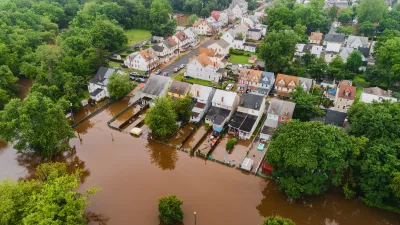
A New Jersey buyout program that purchases properties in flood-prone areas has successfully acquired around 1,200 properties, helping families move out of risky regions, reports Emilie Lounsberry for Inside Climate News.
The Blue Acres Program, launched in 1995, has used $234 million in state and federal funds to pay homeowners fair market value for their properties. “A report this month by Georgetown Climate Center said the program has achieved ‘significant results’ by moving quicker than federal buyout programs, providing a stable source of state funding and shepherding homeowners through the process.”
A separate report from the Natural Resources Defense Council and the Environmental Defense Fund advises communities that more cities around the country will need to consider similar programs as certain areas become unlivable due to high risks of flooding, wildfires, or other disasters.
For New Jersey, the program’s success is crucial. “Sea level rose about 1.5 feet along the New Jersey coast in the last 100 years—more than twice the global rate—and a new study by the New Jersey Climate Change Resource Center at Rutgers University predicts a likely increase of between 2.2 and 3.8 feet by 2100, if the current level of global carbon emissions continues.”
According to Courtney Wald-Wittkop, who manages Blue Acres for the state Department of Environmental Protection, “The program’s goals, however, go beyond the needs of homeowners. The idea is to help reshape the community by returning properties to permanent open space, which can better absorb rain water than impervious surfaces such as concrete, asphalt and buildings.”
FULL STORY: A New Jersey Buyout Program for Flood-Prone Homes Is a National Model


Rising Above: Innovative Solutions for Waikīkī’s Sea-Level Challenges
The University of Hawaiʻi at Mānoa’s award-winning Waikīkī sea-level rise adaptation project combines science, architecture, and community input to create scalable solutions for climate resilience and coastal flood mitigation.

Study: New Orleans sea level rise is at 'point of no return'
Research shows that the city could be surrounded by water by the end of this century.
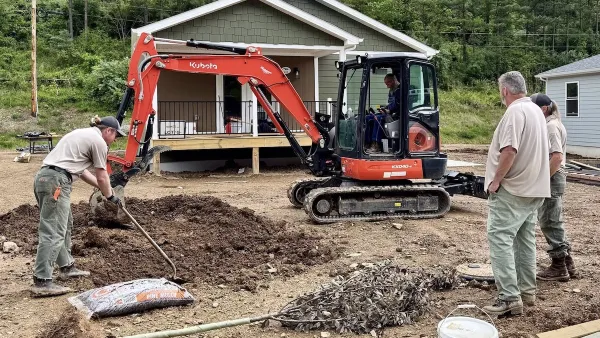
Kentucky Nonprofits Build ‘Higher Ground’ Homes
After destructive floods displaced thousands of Kentucky families, developers are building climate-resilient homes away from flood-prone areas.

Planetizen Federal Action Tracker
A weekly monitor of how Trump’s orders and actions are impacting planners and planning in America.

The state-sanctioned urbicide of Austin
People don’t kill cities. Freeways do.

US to reduce Colorado River water deliveries to Mexico
A new Colorado Treaty amendment reduces Mexico’s Colorado River water allocation by 250,000 acre feet.

5 New England states march closer to 800 megawatt wind energy project
Securing federal approval for the project may be complicated under the Trump administration, which has historically been hostile towards domestic wind power.

Baltimore to break ground on $50 million Transit Priority Project
The project will bring faster bus trips, safer streets and better bike connections to Baltimore.

Airbnb launches $250 million 'last-dollar financing' housing accelerator, makes first investment in Austin
The company will put $6.4 million towards affordable housing development in Texas’ capital.

FREE Course: Walkable City 1: Why Walkability?
After describing his path towards focusing on walkability as the essence of good planning, Jeff Speck marches through his five principal reasons for making more walkable places.
Reinventing Malls: Planning Alchemy—Turning Gray Fields Into Gold
The course focuses on the opportunities and imperatives that shape reinvention of mall sites.

Eagle County Government
Harvard University Graduate School of Design
Nashville Planning Department
The Architects Foundation
University of Cincinnati Online
The Pocatello Development Authority
The Urban Renewal Agency of the City of Pocatello
Journal of the American Planning Association