Satellite data reveals that the Colorado River’s groundwater has decreased dramatically since the start of the century.


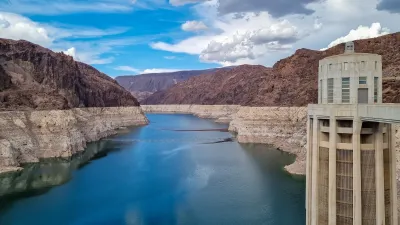
NASA satellites show that groundwater around the Colorado River is decreasing at an unsustainable pace, writes James Acker in Earth Data.
While it’s easy to notice dropping water levels in the river’s above-ground reservoirs, measuring groundwater loss is more difficult. “However, the loss in volume can be detected by satellites in space. By measuring the change in the force of gravity in the region caused by the decreased amount of water in the reservoirs and aquifers, researchers can estimate the volume of water removed.”
A recent study found that the Colorado’s reservoirs and aquifers combined lost a total of 52 cubic kilometers of water since 2002. Groundwater loss made up 65 percent of that total. According to Acker, “Such a loss is not sustainable, and the risk of running out of freshwater is potentially serious.”
The satellite data is verified with the he North American Land Data Assimilation System (NLDAS). Acker adds, “The results of this research are significant for resource managers in the region to consider, particularly for agricultural interests and communities, including Native American tribal lands.”
FULL STORY: NASA Satellite Data Show Decrease in Colorado River Basin Aquifers

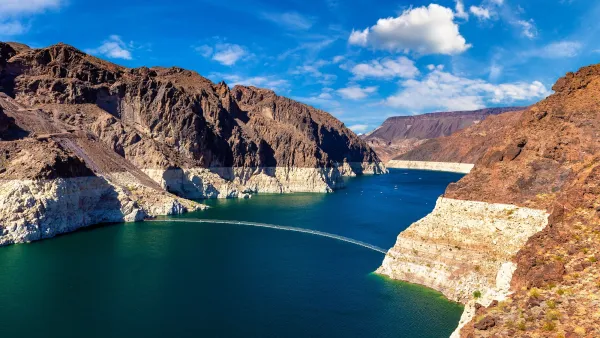
Deadline Nears for Colorado River Water Sharing Agreement
Water officials from the seven Colorado River Basin states are still at odds over how to manage dwindling water resources as current regulations are set to expire in February.
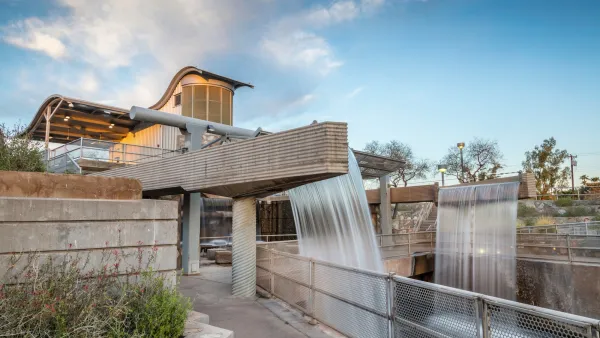
Arizona prepares to tap into emergency water supply as it braces for Colorado River cuts
The Salt River Project has been collecting nearly 4 million acre-feet of water since the mid-1990s.
Phoenix and Tucson create emergency water reserve, anticipating Colorado River cuts
The Secure Water Arizona Program will allow participating cities to use a reserve of water or make agreements to buy it from other jurisdictions.

Planetizen Federal Action Tracker
A weekly monitor of how Trump’s orders and actions are impacting planners and planning in America.

The state-sanctioned urbicide of Austin
People don’t kill cities. Freeways do.

US to reduce Colorado River water deliveries to Mexico
A new Colorado Treaty amendment reduces Mexico’s Colorado River water allocation by 250,000 acre feet.

5 New England states march closer to 800 megawatt wind energy project
Securing federal approval for the project may be complicated under the Trump administration, which has historically been hostile towards domestic wind power.

Baltimore to break ground on $50 million Transit Priority Project
The project will bring faster bus trips, safer streets and better bike connections to Baltimore.

Airbnb launches $250 million 'last-dollar financing' housing accelerator, makes first investment in Austin
The company will put $6.4 million towards affordable housing development in Texas’ capital.

FREE Course: Walkable City 1: Why Walkability?
After describing his path towards focusing on walkability as the essence of good planning, Jeff Speck marches through his five principal reasons for making more walkable places.
Reinventing Malls: Planning Alchemy—Turning Gray Fields Into Gold
The course focuses on the opportunities and imperatives that shape reinvention of mall sites.

Eagle County Government
Harvard University Graduate School of Design
Nashville Planning Department
The Architects Foundation
University of Cincinnati Online
The Pocatello Development Authority
The Urban Renewal Agency of the City of Pocatello
Journal of the American Planning Association