Recent changes to the Red Line’s signal priority forced trains to wait at red lights, leading to complaints of longer commute times.


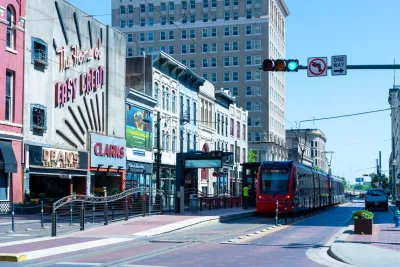
Houston’s Metro transit agency is restoring signal priority to the downtown Red Line light rail line after riders complained to the agency that some travel times doubled with the trains being forced to stop at red lights.
As Octavia Johnson explains in the Houston Chronicle, “Metro officials said they had been collaborating with the city's traffic engineers and the Public Works Department on the changes. In October, officials said they had reduced the number of extra stops.” However, the Chronicle also obtained emails that called the change a “political decision, not a technical decision.”
According to Johnson, “Metro stated in the announcement that it will continue to measure performance and make data-driven adjustments as needed to support its goal of achieving better on-time performance across the system and efficient use of its resources.”
FULL STORY: Metro restores signal priority on downtown Houston’s Red Line after rider backlash over slowed trains

Houston Trains Now Have to Stop at Red Lights, Risking 'Train Traffic Jams'
The city’s light rail trains no longer get signal priority, forcing them to wait through the entire light cycle at intersections.
Houston's pedestrian promenade on track to be ready for World Cup crowds
The city is transforming seven downtown blocks along a light rail line into a car-free zone focused on outdoor dining and entertainment.

Portland gathers to pay respects to the last of its original light rail cars
The TriMet agency has fully replaced its aging fleet of Type 1 cars.

Planetizen Federal Action Tracker
A weekly monitor of how Trump’s orders and actions are impacting planners and planning in America.

The state-sanctioned urbicide of Austin
People don’t kill cities. Freeways do.

US to reduce Colorado River water deliveries to Mexico
A new Colorado Treaty amendment reduces Mexico’s Colorado River water allocation by 250,000 acre feet.

5 New England states march closer to 800 megawatt wind energy project
Securing federal approval for the project may be complicated under the Trump administration, which has historically been hostile towards domestic wind power.

Baltimore to break ground on $50 million Transit Priority Project
The project will bring faster bus trips, safer streets and better bike connections to Baltimore.

Airbnb launches $250 million 'last-dollar financing' housing accelerator, makes first investment in Austin
The company will put $6.4 million towards affordable housing development in Texas’ capital.

FREE Course: Walkable City 1: Why Walkability?
After describing his path towards focusing on walkability as the essence of good planning, Jeff Speck marches through his five principal reasons for making more walkable places.
Reinventing Malls: Planning Alchemy—Turning Gray Fields Into Gold
The course focuses on the opportunities and imperatives that shape reinvention of mall sites.

Eagle County Government
Harvard University Graduate School of Design
Nashville Planning Department
The Architects Foundation
University of Cincinnati Online
The Pocatello Development Authority
The Urban Renewal Agency of the City of Pocatello
Journal of the American Planning Association