A new measurement tool eliminates the inaccuracies that have plagued data about housing supply, helping governments more clearly understand how housing policies are impacting local needs.


A new tool from the U.S. Census Bureau offers a much more granular and accurate portrait of the U.S. housing market. As Alex Armlovich explains for the Niskanen Center, housing data that relies on the American Community Survey or building permit data has been notoriously uneven and inaccurate.
Now, the new Address Count Listing Files offer a new way for state housing agencies and others to understand the housing supply. “By providing a direct count of housing units from its Master Address File every six months, the bureau empowers researchers and policymakers alike to track the change in the total housing stock over time all the way down to the census block.”
The new measurement is “a far more accurate proxy for new, habitable supply than either building permits, which can predate completion by years (and do not always complete), or the ACS.” It is based on “multiple, reinforcing sources.”
This new data accuracy empowers agencies and governments to understand the real-world impact of zoning reforms and housing policies, see long-term housing production data from around the country, and target resources here they are most needed and have the greatest impact. According to Armlovich, “The housing crisis has persisted in part because we haven’t been able to measure our progress accurately. With the Census Bureau’s Address Count Listing File data, that excuse is gone.”
FULL STORY: New census data: A true picture of America’s housing stock


To upzone or not to upzone? Two views on the housing crisis
Allowing more density can increase the housing supply, but does the attendant rise in land prices cancel out the benefits?
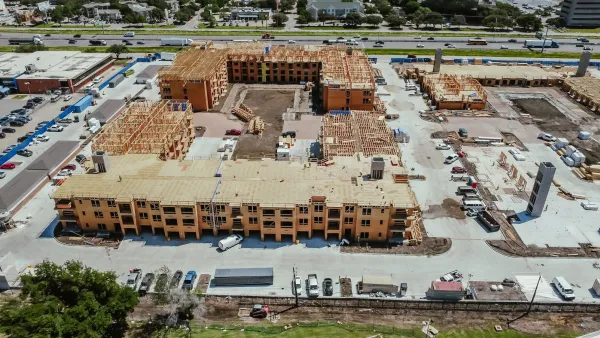
Controversial Texas housing law has 'directly facilitated' over 1,250 new homes
SB 840 allows developers to build multifamily housing by-right on lots zoned for commercial use without applying to a zoning change.

California sues 5 cities over housing goals
Costa Mesa, Half Moon Bay and Ridgecrest are among the cities that the state is taking action against for failing to plan for adequate housing needs.

The state-sanctioned urbicide of Austin
People don’t kill cities. Freeways do.

US to reduce Colorado River water deliveries to Mexico
A new Colorado Treaty amendment reduces Mexico’s Colorado River water allocation by 250,000 acre feet.

New Jersey’s second-largest city bans standalone data centers
Jersey City will continue to allow co-location facilities, such as those meant for research institutions that store their own data.

Amtrak not solely to blame for New Jersey commuter rail's unreliability, report finds
A new study from the Garden State Initiative found that NJ Transit’s budget grew 20% across a 4 year period, but reliability declined significantly over the same period.

EPA erases limits on planet-warming pollution from power plants
Under Monday’s plan, power plants would still have some limits on how much mercury, arsenic and other contaminants they can emit.

Phoenix announces new on-demand transit service, more frequent RAPID buses
Both new services will launch in October, and are part of Phoenix's Project Effective Access Solutions for Easing Congestion.

FREE Course: Walkable City 1: Why Walkability?
After describing his path towards focusing on walkability as the essence of good planning, Jeff Speck marches through his five principal reasons for making more walkable places.
Reinventing Malls: Planning Alchemy—Turning Gray Fields Into Gold
The course focuses on the opportunities and imperatives that shape reinvention of mall sites.

Eagle County Government
Harvard University Graduate School of Design
Nashville Planning Department
The Architects Foundation
University of Cincinnati Online
The Pocatello Development Authority
The Urban Renewal Agency of the City of Pocatello
Journal of the American Planning Association