Kensington Corridor Trust manages dozens of properties, including affordable rental and commercial spaces, as part of its goal to revitalize the commercial corridor — but the group says who makes the decisions is more important than what decisions are made.



Philadelphia’s Kensington Corridor Trust (KCT) is applying a neighborhood-trust model — paired with a perpetual purpose trust—to transfer decision-making power over a high-vacancy commercial corridor to residents and local entrepreneurs.
Since launching in 2019, KCT has acquired 31 properties, is developing 11 commercial spaces and 25 residences across nine sites, stewards a multi-parcel community garden, and reports no commercial vacancies.
Affordability is codified (residential targeted at 25–50% AMI; commercial rents ~25% below market), with governance bodies selected via open neighborhood calls and members paid for their time.
KCT’s blended capital stack includes more than $3 million in grants and over $13 million in loans at or below 2 percent interest. A forthcoming community stewardship trust will let neighbors invest small amounts monthly and share in returns — grounding revitalization in community control and long-term affordability.
Read the full story: Who Holds the Power? How One Corridor Flipped the Script on Development
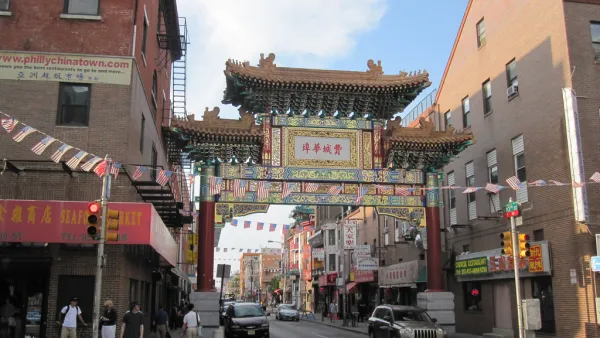
Equitable Development Plan Aims To Protect Philly's Chinatown
As the historic neighborhood experiences increased redevelopment around the new Rail Park, community activists are working to ensure older residents and businesses aren't displaced in the process.
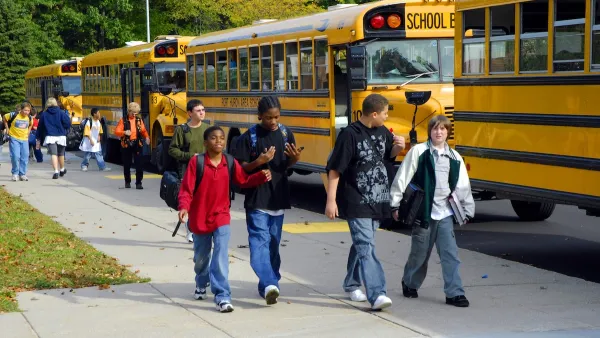
Learning loss and urban schools, part 2
Did test scores in progressive cities drop more post-COVID than test scores in moderate ones?
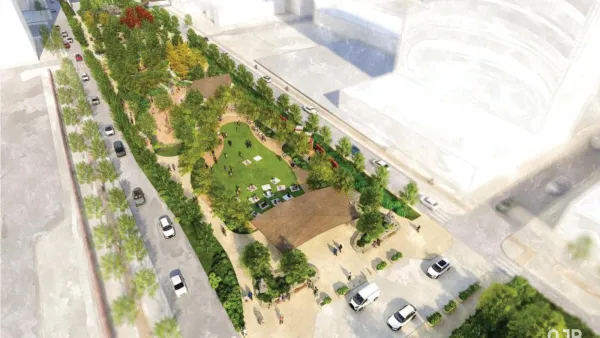
Philadelphia lawmakers fight to save 'Chinatown Stitch' from Trump cuts
The freeway cap project, approved and funded under the Biden administration, is now in jeopardy after the federal government rescinded all but $8 million in funding.

Planetizen Federal Action Tracker
A weekly monitor of how Trump’s orders and actions are impacting planners and planning in America.

California plans to bury El Niño’s downpour
If the state plays its cards right, it may be able to store a billion acre-feet of El Niño’s water in aquifers.

Desperate measures: Advocates weigh draining Lake Powell to fill Colorado River
Draining the reservoir could reduce evaporation losses by a couple hundred thousand acre-feet.

In Texas, data centers are swallowing promised parkland
Residents who moved to Taylor, Texas for a rural community now have to contend with three data centers in their backyard.

How a Chicago-sized wind farm beat the odds and powered on
The project spanned five presidential administrations and a standoff with a U.S. military base.

MTA gives itself 30 days to transform pit into basketball court
The site has been under construction since 2022; the city originally estimated it would finish the court in 2024.

FREE Course: Walkable City 1: Why Walkability?
After describing his path towards focusing on walkability as the essence of good planning, Jeff Speck marches through his five principal reasons for making more walkable places.
Reinventing Malls: Planning Alchemy—Turning Gray Fields Into Gold
The course focuses on the opportunities and imperatives that shape reinvention of mall sites.

City of Rosemead
Rutgers University, Edward J. Bloustein School of Planning and Public Policy
One Hundred Miles
Hunter College, City University of New York (CUNY)
The Architects Foundation
University of Cincinnati Online
City of Cambridge
Montrose County
The Pocatello Development Authority