The former Pierce Brothers Mortuary served as a church before being partially destroyed in a fire in 2018.


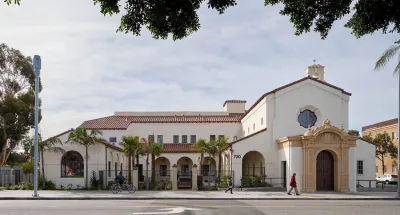
A former mortuary building in Los Angeles was redeveloped into senior housing, reports Heather Senison for the New York Times, signaling the sustained growth of adaptive reuse.
The former Pierce Brothers Mortuary is located in central Los Angeles on what was once known as Mortuary Row. The building became a church in the mid-2000s, then much of it was destroyed in a fire in 2018. “Today, the building, its former hearse garage and four new structures on the site are home to roughly 100 people 55 and older. The 122 units, ranging from studios to two-bedrooms, cost 30 to 60 percent of the area median income.”
Despite the abundance of abandoned and underused commercial buildings in the United States, regulatory and cost barriers often prevent them from being adapted to housing. “Of the 44,000 senior housing properties operating in the United States, roughly 2,200 came from reuse projects, according to Assisted Living Magazine, which provides a marketplace for housing for older adults.”
FULL STORY: ‘I Love It Here’: This Former Mortuary Is Taking New Residents

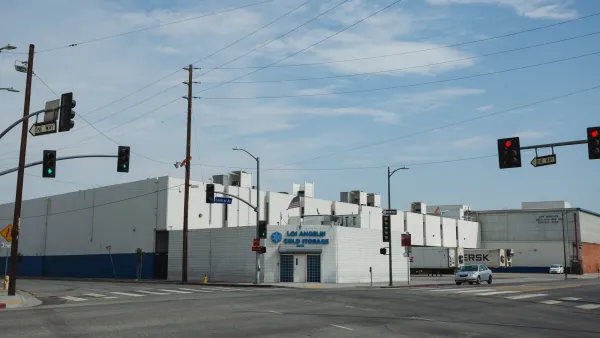
LA approves $2B 'urban village' plan for former cold storage facilities
The project promises an interconnected neighborhood with a focus on public space.
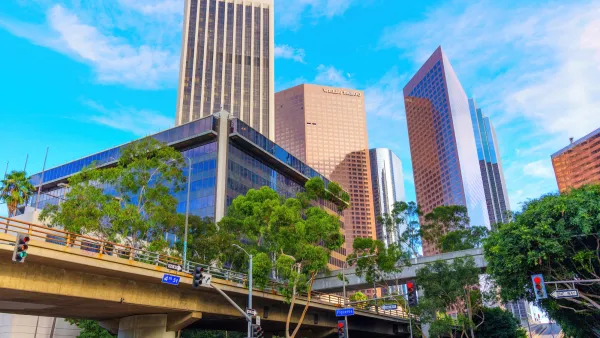
Vacant downtown LA office building will be transformed into 512 affordable homes
The World Trade Center will create hundreds of new apartments with rents starting as low as $937.
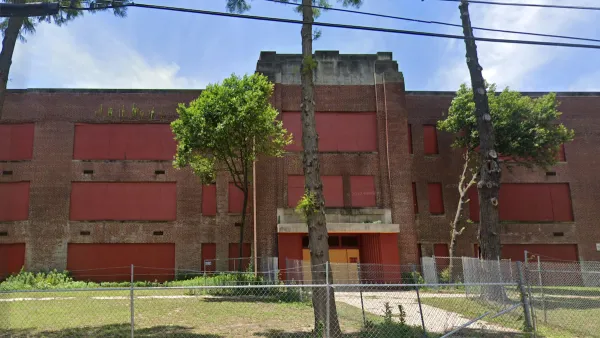
Memphis School Gets New Life as Housing, Library
The project pays homage to the building’s role in the community’s history.

Planetizen Federal Action Tracker
A weekly monitor of how Trump’s orders and actions are impacting planners and planning in America.

The state-sanctioned urbicide of Austin
People don’t kill cities. Freeways do.

US to reduce Colorado River water deliveries to Mexico
A new Colorado Treaty amendment reduces Mexico’s Colorado River water allocation by 250,000 acre feet.

5 New England states march closer to 800 megawatt wind energy project
Securing federal approval for the project may be complicated under the Trump administration, which has historically been hostile towards domestic wind power.

Baltimore to break ground on $50 million Transit Priority Project
The project will bring faster bus trips, safer streets and better bike connections to Baltimore.

Airbnb launches $250 million 'last-dollar financing' housing accelerator, makes first investment in Austin
The company will put $6.4 million towards affordable housing development in Texas’ capital.

FREE Course: Walkable City 1: Why Walkability?
After describing his path towards focusing on walkability as the essence of good planning, Jeff Speck marches through his five principal reasons for making more walkable places.
Reinventing Malls: Planning Alchemy—Turning Gray Fields Into Gold
The course focuses on the opportunities and imperatives that shape reinvention of mall sites.

Eagle County Government
Harvard University Graduate School of Design
Nashville Planning Department
The Architects Foundation
University of Cincinnati Online
The Pocatello Development Authority
The Urban Renewal Agency of the City of Pocatello
Journal of the American Planning Association