A 12-block area known as ‘The Hole’ straddling Brooklyn and Queens has struggled with flooding and sewage contamination for decades.


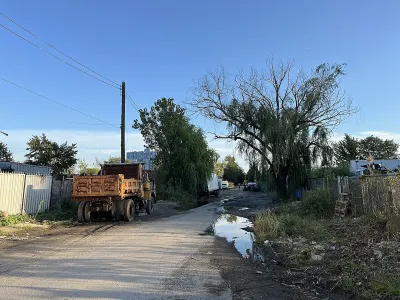
New York City officials announced a plan to bring city sewer infrastructure to a flood-prone neighborhood known as ‘The Hole’ on the border of Brooklyn and Queens.
As Lauren Dalban explains in Inside Climate News, “the 12-block area sits around 10 to 15 feet below the surrounding streets—essentially creating a water-trapping bowl.” Most residents use septic tanks to dispose of waste, which can overflow and lead to the contamination of surrounding land and water. Now, the city plans to connect the homes to a new sanitary sewer system.
The neighborhood’s homes are also not connected to the city system for rainwater. “According to the plan, the city will construct storm sewers to direct and pump rainwater toward a 17-acre city-owned lot a block away from the Jewel Streets.” The plan includes the construction of ‘bluebelts’ that will help water drain before it flows out into Jamaica Bay.
In the southern portion of the area, the city is considering raising the streets by up to 10 feet to connect streets that are now dead ends. For the five homes along these streets, the city says it will offer “a range of solutions” such as buyouts or retrofits. “Once the drainage issues are fixed, the city tentatively plans to encourage the construction of new small homes in the Jewel Streets that fit the neighborhood’s character. The city also hopes to rezone side streets near Linden Boulevard for higher-density housing and community facilities.”
Read the full story: New York City Unveils Plan for Flood-Prone Neighborhood Nicknamed ‘The Hole’

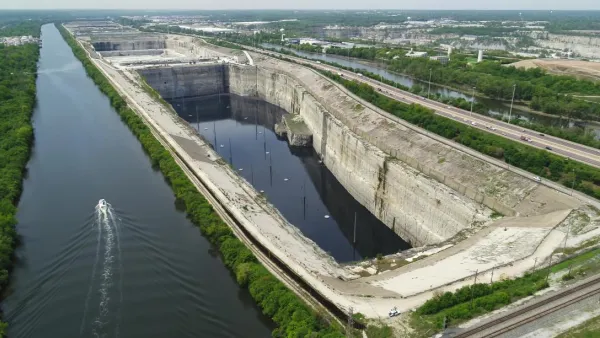
Chicago's underground flood control system is almost full
The system known as Deep Tunnel has never filled much more than halfway, but the cumulative effect of recent rains is putting suburban communities at risk of flooding.
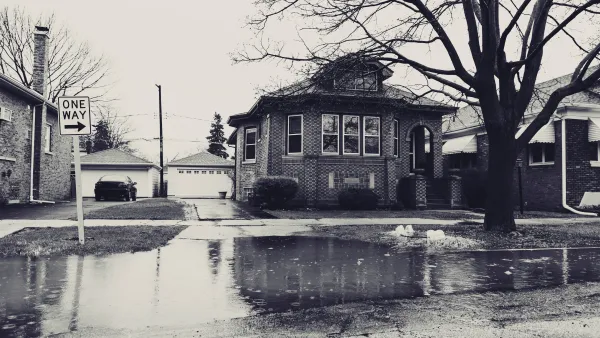
Chicago Flood Mitigation Scrambles to Keep up With Climate Change
The city’s geography and the growing intensity of storms due to climate change are making it difficult for local officials to prevent neighborhood flooding and wastewater spills.
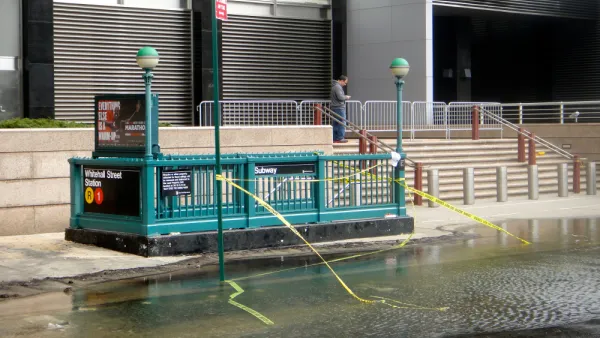
New York City Plans To Boost Resilience Against Floods
How the city is taking action on green infrastructure and stormwater projects to protect neighborhoods from the rising risk of catastrophic flooding.

Planetizen Federal Action Tracker
A weekly monitor of how Trump’s orders and actions are impacting planners and planning in America.

California plans to bury El Niño’s downpour
If the state plays its cards right, it may be able to store a billion acre-feet of El Niño’s water in aquifers.

Chicago breaks ground on $3 billion megadevelopment
The new neighborhood, titled Foundry Park, will one day host 3,700 residences.

Satanic Place Names
From streams and lakes to valleys and canyons, I mapped more than 1,000 places named after the Devil.

California High-Speed Rail Authority CEO resigns after $600,000 scandal
Under Ian Choudri, the authority used taxpayer dollars to fund first class flights and trips to nightclubs.

Want to study the Missouri River? Soon, you may need unanimous approval from 10 states
Legislation would require 10 governors’ permission to study or build projects moving water outside the basin.

FREE Course: Walkable City 1: Why Walkability?
After describing his path towards focusing on walkability as the essence of good planning, Jeff Speck marches through his five principal reasons for making more walkable places.
Reinventing Malls: Planning Alchemy—Turning Gray Fields Into Gold
The course focuses on the opportunities and imperatives that shape reinvention of mall sites.


City of Rosemead
Rutgers University, Edward J. Bloustein School of Planning and Public Policy
One Hundred Miles
Hunter College, City University of New York (CUNY)
The Architects Foundation
University of Cincinnati Online
City of Cambridge
Montrose County
The Pocatello Development Authority