Inefficiencies in the procurement process, small contract sizes, and an emphasis on customization leads American transit agencies to pay more than double for the same vehicles.


A new research paper outlines the reasons that U.S. transit agencies tend to pay more for transit buses than those in other countries. David Zipper describes the findings in Bloomberg CityLab, noting that the paper, titled Paying Less for Public Transit Buses, “offers a set of answers for the inconsistent and exorbitant prices that public transportation agencies pay for new equipment.”
The paper finds that while average prices for diesel, hybrid, and electric buses have stayed relatively consistent for many years, the cost of procurement can vary widely across agencies.
Because U.S. transit agencies are required to adhere to Buy America requirements, U.S. buses are usually more expensive than those built elsewhere. Meanwhile, “A lack of vendor options hampers transit agencies’ ability to negotiate when making a deal.”
According to the authors, U.S. transit agencies call for too much cosmetic customization, which also drives up vehicle costs. “With a median contract size of just five vehicles, bus operators cannot exploit economies of scale to lower production costs.”
The paper suggests that smaller agencies bundle their procurements with others to benefit from economies of scale and propose a federally established list of standard vehicle models that could help bring costs down. “Finally, they recommend that foreign bus manufacturers be allowed to sell up to 100 vehicles of a given model, at which point they would need to establish a US manufacturing facility to expand sales further.”
FULL STORY: Why US Cities Pay Too Much for Transit Buses

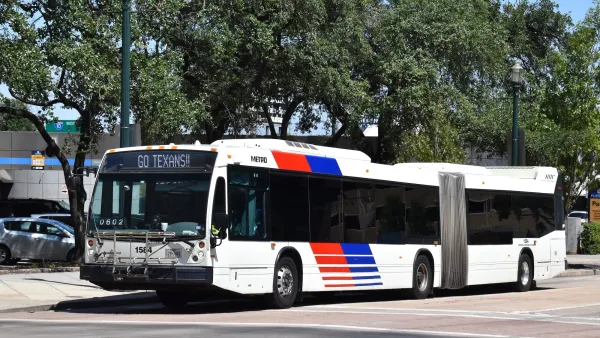
A Love Letter to the Articulated Bus
An ode to the bendy boys, by far the wackiest of the specialized vehicles you might find at a transit authority.
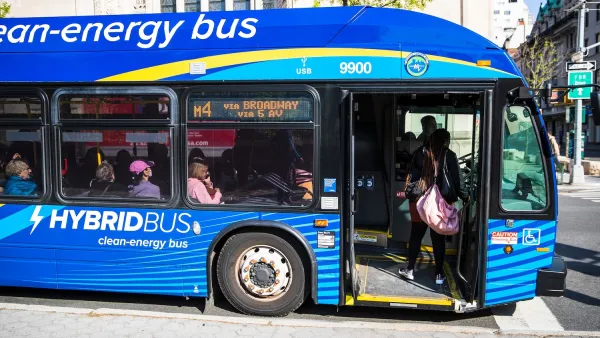
USDOT Announces $2B in Grants for Transit Buses, Favoring Hybrids Over Electric Options
The new round of grants for buses and facility upgrades doesn’t include any for battery-electric buses, favoring instead diesel-electric hybrids and CNG buses.
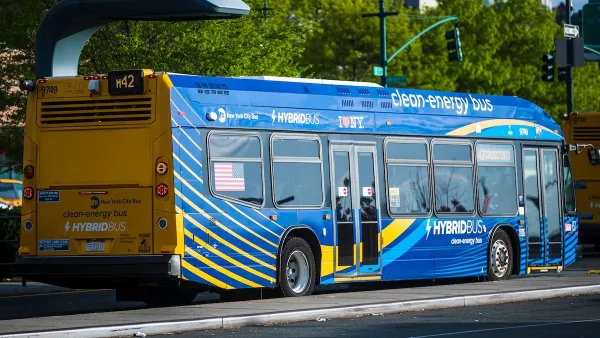
Transit Bus Costs Rise Sharply Due to Tariffs
The cost of a transit bus has gone up by 68 percent since 2021, in part because of recent tariffs on steel and aluminum.

Planetizen Federal Action Tracker
A weekly monitor of how Trump’s orders and actions are impacting planners and planning in America.

The state-sanctioned urbicide of Austin
People don’t kill cities. Freeways do.

US to reduce Colorado River water deliveries to Mexico
A new Colorado Treaty amendment reduces Mexico’s Colorado River water allocation by 250,000 acre feet.

5 New England states march closer to 800 megawatt wind energy project
Securing federal approval for the project may be complicated under the Trump administration, which has historically been hostile towards domestic wind power.

Baltimore to break ground on $50 million Transit Priority Project
The project will bring faster bus trips, safer streets and better bike connections to Baltimore.

Airbnb launches $250 million 'last-dollar financing' housing accelerator, makes first investment in Austin
The company will put $6.4 million towards affordable housing development in Texas’ capital.

FREE Course: Walkable City 1: Why Walkability?
After describing his path towards focusing on walkability as the essence of good planning, Jeff Speck marches through his five principal reasons for making more walkable places.
Reinventing Malls: Planning Alchemy—Turning Gray Fields Into Gold
The course focuses on the opportunities and imperatives that shape reinvention of mall sites.

Eagle County Government
Harvard University Graduate School of Design
Nashville Planning Department
The Architects Foundation
University of Cincinnati Online
The Pocatello Development Authority
The Urban Renewal Agency of the City of Pocatello
Journal of the American Planning Association