Boston’s transit agency is taking a firmer stance against fare evasion, cautioning riders it will begin issuing citations beginning September 8.


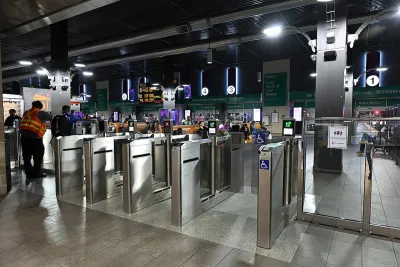
The Massachusetts Bay Transportation Authority (MBTA) announced plans to crack down on fare evasion on its transit system “with agency staff prepared to issue formal warnings and citations to riders who skip the fare gates or fareboxes.”
According to an article by Will Katcher in Mass Live, the agency has “been conducting fare education outreach” and stationed fare engagement representatives at some T stations, where fare collection jumped by 35 percent after several weeks. “The T also said it was deploying the fare staff ‘based on ridership patterns, not geography, to avoid a disproportionate presence in any one community.’”
Riders who skip fare payment will be given a warning on their first offense, $50 civil citations for three subsequent offenses, and a $100 fine on their fourth violation. The agency says the move is necessary in light of its budget problems.
Read the full story: Free ride is over: MBTA announces plan to fine riders for fare evasion

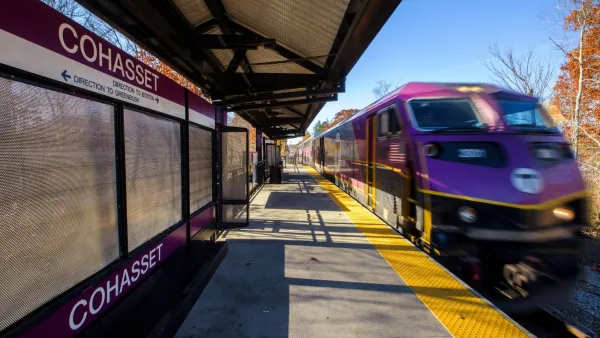
MBTA extends commuter rail discounts and lowers express bus fare to keep passengers riding into the fall
Boston-area commuters can access half-price monthly passes through November.
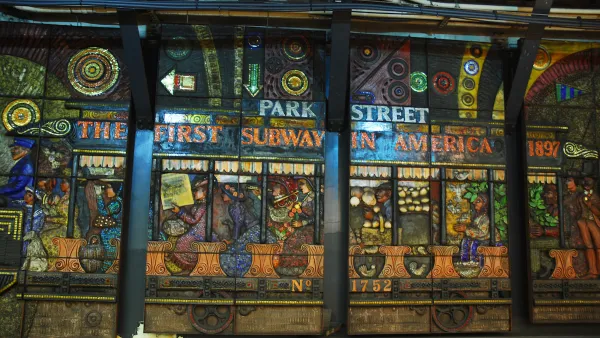
Boston Transit Board Approves Low-Income Fare, but Funding is Unclear
The board voted to include the T’s on-demand paratransit service in the discount program, prompting concerns about cost.
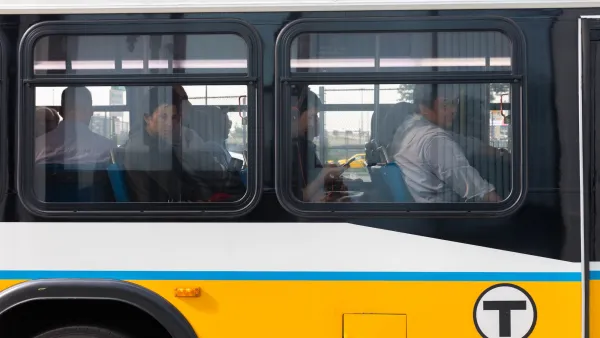
Boston extends successful fare-free bus pilot
The program began in 2021 and expanded later to include lines 28, 23 and 29.

Planetizen Federal Action Tracker
A weekly monitor of how Trump’s orders and actions are impacting planners and planning in America.

California plans to bury El Niño’s downpour
If the state plays its cards right, it may be able to store a billion acre-feet of El Niño’s water in aquifers.

Chicago breaks ground on $3 billion megadevelopment
The new neighborhood, titled Foundry Park, will one day host 3,700 residences.

Satanic place names
From streams and lakes to valleys and canyons, I mapped more than 1,000 places named after the Devil.

California High-Speed Rail Authority CEO resigns after $600,000 scandal
Under Ian Choudri, the authority used taxpayer dollars to fund first class flights and trips to nightclubs.

Want to study the Missouri River? Soon, you may need unanimous approval from 10 states
Legislation would require 10 governors’ permission to study or build projects moving water outside the basin.

FREE Course: Walkable City 1: Why Walkability?
After describing his path towards focusing on walkability as the essence of good planning, Jeff Speck marches through his five principal reasons for making more walkable places.
Reinventing Malls: Planning Alchemy—Turning Gray Fields Into Gold
The course focuses on the opportunities and imperatives that shape reinvention of mall sites.


City of Rosemead
Rutgers University, Edward J. Bloustein School of Planning and Public Policy
One Hundred Miles
Hunter College, City University of New York (CUNY)
The Architects Foundation
University of Cincinnati Online
City of Cambridge
Montrose County
The Pocatello Development Authority