The rail system keeps gaining riders and seeks to expand their reach to other areas in the commonwealth amid federal mass layoffs and budget cuts.


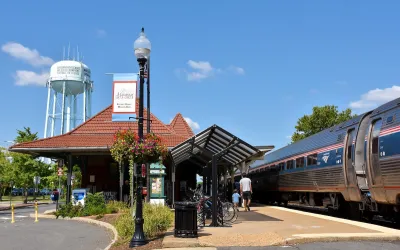
This story by Ian Stewart was originally published in The Virginia Mercury. It has been shortened.
Amtrak Virginia ridership increased exponentially this year. But is future growth in jeopardy?
The rail system keeps gaining riders and seeks to expand their reach to other areas in the commonwealth amid federal mass layoffs and budget cuts.
Possible bumps in the future of rail travel and infrastructure improvements in the commonwealth could come from how federal dollars are awarded in the form of grants stemming from changes in a landmark infrastructure law enacted during the previous presidential administration.
According to The Architects Newspaper, infrastructure projects to improve stations, tunnels and bridges are in jeopardy because of a $2.3 billion cut in the Bipartisan Infrastructure Law, which was created under the administration of former President Joe Biden. In addition, there will be a 91% cut to the federal administration and discretionary funding for Amtrak’s national network, which includes the northeast corridor, has been eliminated, according to a report by the House Democrats Appropriations Committee.
Current projects that have already been approved, such as the Long Bridge Project, which will create two new track railroad bridges over the Potomac River from Alexandria into D.C., have not been affected by federal budget cuts, said Gerica Goodman, director of external affairs at the Virginia Passenger Rail Authority.
FULL STORY: Amtrak Virginia ridership increased exponentially this year. But is future growth in jeopardy?

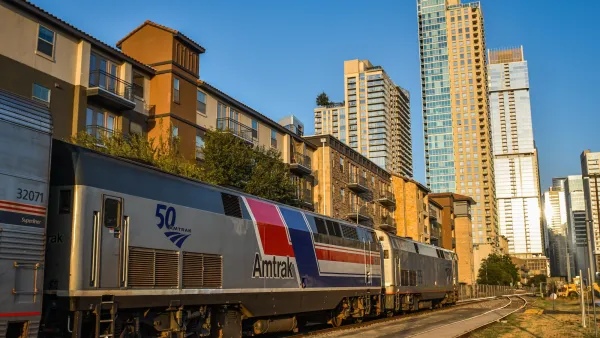
Texas DOT report outlines options for commuter rail between Austin and San Antonio
Amtrak currently operates just one trip per day between the two cities.
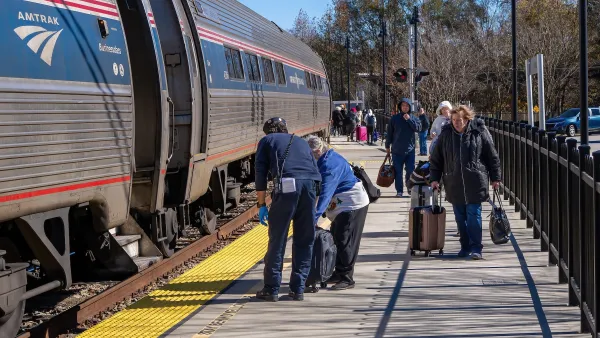
Rail advocates: BUILD America 250 Act could slash railway funding by 80%
Leaving rail funding up to annual appropriations threatens to drastically limit its reliability and effectiveness.
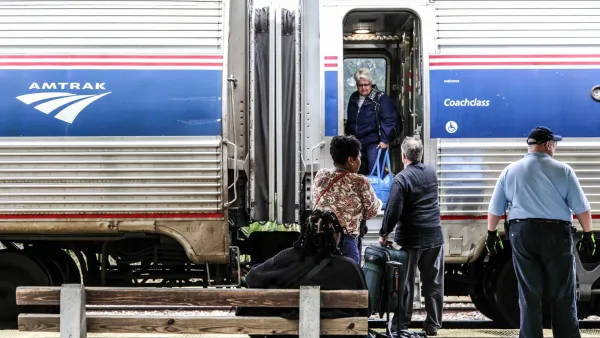
Trump budget slashes passenger rail funding by 82%
The White House's proposed FY2027 budget makes drastic cuts to public transit and eliminates high-speed rail funding altogether.

Planetizen Federal Action Tracker
A weekly monitor of how Trump’s orders and actions are impacting planners and planning in America.

The state-sanctioned urbicide of Austin
People don’t kill cities. Freeways do.

US to reduce Colorado River water deliveries to Mexico
A new Colorado Treaty amendment reduces Mexico’s Colorado River water allocation by 250,000 acre feet.

Airbnb launches $250 million 'last-dollar financing' housing accelerator, makes first investment in Austin
The company will put $6.4 million towards affordable housing development in Texas’ capital.

Guerilla urbanists are building DIY bus stop benches in Chicago
A before-and-after of one of the bus stops with a new bench. The new benches are not officially sanctioned or permitted, but the residents who placed them hope they will be the start of a network of DIY benches across the city.

Mamdani overhauls NYC's Vision Zero plan with 100 new policy goals
The overhaul aims to reduce traffic deaths and make streets safer for pedestrians, cyclists and drivers through lower speed limits, new safety infrastructure and more.

FREE Course: Walkable City 1: Why Walkability?
After describing his path towards focusing on walkability as the essence of good planning, Jeff Speck marches through his five principal reasons for making more walkable places.
Reinventing Malls: Planning Alchemy—Turning Gray Fields Into Gold
The course focuses on the opportunities and imperatives that shape reinvention of mall sites.

Eagle County Government
Harvard University Graduate School of Design
Nashville Planning Department
The Architects Foundation
University of Cincinnati Online
The Pocatello Development Authority
The Urban Renewal Agency of the City of Pocatello
Journal of the American Planning Association