Should monthly charges be pegged to the cost of financing, developing, and operating housing, or to household income? Or are there other ways to design how rent is calculated?


Exploring the challenges of defining and implementing fair rent in the U.S., an article from Shelterforce contrasts existing market-based and subsidized models with an alternative approach like Zurich’s “cost rent” system. It highlights the disconnect between rent, operating costs, and affordability, questioning the sustainability of profit-driven housing. The discussion examines cooperative housing models and the potential for decommodifying housing while acknowledging structural limitations within capitalist economies. Ultimately, the article asks whether housing should be treated as a public service, similar to education, and what policies could ensure long-term affordability without reliance on market fluctuations or income restrictions.
Read more at the source link.
Read the full story: What Makes Rent ‘Fair’
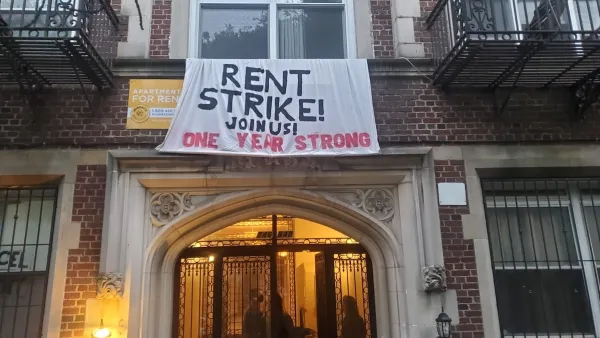
What Zohran Mamdani’s Primary Win Means for the Tenant Movement
The mayoral candidate made a rent freeze central to his campaign. Here's how his supporters used in-person campaigning to clinch a victory, and what's ahead.

Missouri Law Would Ban Protections for Housing Voucher Users
A state law seeks to overturn source-of-income discrimination bans passed by several Missouri cities.
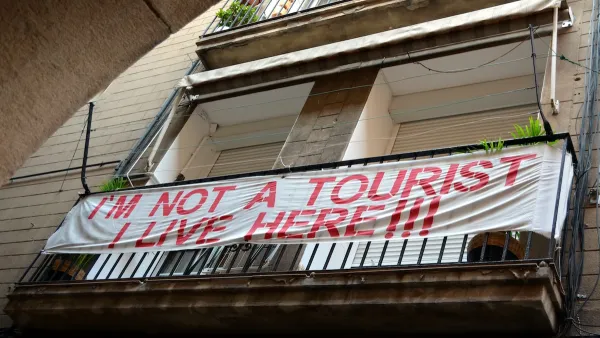
Barcelona Buys Building to Prevent Tenant Evictions
One apartment building — and its tenants who faced eviction — became a potent symbol of the city’s growing housing crisis.

Planetizen Federal Action Tracker
A weekly monitor of how Trump’s orders and actions are impacting planners and planning in America.

California plans to bury El Niño’s downpour
If the state plays its cards right, it may be able to store a billion acre-feet of El Niño’s water in aquifers.

Desperate measures: Advocates weigh draining Lake Powell to fill Colorado River
Draining the reservoir could reduce evaporation losses by a couple hundred thousand acre-feet.

Mamdani’s pied-à-terre tax survives legal challenge
A panel of judges found that the plaintiffs failed to demonstrate injury as a result of New York City's implementation of the tax.

Eastern Nebraska is running out of electricity
Data centers and electrification are straining eastern Nebraska’s grid, throttling economic development.

Seattle passes record-breaking transit services expansion
Proposition 1 will double the city’s transit tax to add 95,000 more bus trips and preserve 180,000 bus trips annually.

FREE Course: Walkable City 1: Why Walkability?
After describing his path towards focusing on walkability as the essence of good planning, Jeff Speck marches through his five principal reasons for making more walkable places.
Reinventing Malls: Planning Alchemy—Turning Gray Fields Into Gold
The course focuses on the opportunities and imperatives that shape reinvention of mall sites.

City of Rosemead
Rutgers University, Edward J. Bloustein School of Planning and Public Policy
One Hundred Miles
University of Michigan School for Environment and Sustainability (SEAS)
Hunter College, City University of New York (CUNY)
The Architects Foundation
City of Cambridge
Montrose County
The Pocatello Development Authority