Zoning changes at the local and state levels are making it easier and faster to build housing.



Ahead of a discussion on zoning in the Dallas city council, an article by Leah Waters in the Dallas Morning News outlines current and historic zoning reforms taking place in cities across Texas.
In Houston, the reduction of the minimum lot size to 3,500 square feet from 5,000 square feet in 1998 “spurred housing development dramatically,” leading to the construction of over 34,000 townhomes between 2007 and 2020.
Austin loosened zoning rules last December to allow denser development, but neighborhoods can opt out by forming homeowners’ associations.
At the state level, the Texas legislature passed a bill last fall that streamlines the permitting process, but failed to pass another bill that would have limited cities’ control over minimum lot sizes. “A bill that would have allowed by-right development of accessory dwelling units in backyards of single-family homes failed to pass by one vote in the Texas House.”
FULL STORY: Here’s how cities across Texas changed their zoning to increase housing

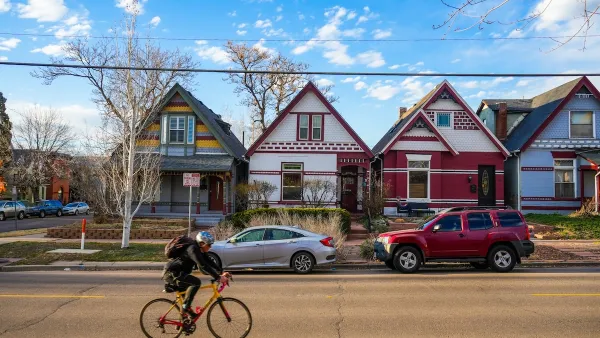
Amidst Colorado Affordability Crisis, Just 3% of Residential Land Zoned for Multifamily Housing
A new report suggests loosening restrictive zoning laws on multifamily development could help bring down high housing costs.

Pittsburgh Mayor Proposes Zoning Changes to Curb Housing Shortage
The mayor’s plan includes legalizing ADUs in single-family neighborhoods, eliminating parking requirements, and adding new affordability requirements to buildings with over 20 units.
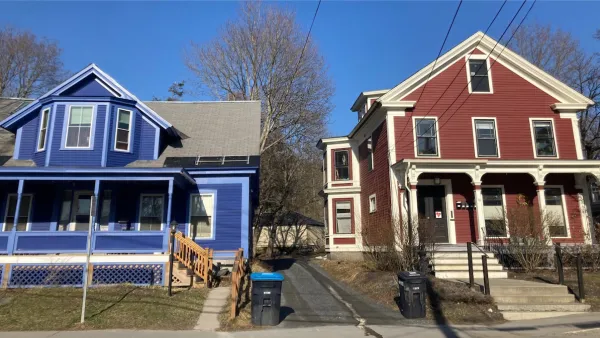
Vermont Issues Missing Middle Housing Toolkit
The state wants to encourage mid-density development to ease the housing crisis and provide a wider variety of housing options for residents.

Planetizen Federal Action Tracker
A weekly monitor of how Trump’s orders and actions are impacting planners and planning in America.

The state-sanctioned urbicide of Austin
People don’t kill cities. Freeways do.

US to reduce Colorado River water deliveries to Mexico
A new Colorado Treaty amendment reduces Mexico’s Colorado River water allocation by 250,000 acre feet.

5 New England states march closer to 800 megawatt wind energy project
Securing federal approval for the project may be complicated under the Trump administration, which has historically been hostile towards domestic wind power.

Baltimore to break ground on $50 million Transit Priority Project
The project will bring faster bus trips, safer streets and better bike connections to Baltimore.

Airbnb launches $250 million 'last-dollar financing' housing accelerator, makes first investment in Austin
The company will put $6.4 million towards affordable housing development in Texas’ capital.

FREE Course: Walkable City 1: Why Walkability?
After describing his path towards focusing on walkability as the essence of good planning, Jeff Speck marches through his five principal reasons for making more walkable places.
Reinventing Malls: Planning Alchemy—Turning Gray Fields Into Gold
The course focuses on the opportunities and imperatives that shape reinvention of mall sites.

Eagle County Government
Harvard University Graduate School of Design
Nashville Planning Department
The Architects Foundation
University of Cincinnati Online
The Pocatello Development Authority
The Urban Renewal Agency of the City of Pocatello
Journal of the American Planning Association