Changing the legacy of racist planning policies requires a creative vision, practical solutions, and centering of the Black experience.



“From food deserts to tree inequity, racist planning practices have left Black neighborhoods devoid of amenities that promote health and well-being,” writes Alexa Spencer for Word in Black. The stark differences between Black neighborhoods and predominantly white communities are not happenstance, Spencer states, but “well-thought-out designs by urban planners, people who direct the development of cities and towns.”
This article, part of a series called Black to the Future, spotlights a “new crop” of urban planners that are seeking to change the legacy of racist planning practices with imaginative vision and practical planning solutions that center and uplift Black experience.
Such planners include Dee Powell, founder of Do Right By The Streets, a Black woman-owned urban planning and place creation group that crafts community-driven spaces. She is “on a mission to bring economic mobility and spatial justice to South Dallas, an area that is 35% Black with the highest rates of poverty in the city,” reports Spencer. Her most recent project is the Sunny South Dallas Food Park, which aims to provide a commerce space for Black-owned businesses and a place for residents to gather, have meetings, and connect to wifi. Powell dreams of “a revived Tulsa — or South Dallas — of the 1950s and 1960s, where Black folks thrived in health, community, and business.”
Do Right By The Streets is one of many groups nationwide working to build a prosperous future for Black communities via urban planning strategies. Others highlighted in the Word In Black article include Thrivance Group in California, Albina Vision Trust in Portland, Oregon, and Jima Studio on the East Coast.
FULL STORY: Urban Planning, But Add Some Afrofuturism

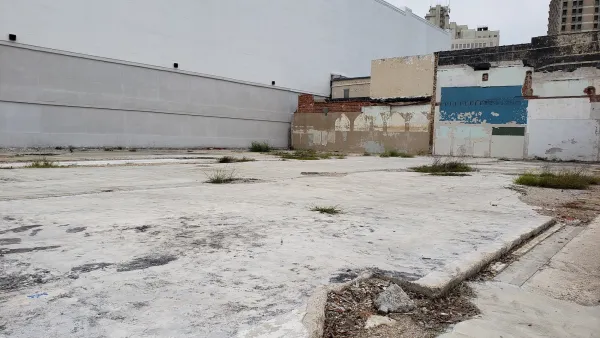
Vacant lots in south Dallas are giving way to affordable housing
A land use analysis found that Dallas could increase tax revenue and close resource gaps if it invests in vacant lot redevelopment.

Dallas area transit prepares for World Cup, asks locals to drive
DART is adding a special shuttle service and creating back-up mechanisms to ensure it can serve all of this summer's World Cup attendees.
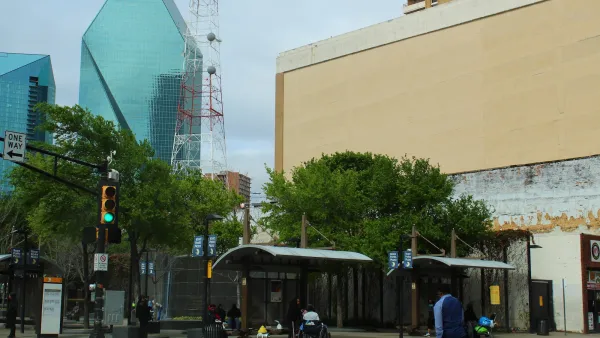
Dallas transit to invest up to $71.5M in upgraded bus shelters
The new shelters will feature solar-powered lighting and materials designed to protect riders from extreme weather.

Planetizen Federal Action Tracker
A weekly monitor of how Trump’s orders and actions are impacting planners and planning in America.

The state-sanctioned urbicide of Austin
People don’t kill cities. Freeways do.

US to reduce Colorado River water deliveries to Mexico
A new Colorado Treaty amendment reduces Mexico’s Colorado River water allocation by 250,000 acre feet.

Amtrak not solely to blame for New Jersey commuter rail's unreliability, report finds
A new study from the Garden State initiative found that NJ Transit’s budget grew 20% across a 4 year period, but reliability declined significantly over the same period.

EPA erases limits on planet-warming pollution from power plants
Under Monday’s plan, power plants would still have some limits on how much mercury, arsenic and other contaminants they can emit.

Phoenix announces new on-demand transit service, more frequent RAPID buses
Both new services will launch in October, and are part of Phoenix's Project Effective Access Solutions for Easing Congestion.

FREE Course: Walkable City 1: Why Walkability?
After describing his path towards focusing on walkability as the essence of good planning, Jeff Speck marches through his five principal reasons for making more walkable places.
Reinventing Malls: Planning Alchemy—Turning Gray Fields Into Gold
The course focuses on the opportunities and imperatives that shape reinvention of mall sites.

Eagle County Government
Harvard University Graduate School of Design
Nashville Planning Department
The Architects Foundation
University of Cincinnati Online
The Pocatello Development Authority
The Urban Renewal Agency of the City of Pocatello
Journal of the American Planning Association