A court declined to revisit its decision to invalidate a city ban on natural gas hookups.



The Ninth Circuit Court of Appeals declined to reconsider its reversal of a Berkeley, California ban on natural gas hookups in new buildings, marking a defeat for a movement aimed at eliminating fossil fuel-burning appliances. Ysabelle Kempe explains in Smart Cities Dive, noting that similar lawsuits have led to reversals in other states.
In April, a court panel agreed with a coalition of California restaurant owners that the ban ‘overstepped’ the federal Energy and Policy Conservation Act. “The decision led other jurisdictions in the region to reconsider their own building electrification rules to avoid legal threats, with Eugene, Oregon, reversing its gas ban altogether and Washington state changing recently adopted building codes that would have mandated electric heat pumps in new buildings.”
Natural gas has been shown to significantly degrade indoor air quality. Berkeley officials have not commented on whether they plan to take the case to the U.S. Supreme Court, the next legal recourse.
FULL STORY: Federal court won’t reconsider decision to overturn Berkeley, California, natural gas ban


California Cities Suspend Natural Gas Bans Following Court Ruling
A Ninth Circuit court ruling forced Berkeley to reverse its ban on natural gas in new buildings, prompting other cities to suspend their own efforts to promote all-electric buildings.

Improving Indoor Air Quality, One Block at a Time
A movement to switch to electric appliances at the neighborhood scale is taking off in California.
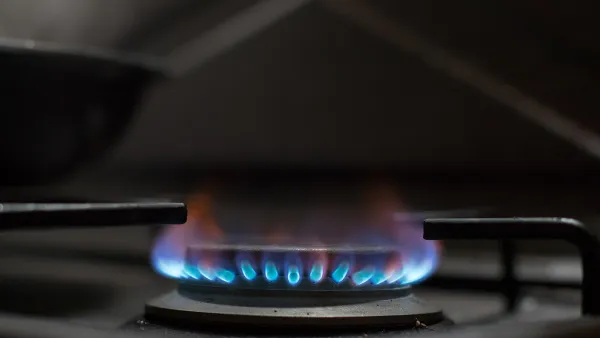
Berkeley’s First-in-Nation Natural Gas Ban Overthrown by Court Ruling
The Ninth Circuit Court of Appeals ruled that Berkeley does not have the power to mandate electric hookups in new development because a federal rule preempts the local regulation.

Planetizen Federal Action Tracker
A weekly monitor of how Trump’s orders and actions are impacting planners and planning in America.

The state-sanctioned urbicide of Austin
People don’t kill cities. Freeways do.

US to reduce Colorado River water deliveries to Mexico
A new Colorado Treaty amendment reduces Mexico’s Colorado River water allocation by 250,000 acre feet.

Baltimore to break ground on $50 million Transit Priority Project
The project will bring faster bus trips, safer streets and better bike connections to Baltimore.

Airbnb launches $250 million 'last-dollar financing' housing accelerator, makes first investment in Austin
The company will put $6.4 million towards affordable housing development in Texas’ capital.

Guerilla urbanists are building DIY bus stop benches in Chicago
A before-and-after of one of the bus stops with a new bench. The new benches are not officially sanctioned or permitted, but the residents who placed them hope they will be the start of a network of DIY benches across the city.

FREE Course: Walkable City 1: Why Walkability?
After describing his path towards focusing on walkability as the essence of good planning, Jeff Speck marches through his five principal reasons for making more walkable places.
Reinventing Malls: Planning Alchemy—Turning Gray Fields Into Gold
The course focuses on the opportunities and imperatives that shape reinvention of mall sites.

Eagle County Government
Harvard University Graduate School of Design
Nashville Planning Department
The Architects Foundation
University of Cincinnati Online
The Pocatello Development Authority
The Urban Renewal Agency of the City of Pocatello
Journal of the American Planning Association