Mirroring New Orleans’ French Quarter or the Las Vegas Strip, some cities are experimenting with loosening open container laws in certain commercial areas.



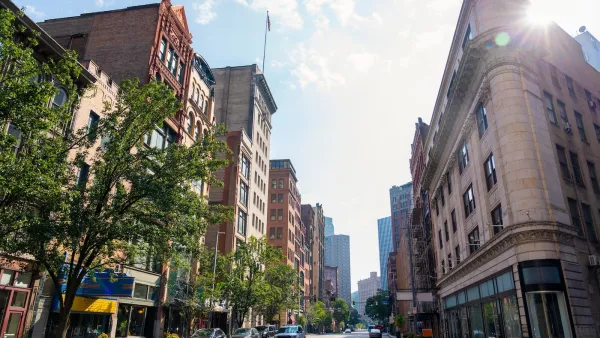
While most of the United States has strict laws against ‘open containers’ of alcohol outside of bars and restaurants, some cities are experimenting with the creation of ‘drinking zones’ that allow patrons to carry drinks around certain designated commercial areas. “The hope is that by allowing people to grab a drink and linger, they’ll spend more time and money downtown.”
In some cases, states such as North Carolina and Ohio are relaxing regulations to let cities create these zones, explains Kevin Hardy in Stateline. “They aim to revitalize downtown cores hollowed out by the changing nature of retail and the post-pandemic loss of office workers.”
“Aside from bringing foot traffic to shops and restaurants, officials say the success of the new districts reveals the need to update antiquated liquor laws that long banned public consumption in most places to try to reduce public intoxication and drunken driving.”
Hardy describes efforts in several cities and states, noting that, in most cases, the districts face little local opposition. Meanwhile, business owners report seeing increased activity.
FULL STORY: ‘I felt so naughty’: New open carry alcohol laws boost downtowns

Pittsburgh downtown tax diversion plan draws criticism for lack of transparency
A proposed new development tax faces opposition from transit advocates.

Downtown Los Angeles Gears Up for Growth
A new report highlights Downtown L.A.’s ongoing revival through major housing projects, adaptive reuse, hospitality growth, and preparations for global events in the years ahead.

The Simple Legislative Tool Transforming Vacant Downtowns
In California, Michigan and Georgia, an easy win is bringing dollars — and delight — back to city centers.

Planetizen Federal Action Tracker
A weekly monitor of how Trump’s orders and actions are impacting planners and planning in America.

The state-sanctioned urbicide of Austin
People don’t kill cities. Freeways do.

US to reduce Colorado River water deliveries to Mexico
A new Colorado Treaty amendment reduces Mexico’s Colorado River water allocation by 250,000 acre feet.

5 New England states march closer to 800 megawatt wind energy project
Securing federal approval for the project may be complicated under the Trump administration, which has historically been hostile towards domestic wind power.

Baltimore to break ground on $50 million Transit Priority Project
The project will bring faster bus trips, safer streets and better bike connections to Baltimore.

Airbnb launches $250 million 'last-dollar financing' housing accelerator, makes first investment in Austin
The company will put $6.4 million towards affordable housing development in Texas’ capital.

FREE Course: Walkable City 1: Why Walkability?
After describing his path towards focusing on walkability as the essence of good planning, Jeff Speck marches through his five principal reasons for making more walkable places.
Reinventing Malls: Planning Alchemy—Turning Gray Fields Into Gold
The course focuses on the opportunities and imperatives that shape reinvention of mall sites.

Eagle County Government
Harvard University Graduate School of Design
Nashville Planning Department
The Architects Foundation
University of Cincinnati Online
The Pocatello Development Authority
The Urban Renewal Agency of the City of Pocatello
Journal of the American Planning Association