A group of resident advocates is challenging the Ohio Department of Transportation’s arguments in favor of a proposed interstate widening.


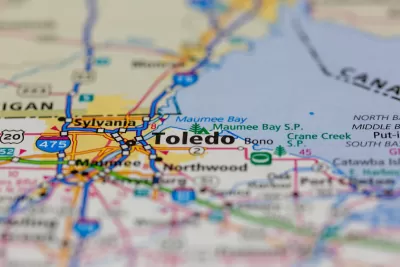
Residents in Toledo, Ohio are using data from the Ohio Department of Transportation (ODOT) to counter the department’s own narrative about its freeway expansion projects, reports Asia Mieleszko in Strong Towns.
When it comes to ODOT’s assertion that a proposed widening of Interstate 475 in Toledo is necessary for “traffic congestion reduction,” a group calling itself I-475 Neighbors Coalition argues that “In a national ranking of truck bottlenecks, the segment up for expansion sits at 7,608th place in the westbound lane and at 8,664th in the eastbound lane,” with just over one minute of time added to peak-hour trips due to congestion.
Local advocates are also using research on the phenomenon of induced demand to counter the agency’s assertions that expanding the freeway would reduce congestion at all. “Additionally, the costs—displacement of longtime residents, destruction of natural areas, deepening of car dependency—far outweigh the projected benefits,” going against the department’s stated commitment to the goals of Reconnecting Communities.
FULL STORY: Toledo Freeway Fighters Are Weaponizing ODOT’s Data Against It

San Mateo Formally Opposes Freeway Project
The city council will send a letter to Caltrans urging the agency to reconsider a plan to expand the 101 through the city of San Mateo.
California Commission Approves Freeway Expansion
The state Transportation Commission ultimately voted to move a controversial Inland Empire interstate project forward.

Halted Interstate Expansion Could Proceed in Houston
Local and state officials have come to an ‘historic’ agreement that could move the stalled project forward.

Planetizen Federal Action Tracker
A weekly monitor of how Trump’s orders and actions are impacting planners and planning in America.

The state-sanctioned urbicide of Austin
People don’t kill cities. Freeways do.

US to reduce Colorado River water deliveries to Mexico
A new Colorado Treaty amendment reduces Mexico’s Colorado River water allocation by 250,000 acre feet.

5 New England states march closer to 800 megawatt wind energy project
Securing federal approval for the project may be complicated under the Trump administration, which has historically been hostile towards domestic wind power.

Baltimore to break ground on $50 million Transit Priority Project
The project will bring faster bus trips, safer streets and better bike connections to Baltimore.

Airbnb launches $250 million 'last-dollar financing' housing accelerator, makes first investment in Austin
The company will put $6.4 million towards affordable housing development in Texas’ capital.

FREE Course: Walkable City 1: Why Walkability?
After describing his path towards focusing on walkability as the essence of good planning, Jeff Speck marches through his five principal reasons for making more walkable places.
Reinventing Malls: Planning Alchemy—Turning Gray Fields Into Gold
The course focuses on the opportunities and imperatives that shape reinvention of mall sites.

Eagle County Government
Harvard University Graduate School of Design
Nashville Planning Department
The Architects Foundation
University of Cincinnati Online
The Pocatello Development Authority
The Urban Renewal Agency of the City of Pocatello
Journal of the American Planning Association