Culdesac Tempe bans personal cars in exchange for access to scooters, bike facilities, and free transit. Is that enough to reduce car ownership in auto-centric Arizona?


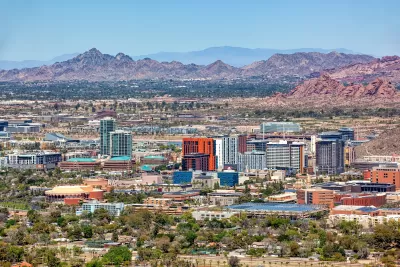
The community calling itself “the first car-free neighborhood built from scratch in the U.S.” is close to opening in Tempe, Arizona, reports Jeremiah Budin for Yahoo News.
Once complete, residents who move into Culdesac Tempe will not be able to park personal vehicles within the development. “The community will still make ample use of cars but in the form of rideshares via Lyft and car sharing via Envoy, a community-based electric car-sharing service and platform.”
The neighborhood will feature Bird e-scooters, ample bike parking, and free transit rides, making it easy to get around for short trips. Will residents give up their cars altogether or will they find the need to maintain vehicles to reach essential daily destinations and get around the rest of not-exactly-pedestrian-friendly Arizona?
Read the full story: This neighborhood is ‘banning’ cars for all residents — but it’s offering them a thought-provoking deal in return
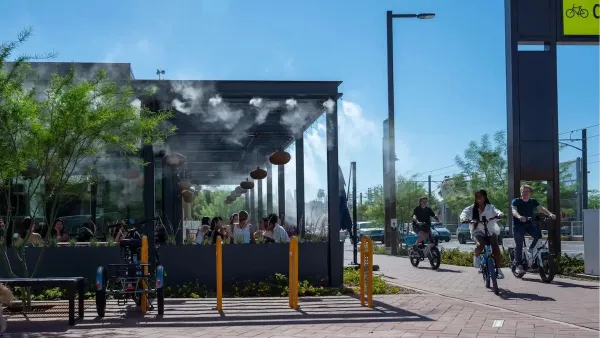
Car-Free Arizona Suburb Gains Residents
The project, dubbed Culdesac, offers EV rentals, free light rail passes, and other perks instead of private parking.
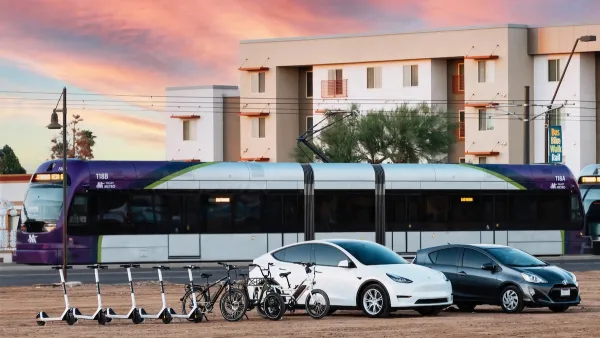
Arizona’s ‘Car-Free’ Community Takes Shape
Culdesac Tempe has been welcoming residents since last year.
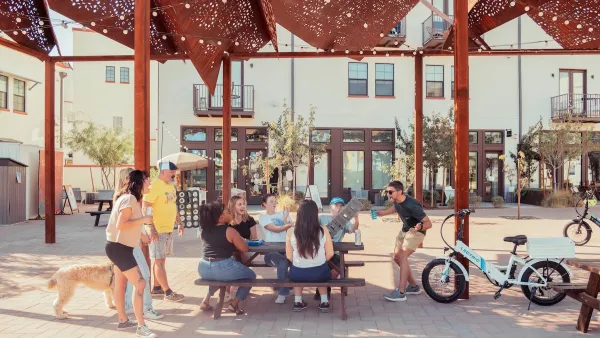
After Culdesac's success in Tempe, Mesa approves new 1,000-unit 'car-light' development
Culdesac Mesa will take the same transit-oriented approach with a compact, walkable design and access to transit and shared mobility options.

Washington state to charge fee to drivers with fuel-efficient cars
Revenue from the fee will go towards supporting the state’s highways.

Illinois considers spending $1 billion in taxpayer money on data center
A quantum computing campus and data center are currently under construction in Chicago.

Trump to blast ‘hydrocarbon highway’ through ‘world’s longest art gallery’
Environmental and historic preservation groups are suing to stop the project.

Boston City Council votes to no longer mandate parking in residential developments
The Boston Zoning Commission still needs to approve the proposal.

Passengers in New York, California lift off in air taxis
Two air taxi companies have received a Special Airworthiness Market Survey Certificate, which allows them to service passengers.

MTA to upgrade subway signals for entire network by 2050
This is the first time New York City has planned to modernize subway signals in the Bronx.

FREE Course: Walkable City 1: Why Walkability?
After describing his path towards focusing on walkability as the essence of good planning, Jeff Speck marches through his five principal reasons for making more walkable places.
Reinventing Malls: Planning Alchemy—Turning Gray Fields Into Gold
The course focuses on the opportunities and imperatives that shape reinvention of mall sites.

City of Charlotte
City of Rosemead
Rutgers University, Edward J. Bloustein School of Planning and Public Policy
University of Michigan School for Environment and Sustainability (SEAS)
Hunter College, City University of New York (CUNY)
The Architects Foundation
University District Partnership