With pandemic-era parklet regulations set to expire on June 30, the city is launching a new, permanent set of guidelines for outdoor dining and other uses of curbside space.


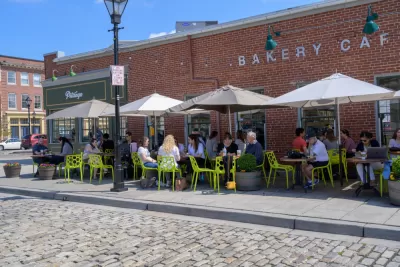
The city of Baltimore is enacting new, permanent guidelines for its Covid-era outdoor dining and parklets program, reports Amanda Yeager in the Baltimore Sun. “Baltimore’s decision to preserve restaurant parklets follows a public feedback period that started last fall, when the Department of Transportation issued a set of draft guidelines for the program. DOT officials say they received more than 2,000 comments on the proposed rules.”
Fees for parklets will be based on location, with costs ranging from $5 to $10 per square foot based on neighborhood equity scores. “Equity scores are based on census tract data, including the percentage of households with people of color within a community, as well as that area’s median income and the percentage of households that have access to a car.”
“The new policy creates fire safety rules for the outdoor dining structures — no open flames will be allowed, for instance — and also requires the parklets to be separated from the street by vertical blockades like concrete barriers or water-filled Jersey walls.” While restaurants have been the most eager adopters of parklets, other businesses are also eligible for the program. The new program takes effect July 1, one day after the temporary guidelines expire.
Read the full story: Outdoor dining is here to stay: 5 things to know about Baltimore’s new policy for curbside parklets

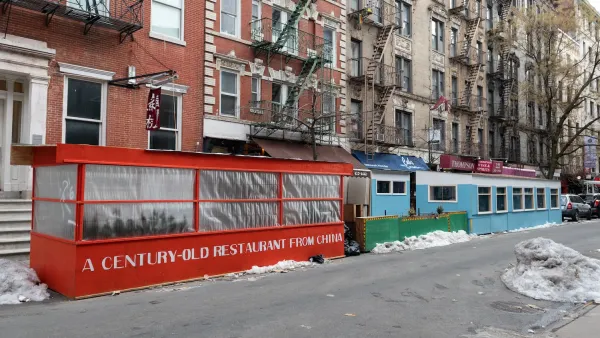
NYC Outdoor Dining Could Get a Re-Do
The city council is considering making the al fresco dining program year-round to address cost concerns from small businesses.
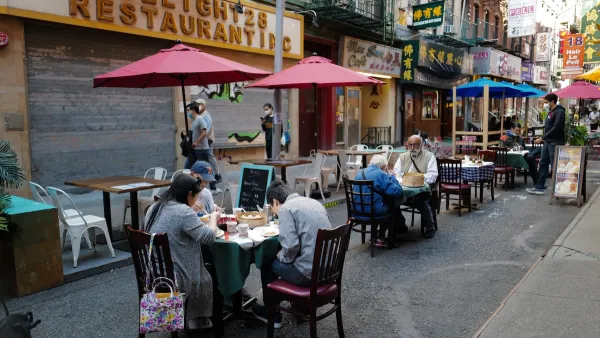
NYC Losing Many Outdoor Dining Areas Due to Expensive New Regulations
Restaurant owners say the city’s new outdoor dining program makes it too difficult and expensive to operate al fresco setups.
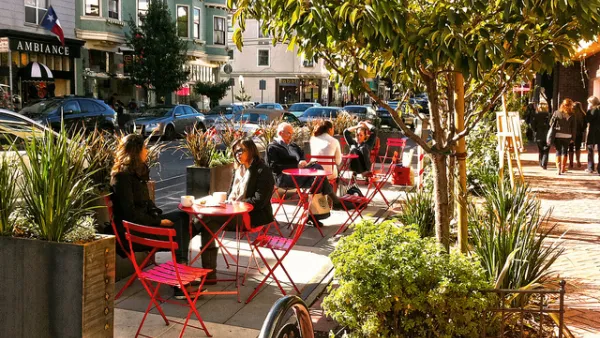
How Park(ing) Day Leads to Permanent Change
Small-scale interventions can lead the way to major parking reforms.

Planetizen Federal Action Tracker
A weekly monitor of how Trump’s orders and actions are impacting planners and planning in America.

Amtrak, CN end decades-long dispute with eight-year agreement
The new operating agreement establishes an updated framework for the companies to work together, including processes to resolve disputes.
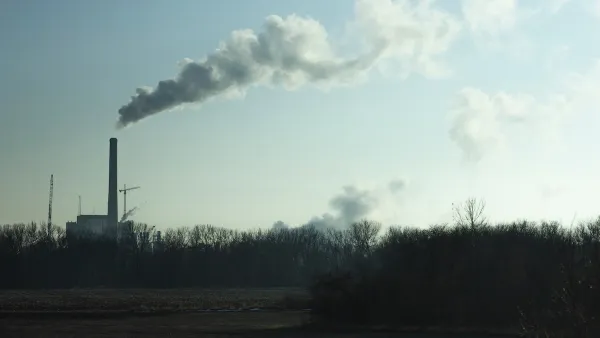
Nation's most wind-powered state turns to coal as data centers increase energy demand
For the first time in decades, Iowa has increased its generation of coal power.

Alabama scores up to $2.5 billion federal loan for largest infrastructure project in state’s history
The Mobile River Bridge and Bayway Project aims to ease congestion at Alabama’s worst bottleneck.

Trump is considering data centers on 6 states' public land — some state officials say they had no idea
If the administration approves the proposed projects, data center and data center-related developments will cover 17,600 acres of public land.

Despite court ruling, Trump is keeping nearly all wind projects in the US on hold
At least 110 wind energy projects have not heard from the government since a federal judge ruled that the Trump administration's freeze on wind turbine clearances was likely illegal.

FREE Course: Walkable City 1: Why Walkability?
After describing his path towards focusing on walkability as the essence of good planning, Jeff Speck marches through his five principal reasons for making more walkable places.
Reinventing Malls: Planning Alchemy—Turning Gray Fields Into Gold
The course focuses on the opportunities and imperatives that shape reinvention of mall sites.

KFH Group Inc.
Greater Baltimore Committee
Eagle County Government
The Architects Foundation
University of Cincinnati Online
The Pocatello Development Authority
The Urban Renewal Agency of the City of Pocatello