The program would allow transit agencies throughout the state to eliminate or reduce fares.


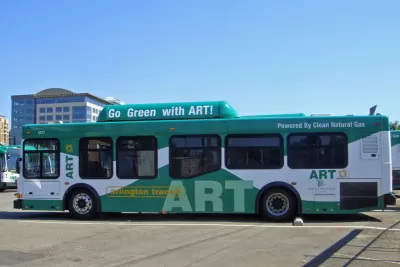
Two bills in Virginia, HB1414 and SB890, include a $6.3 million proposal from Governor Ralph Northam to fund pilot projects at transit agencies in the state that would offer discounted fares to low-income riders or free routes.
The Transit Incentive Program would provide free or low-cost transit passes, eliminate fares on high-capacity routes, and establish fare-free routes for entire systems.
Proponents of the proposal say such a program would eliminate transportation costs, a major job barrier for those riders least able to afford fares, and improve equity and access. But critics say fare-free systems are costly, and they argue that funding that goes toward such systems could be used for service improvements instead.
"To Lisa Guthrie, executive director of the Virginia Transit Association, the Transit Incentive Program represents a natural next step in the Commonwealth’s dogged determination to remain the number one state for business while also beginning to tackle its status as the worst state for workers," writes Wyatt Gordon.
Read the full story: Virginia considers free or reduced fares for local transit agencies

The Free Public Transit Debate
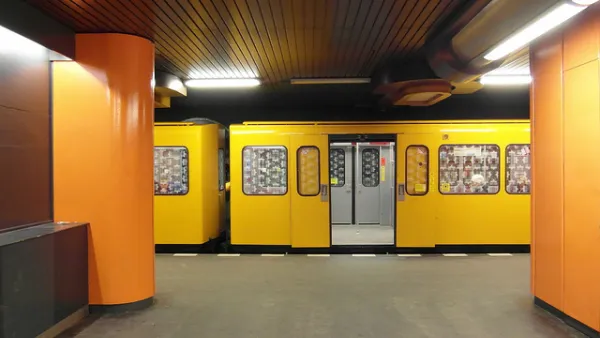
The pros and cons of fare-free transit involve a range of issues, from operations logistics and outcomes to costs and fiscal priorities.
Downtown Columbus Workers to Get Free Transit Passes
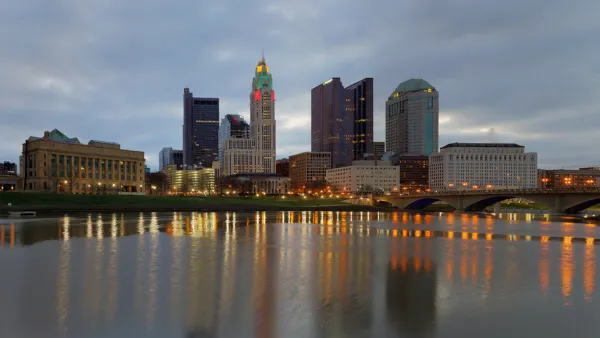
Downtown businesses are helping fund an innovative program to get more downtown workers out of their cars and onto public transit.

Every Worker in Downtown Columbus Could Have a Free Bus Pass Coming Their Way
A program under consideration by the Capital Crossroads Special Improvement District could be the envy of central business district's all over the country.

Planetizen Federal Action Tracker
A weekly monitor of how Trump’s orders and actions are impacting planners and planning in America.

The state-sanctioned urbicide of Austin
People don’t kill cities. Freeways do.

US to reduce Colorado River water deliveries to Mexico
A new Colorado Treaty amendment reduces Mexico’s Colorado River water allocation by 250,000 acre feet.

Nation's most wind-powered state turns to coal as data centers increase energy demand
For the first time in decades, Iowa has increased its generation of coal power.

NYC cools commuters with city's first rain garden above a bus stop
New York City officials say the plants in the rain garden can absorb 16 gallons of rainwater during heavy storms.

Brightline West’s future may rely on $6 billion federal loan
The company has until Nov. 2 to make a $400 million equity investment into its proposed high-speed rail line.

FREE Course: Walkable City 1: Why Walkability?
After describing his path towards focusing on walkability as the essence of good planning, Jeff Speck marches through his five principal reasons for making more walkable places.
Reinventing Malls: Planning Alchemy—Turning Gray Fields Into Gold
The course focuses on the opportunities and imperatives that shape reinvention of mall sites.


Eagle County Government
Harvard University Graduate School of Design
Nashville Planning Department
The Architects Foundation
University of Cincinnati Online
The Pocatello Development Authority
The Urban Renewal Agency of the City of Pocatello
Journal of the American Planning Association