The culture war episode sparked by a recent commercial aired on the Hallmark Movies & Mysteries Channel shouldn't surprise anyone who has noticed the anti-urban themes consistent in the channel's Christmas movies.



Columnist Jeb Lund has noticed a theme among the many examples of the Hallmark Movies & Mysteries Channel (commonly referred to as the Hallmark Channel):
The world of Hallmark often resembles a kind of rear-guard action in a culture war that the network’s prime demographic is losing. The jobs, homes, community and security in the bleached pastoral hamlets showcased in the Hallmark universe are dwindling, increasingly as unreal as their TV presentation.
The channel's original program amounts to a Normal Rockwell take on Christmas, according to Lund. That vision of the United States is also obviously anti-metropolitan.
Hallmark’s movies are stridently anti-metropolitan, almost always beginning with a heroine fleeing the city on some pretext or another. The geography of her personal rescue takes the form of small towns and pastoral settings, where everyone has a nice house and a car and is probably a small-business owner or about to improve themselves by becoming one.
The culture war did not end with the "skirmish" surrounding the lesbian kiss depicted in a commercial aired on the channel, argues Lund, and the political choices that motivate programming choices like Hallmark's come with social costs.
Read the full story: Hallmark’s Christmas movies are part of a culture war their viewers are losing

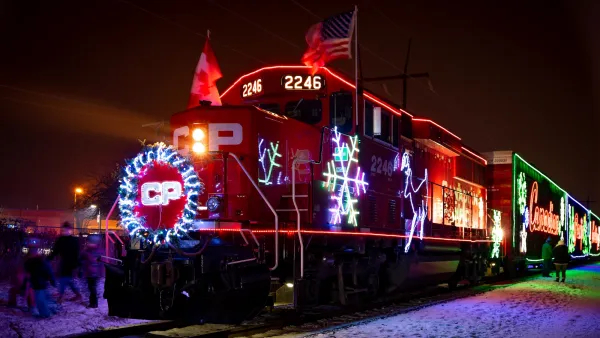
Minnesota’s Joyful ‘Holiday Train’ Begins its Annual Cross-state Journey
The brightly decorated train makes 21 stops, hosting live music events in cities it visits.
Dairy Queen and Rural Third Places
Dozens of Dairy Queen restaurants across Texas are closing, taking a critical community space with them.
Midburbs: A New Definition of Suburbs
When the name “suburb” just doesn't quite fit.

Amtrak, CN end decades-long dispute with eight-year agreement
The new operating agreement establishes an updated framework for the companies to work together, including processes to resolve disputes.

Judges permit Denver to divert 77,000 acre feet from the Colorado River for reservoir expansion
Overuse and climate change have caused the Colorado River’s water levels to plummet.
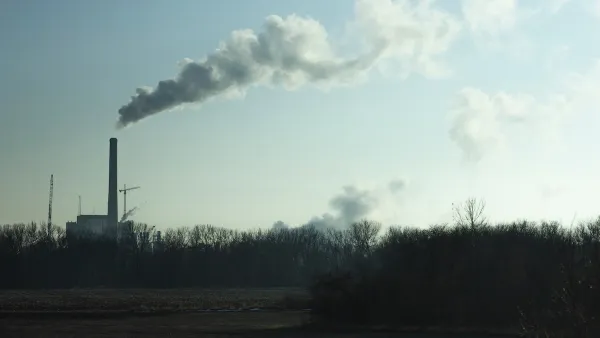
Nation's most wind-powered state turns to coal as data centers increase energy demand
For the first time in decades, Iowa has increased its generation of coal power.

Boston has spent millions making the Green Line more accessible — and there’s no end in sight
While the city has invested millions into expanding and adding platforms to the Green Line to make it more accessible, new train cars set to arrive next year will be too tall for disabled passengers to board without raising the current platforms.

Idaho may see an 18% drop in federal surface transit funding — the largest estimated cut in the US
Transit systems in rural communities are much more reliant on federal funding to provide their services.

How ‘post-disaster gentrification’ alters neighborhoods after natural calamities
After hurricanes, fires or other calamities, the original residents of a community are often replaced by younger, wealthier residents.

FREE Course: Walkable City 1: Why Walkability?
After describing his path towards focusing on walkability as the essence of good planning, Jeff Speck marches through his five principal reasons for making more walkable places.
Reinventing Malls: Planning Alchemy—Turning Gray Fields Into Gold
The course focuses on the opportunities and imperatives that shape reinvention of mall sites.

City of Wisconsin Rapids
Harvard University Graduate School of Design
KFH Group Inc.
The Architects Foundation
University of Cincinnati Online
The Pocatello Development Authority
The Urban Renewal Agency of the City of Pocatello