In communities lacking green space, public access to upgraded school playgrounds is a win-win solution.


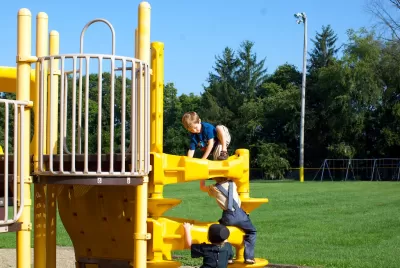
Adele Peters reports on a program that helps open up school playgrounds to surrounding communities, particularly in areas where residents do not have easy access to parks and open space.
"The Trust for Public Land, a nonprofit that helps schools and cities create 'shared-use' agreements for playground space, calculated that if all schoolyards in the U.S. were opened to the public during nonschool hours, nearly 20 million Americans who don’t currently live near parks would suddenly be a short walk from one," writes Peters.
The arrangements provide additional benefits, notes Peters. The schoolyards often get more greenery and trees, and the increase in green space can help urban areas deal with the heat island effect that results from climate change.
FULL STORY: There’s a simple way to give 20 million Americans access to parks: Let them use school playgrounds

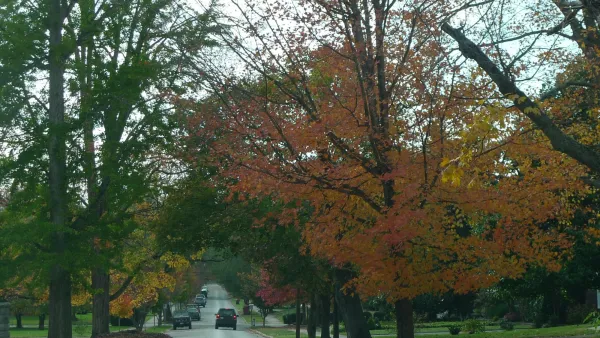
Research Shows Urban Trees Stave off Depression
A new study shows that regular exposure to trees and green spaces has a powerful impact on depression and mental health.
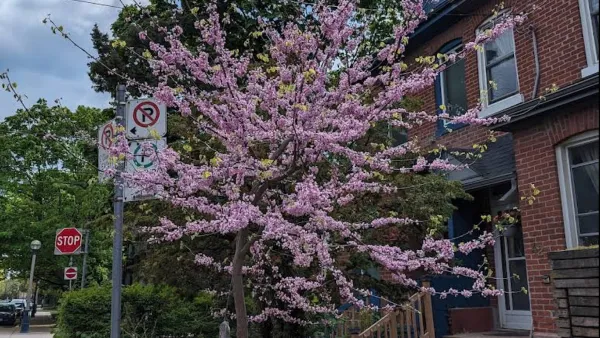
The Most Popular Tree on Google?
Meet Rodney: the Toronto tree getting rave reviews.
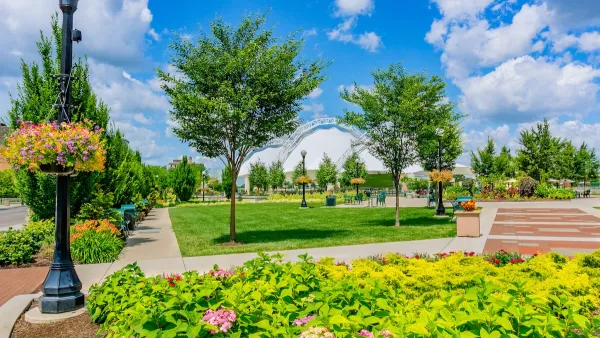
A Plan to Expand Tree Canopy Across Dayton
Dayton is developing an urban forest master plan, using a $2 million grant to expand its tree canopy, address decades of tree loss, and enhance environmental equity across the city.

Planetizen Federal Action Tracker
A weekly monitor of how Trump’s orders and actions are impacting planners and planning in America.

The state-sanctioned urbicide of Austin
People don’t kill cities. Freeways do.

US to reduce Colorado River water deliveries to Mexico
A new Colorado Treaty amendment reduces Mexico’s Colorado River water allocation by 250,000 acre feet.

Mamdani overhauls NYC's Vision Zero plan with 100 new policy goals
The overhaul aims to reduce traffic deaths and make streets safer for pedestrians, cyclists and drivers through lower speed limits, new safety infrastructure and more.

Amtrak not solely to blame for New Jersey commuter rail's unreliability, report finds
A new study from the Garden State Initiative found that NJ Transit’s budget grew 20% across a 4 year period, but reliability declined significantly over the same period.

EPA erases limits on planet-warming pollution from power plants
Under Monday’s plan, power plants would still have some limits on how much mercury, arsenic and other contaminants they can emit.

FREE Course: Walkable City 1: Why Walkability?
After describing his path towards focusing on walkability as the essence of good planning, Jeff Speck marches through his five principal reasons for making more walkable places.
Reinventing Malls: Planning Alchemy—Turning Gray Fields Into Gold
The course focuses on the opportunities and imperatives that shape reinvention of mall sites.

Eagle County Government
Harvard University Graduate School of Design
Nashville Planning Department
The Architects Foundation
University of Cincinnati Online
The Pocatello Development Authority
The Urban Renewal Agency of the City of Pocatello
Journal of the American Planning Association