In case you weren't already aware, there are is a how subculture of debate and controversy on Twitter devoted to the subject of housing. And if you were aware, and perhaps are a participant, here's what Fast Company is saying about you.



Eillie Anzilotti writes: "…if you’ve ever seen a discussion of a new development in your neighborhood, or a new state law offering protections to tenants, you may have felt the collective blood pressure rising as you scroll through endless, increasingly vitriolic and personal replies."
"Welcome, you’ve just discovered housing Twitter."
There are massive disagreements and heated playing out on Housing Twitter (one of the "subcultures and loose associations of people who gravitate toward one another" on Twitter, according to Anzilotti), but the one thing everyone agrees on is that there's a crisis in housing in this country. "What’s less agreed upon is what to do about it," writes Anzilotti.
On housing Twitter, people strongly identify with what they believe will best solve the housing crisis, whether that be sweeping rent control, building many more units, some combination of the two, or something else entirely. Discord among people in these different camps is frequent and often aggressive.
Planners might have hoped for decades for a higher profile or new turf for the debates of the professional and academic field of planning, and its many related intersections. Here it is.
The lengthy article attempts to create a taxonomy of participants in Housing twitter, at one point splitting people into two camps—YIMBY and NIMBY—before also acknowledging subcategories—like PHIMBYs, market urbanists, anti-gentrification advocates, and tenants rights advocates.
Read the full story: Welcome to housing Twitter, the shoutiest debate on the internet
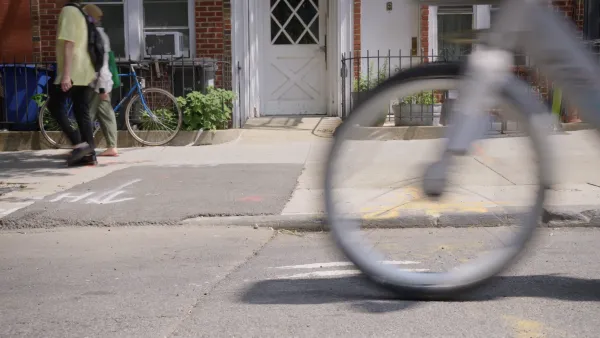
Art project makes NYC Citi Bikes physically harder to pedal in rent-burdened neighborhoods
Ground Truth, created by Brooklyn artist Justin Blinder, slows bikes down to make cyclists feel the burden of high rent.
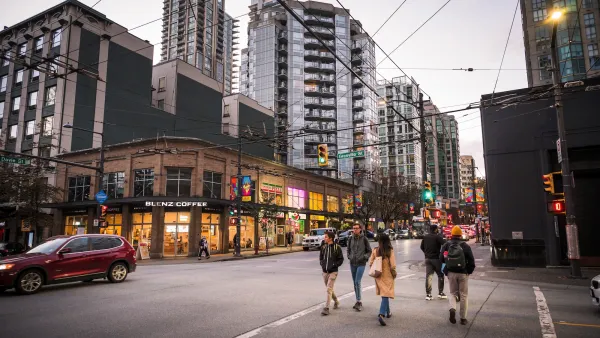
To upzone or not to upzone? Two views on the housing crisis
Allowing more density can increase the housing supply, but does the attendant rise in land prices cancel out the benefits?
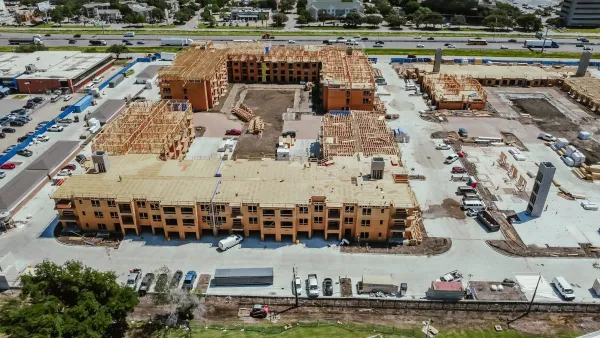
Controversial Texas housing law has 'directly facilitated' over 1,250 new homes
SB 840 allows developers to build multifamily housing by-right on lots zoned for commercial use without applying to a zoning change.

Planetizen Federal Action Tracker
A weekly monitor of how Trump’s orders and actions are impacting planners and planning in America.

California plans to bury El Niño’s downpour
If the state plays its cards right, it may be able to store a billion acre-feet of El Niño’s water in aquifers.

Desperate measures: Advocates weigh draining Lake Powell to fill Colorado River
Draining the reservoir could reduce evaporation losses by a couple hundred thousand acre-feet.

Housing is the top priority of Seattle’s sole new councilmember
Jenks campaigned on building 1,000 new units of affordable housing.

New tax cuts may slash $1.5 billion in funding for Miami transit, public parks
Amendment 3 will save Miami-Dade homeowners $2,700 in 2028.

Arizona, Wisconsin, Pennsylvania hope to finally advance climate goals post-midterms
The three states have spent years under Republican or divided control.

FREE Course: Walkable City 1: Why Walkability?
After describing his path towards focusing on walkability as the essence of good planning, Jeff Speck marches through his five principal reasons for making more walkable places.
Reinventing Malls: Planning Alchemy—Turning Gray Fields Into Gold
The course focuses on the opportunities and imperatives that shape reinvention of mall sites.

City of Rosemead
Rutgers University, Edward J. Bloustein School of Planning and Public Policy
One Hundred Miles
University of Michigan School for Environment and Sustainability (SEAS)
Hunter College, City University of New York (CUNY)
The Architects Foundation
City of Cambridge
Montrose County
The Pocatello Development Authority