Residents of Washington, D.C. report being very concerned about being forced to move by rising housing prices.


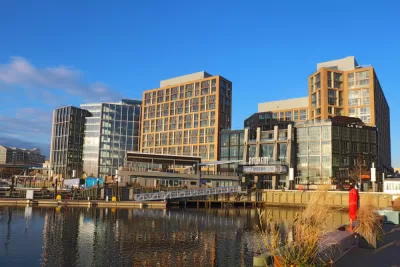
"In increasingly expensive D.C., about 20% of residents in Wards 7 and 8 anticipate needing to move in the next three years because they will be unable to afford their home," reports Tasna Khademian.
Khademian is sharing the results of a survey recently conducted by the Office of the Deputy Mayor for Planning and Economic Development, in collaboration with The Lab @ DC, a team in the Office of the City Administrator that conducts surveys and research to improve policy making.
Residents of other parts of the District also report housing pressure, though at lower levels. "For example, 12% of those who live in Ward 5 and 9% of residents in Ward 4 also say they expect they will need to move in three years because of an inability to pay their landlord or bank," reports Khademian.
"But the worry is greatest in Ward 7 and 8, where 19 and 21% of residents, respectively, reported that they are “somewhat likely” or 'very likely' to need to find a new home within three years."
The article includes more findings from the survey, and the con sequences of the understanding about the D.C. real estate market that emerges from the data.
Read the full story: D.C. Residents Worry About Moving As Housing Prices Rise


Louisville Launches ‘Anti-Displacement Tool’
After a years-long, tenant-led effort, Louisville will use a new tool to analyze whether a proposed housing development can meet a neighborhood’s housing needs and income levels. If it doesn’t, the city won’t subsidize it.
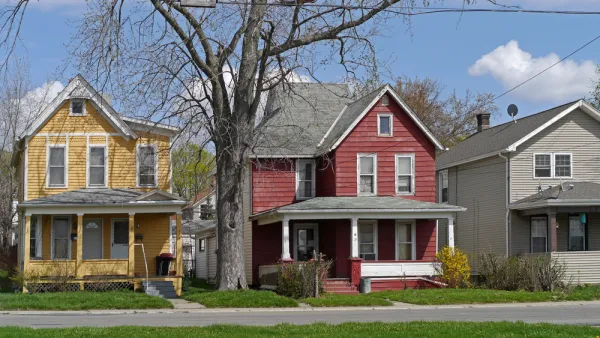
Opinion: Freeze Property Taxes in Gentrifying Neighborhoods
A proposed bill in the Texas legislature would help prevent displacement of homeowners in areas experiencing reinvestment and redevelopment.
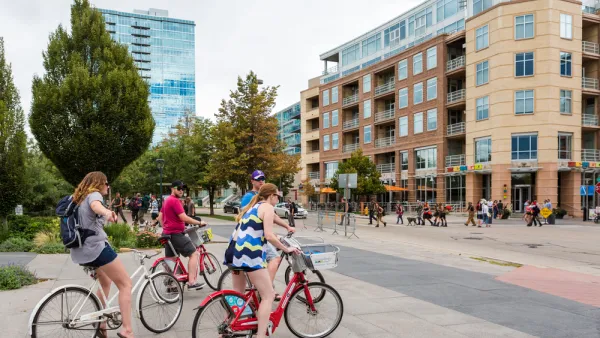
Opinion: Denver Needs New Direction on Housing
A Denver writer calls attention to the city's worsening housing affordability, gentrification, and displacement challenges, and prescribes a YIMBY response.

Planetizen Federal Action Tracker
A weekly monitor of how Trump’s orders and actions are impacting planners and planning in America.

California plans to bury El Niño’s downpour
If the state plays its cards right, it may be able to store a billion acre-feet of El Niño’s water in aquifers.

Desperate measures: Advocates weigh draining Lake Powell to fill Colorado River
Draining the reservoir could reduce evaporation losses by a couple hundred thousand acre-feet.

California city breaks ground on transit connector
The project includes three mobility hubs and a pedestrian bridge.

After public outcry, Massachusetts city releases housing development tracker
Cambridge’s tracker currently shows 250 housing projects in various stages of development.

40 years after approval, Chicago breaks ground on new park
The park honors Jean Baptiste Point du Sable, the city’s first permanent non-native settler.

FREE Course: Walkable City 1: Why Walkability?
After describing his path towards focusing on walkability as the essence of good planning, Jeff Speck marches through his five principal reasons for making more walkable places.
Reinventing Malls: Planning Alchemy—Turning Gray Fields Into Gold
The course focuses on the opportunities and imperatives that shape reinvention of mall sites.

City of Rosemead
Rutgers University, Edward J. Bloustein School of Planning and Public Policy
One Hundred Miles
Hunter College, City University of New York (CUNY)
The Architects Foundation
University of Cincinnati Online
City of Cambridge
Montrose County
The Pocatello Development Authority